Knowing the common health issues related to the Dendrobates leucomelas before buying can save you some headache later on. It is very helpful to know the signs to watch out for so you can intervene as necessary and don’t have to take it to an exotic vet.
Please know where your closest amphibian specialist vet is located. Using the ARAV Find a Vet tool you can find your closest vet that has amphibian experience so you do not waste your time going to your neighborhood vet who has never worked with a frog before.
Common health issues for the Dendrobates leucomelas
Shedding – Frogs will shed their skin into their mouth and then eat it. The skin contains many nutrients (calcium and proteins, etc.) which would be wasted if the frog did not eat it’s lost skin.
Symptoms:
- crouched position followed by a stretch
- repetitively opening and closing mouth
- puff up like a balloon to loosen skin
- Remove the skin towards the mouth
Cause: Frequent renewal of skin prevents the skin from hardening and becoming less permeable to oxygen.
Treatment: No treatment is necessary. This is perfectly normal and most likely happens every couple of days.
SLS – Spindly Leg Syndrome is a developmental abnormality observed in one or both of the amphibians front legs.
Symptoms:
- thin arms
- top heavy appearance
- poor development of the toes
- cannot support own weight
- limited capability for movement
Cause: While the cause is somewhat unknown, it is thought that genetics, nutrition (tadpole and parents) and husbandry are all contributing factors.
Treatment: No long-term survival rate. It will eventually starve to death if other health factors don’t affect it earlier. Best course of action is to stop the suffering by placing a drop of benzocaine (Orajel) on the head or belly.
STS – Short Tongue syndrome is a slow decline in the ability to capture prey due to a reduction in the stickiness of the tongue.
Symptoms:
- missing flies during feeding time
Cause: Low level of Vitamin A from supplements that are expired or have been improperly stored.
Treatment: Isolate affected frog to reduce competition at meal time. Supplement straight Vitamin A dusting on flies to once every week for a month and then re-evaluate. Limit the number of flies during each feeding to ensure that supplements are not being groomed off by the flies by the time the frog catches it.
Parasites/ Worms
Symptoms:
- feeding well but not gaining weight
- worms in stool
- watery stool
Cause: Addition of infected item to the collection without proper quarantine. This could be plants, substrate, other animals, hands, etc. Most frogs will have some sort of Parasites/worms in their lifetime. As long as the frog is unstressed it will rarely need treatment.
Treatment: Only treatment is to have a fecal lab work done through a vet. This will provide the type of parasite along with treatment options.
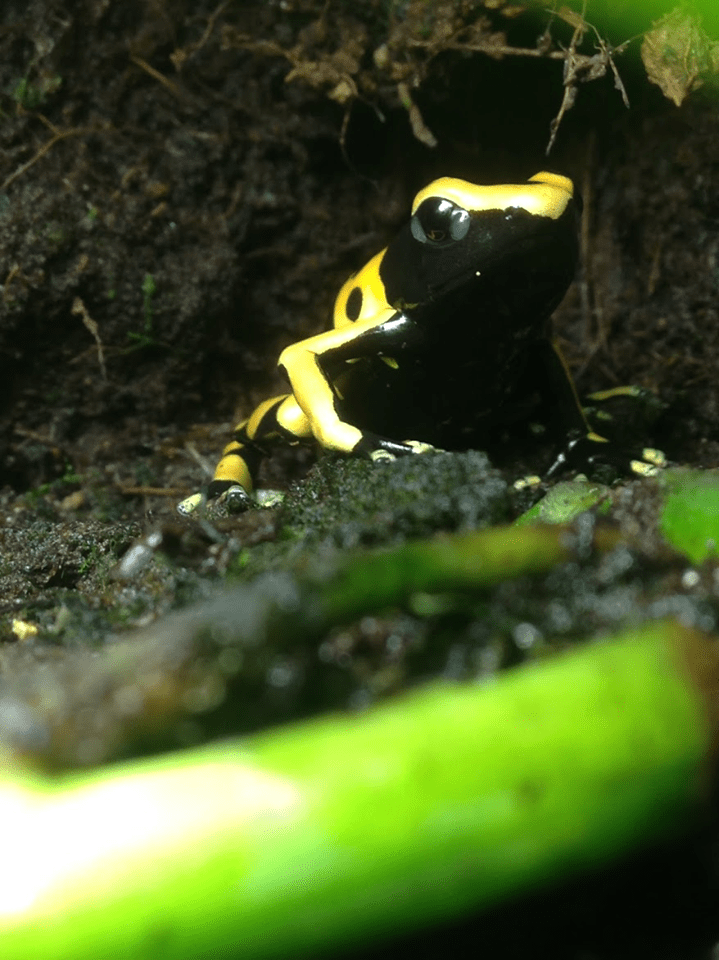
Swollen Conjuctiva
Symptoms:
- cloudy white on eye
Cause: Poor Husbandry and lack of replacing of supplements
Treatment: Replace supplements, Supplement with Repashy Calcium Plus at every feeding and substitute Repashy Vitamin A once a week for a month and then reassess.
Ultimate Dendrobates leucomelas Care Guide:
- Introduction to care
- Morphs
- Terrarium Size
- Lighting, Temperature and Humidity Requirements
- Terrarium Design
- Feeding
- Breeding
- Tadpole Care
- Shopping Must Haves
- Common health Issues (Current Page)
- Additional Resources
Is this information out of date?
Thefroglady.wordpress.com’s goal is to provide credible and up to date information for amphibian keepers of all stages. We try our best to keep up with recommended care as it is released but sometimes we miss some items. If you have found something that is out of date, please contact us here so we can fix it. Thanks!



10 thoughts on “Dendrobates leucomelas heath issues”