***This post is a part of my series where this year I will be highlighting all of the different states native frogs and toads. Check out this page to see all of the United State’s native frogs broken down by state. ***
Interested in learning more about the Frogs and Toads from Kansas? Check out the Kansas Herpetofaunal Atlas for more information or download the pocket guide to Kansas Amphibians, Turtles & Lizards here!
Here are the frogs and Toads that can be found in Kansas:
American Bullfrog (Lithobates catesbeianus)
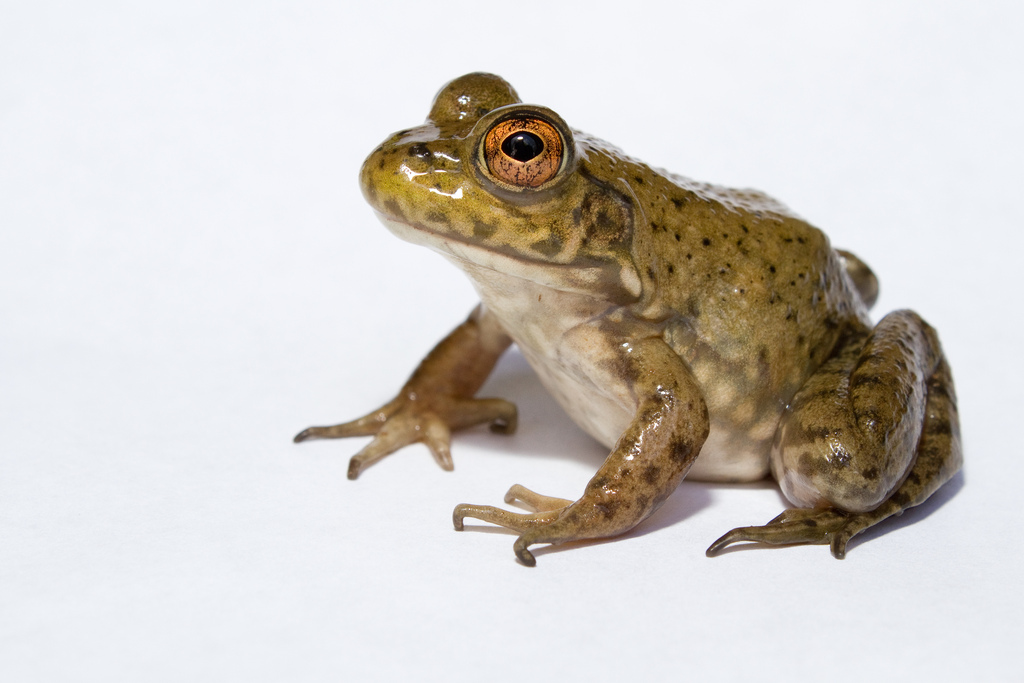
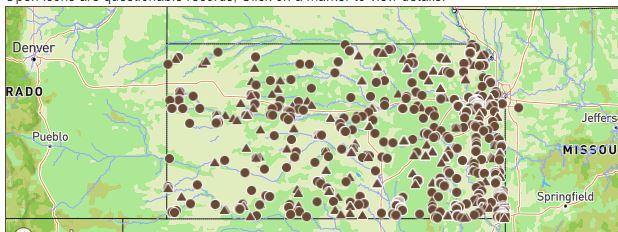
The American Bullfrog is the largest frog in Kansas. They are typically green or gray-brown with brown spots. They can grow up to 6.5″ in length and weigh up to a 1 pound. The bullfrog can be found near large permanent bodies of water with vegetation near the shorelines. In Kansas, they can be found statewide.
Bullfrogs will eat almost anything that will fit in their mouths. They have been known to eat spiders, fish, birds and even small mammals. It has a very deep call which resembles the mooing of a cow. Watch the video below to hear! Both genders of the bullfrog croak. Their calls may be heard day or night between May and August.
American Toad (Anaxyrus americanus)
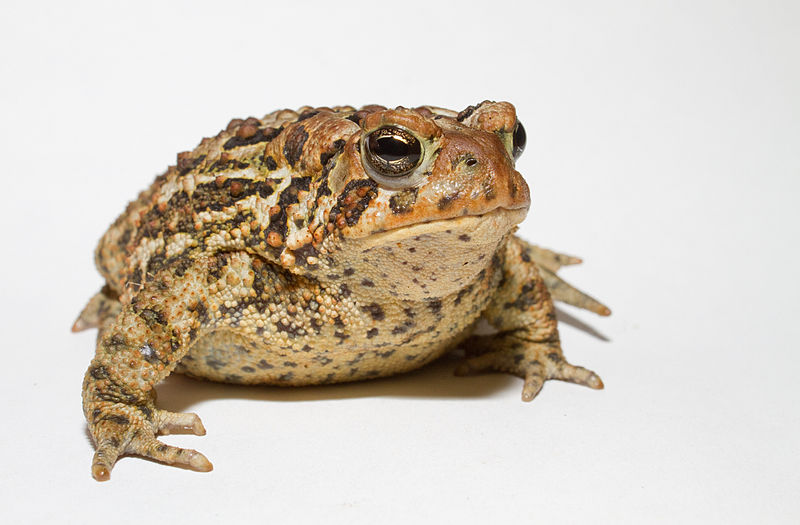
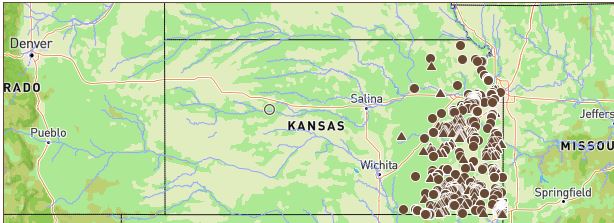
The American toad is mainly nocturnal and is most active when the weather is warm and humid. During the winter, the toad will burrow deep into the ground below the frost line. As the frost line gets deeper, the toads will burrow deeper beneath the ground. They are common in eastern quarter of Kansas.
Most American toads don’t survive more than a year in the wild, however some have lived to 10 years old. Captive raised, they have reached 36 years old. The toad has a high musical trill which can last upwards of 30 seconds. American toad is highly terrestrial and can only be found in the water for a short period while breeding and laying eggs. Below is a video that shows the American Toad calling.
Blanchard’s Cricket Frog (Acris crepitans blanchardi)

The Blanchard’s Cricket frog measures an average of 1.5″ in length with the females being slightly larger. These frogs can jump a surprisingly long way (5-6′) for their small size. They can range a combination of black, yellow orange or red on a base of brown or green. The Blanchard’s Cricket frog can be found everywhere within Kansas. They may be found near permanent water sources like slow moving streams, margins of lakes and ponds or around marshy areas.
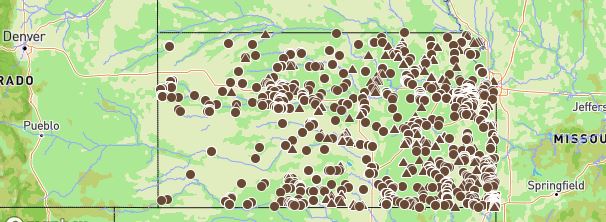
This frog was named for its breeding call which sounds very much like a chirp or trill of a cricket repeated for about 20 beats or like 2 pebbles clicked together. Listen to its call below.
Boreal Chorus Frog (Pseudacris maculata)

The Boreal Chorus frog is brown with 3 dark lateral stripes or spots down its back with a white upper lip and measures up to 1-1/2″ long. These frogs are typically found near heavily vegetated bodies of water, but also need a shallow open area for breeding. These frogs may be found across Kansas.
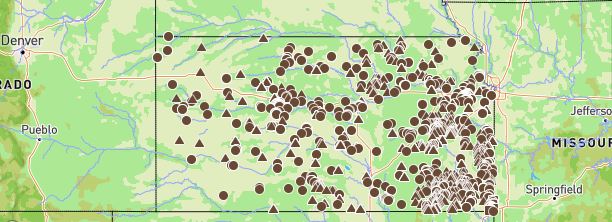
The boreal chorus frog sounds similar to the spring peeper in that it sounds like fingers running over a comb, however the boreal chorus frog’s call is more tinny and mechanical opposed to the musical whistle of the spring peeper. Females lay 500-1,500 eggs in groups of 5-300. Listen to the call below.
Chihuahuan Green Toad (Bufo debilis)
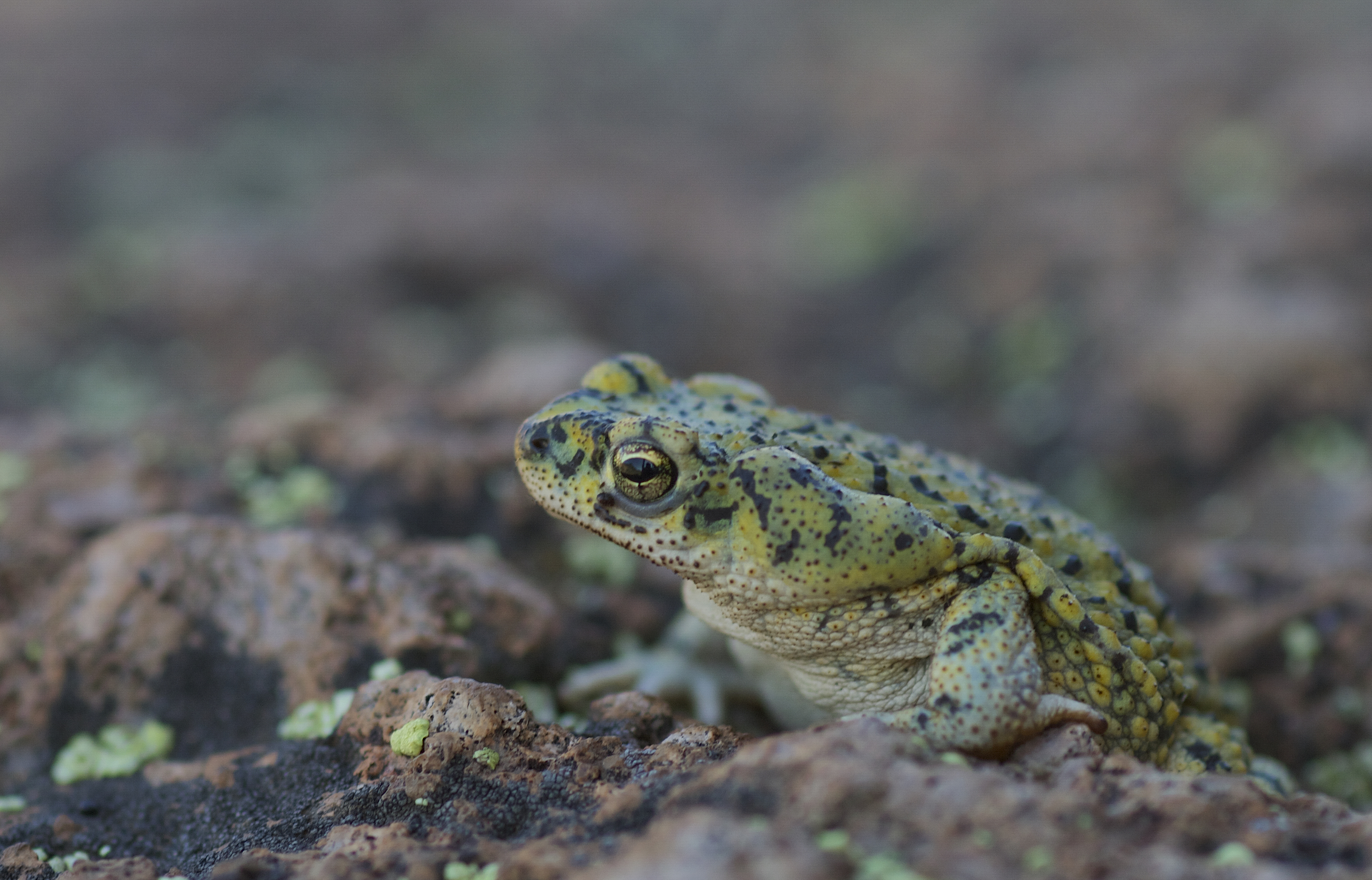
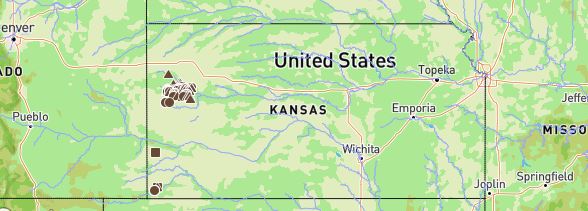
Another name for this eastern green toad is the Chihuahuan Toad. This toad is a very unique shade of green with small black spots and irregular lines. It can reach around 2″ in length. This toad spends most of its life underground and emerges to breed in pools after heavy rains in late spring or summer. They can be found in a few scattered areas across the western portion of Kansas.
The green toad’s call is a flat buzz that lasts from 2-8 seconds. Listen to him go below:
Cope’s Gray Treefrog (Hyla chrysoscelis)
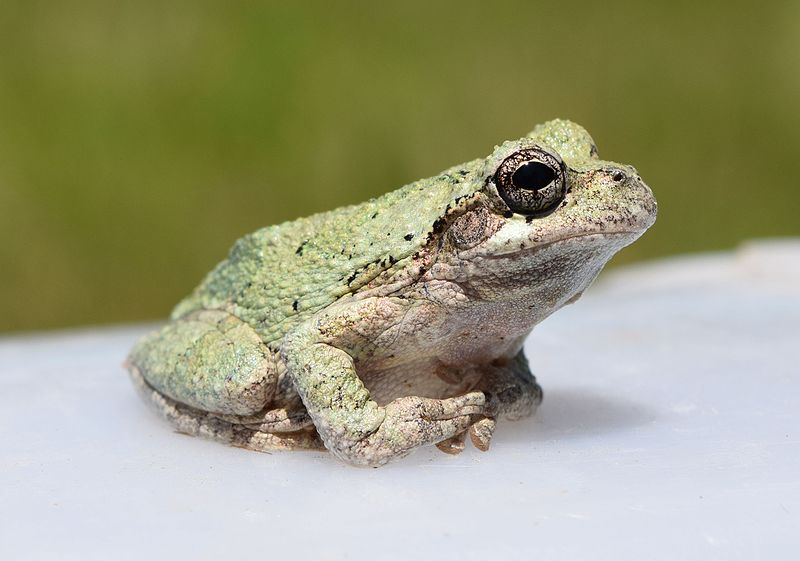
The Cope’s gray treefrog is smaller and smoother skinned than the gray treefrog. The gray treefrog and Cope’s gray treefrog can be difficult to tell apart during breeding while they are both mottled. However, most of the time the Cope’s gray treefrog has a solid lime green colored back. It can be found across most of the eastern area of Kansas.
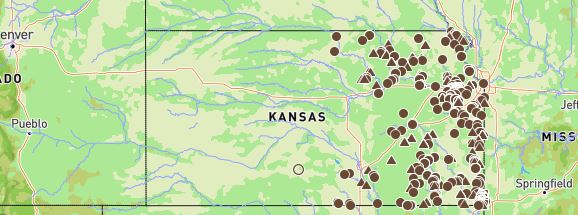
Another way the Cope’s gray treefrog can be distinguished from the gray treefrog is by its call. The Cope’s gray treefrog’s call is short and raspy. Listen to the video below to hear.
Crawfish Frog (Lithobates areolatus)
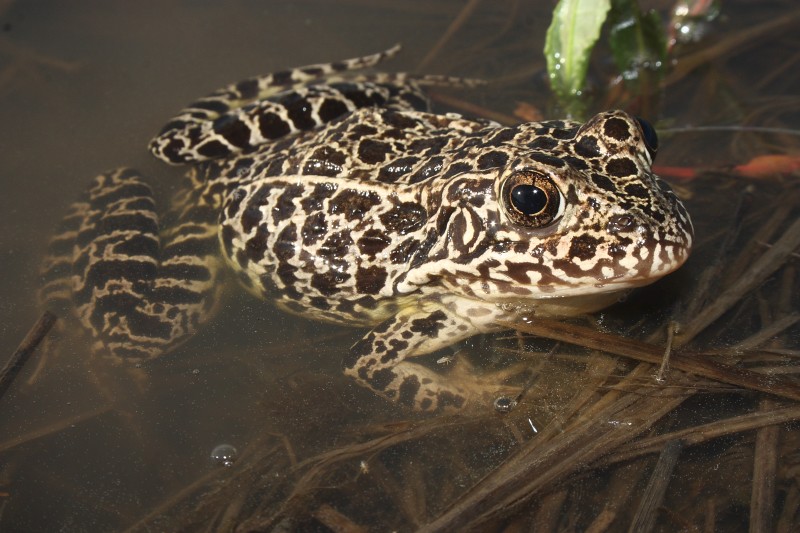
This frog has a large and stubby body with a distinct humped back while it rests. It is covered in many irregular shaped spots and its belly is solid white. It gets its name from its diet which consists of nocturnal beetles, small amphibians and reptiles and crawfish. The crawfish frog can be found in low lying areas including meadows, prairies, brush fields and crawfish holes. In Kansas, it may be found on the eastern portion of the state. However, it is rarely seen as it burrows underground.
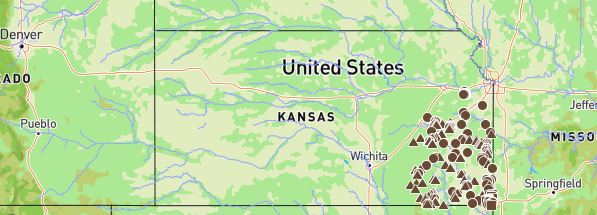
The crawfish frog breed from late February through April. The males will gather in a fishless pond and call. The females can lay up to 7000 eggs group in large 5-6″ clumps. The pond must maintain through mid-June while all of the froglets transform. The crawfish frog has a loud and deep call which reminds me of a hog. Listen to them below:
Eastern narrow mouth toad (Gastrophryne carolinensis)**
**Although it bears the name of “toad” it is actually considered to be a frog.
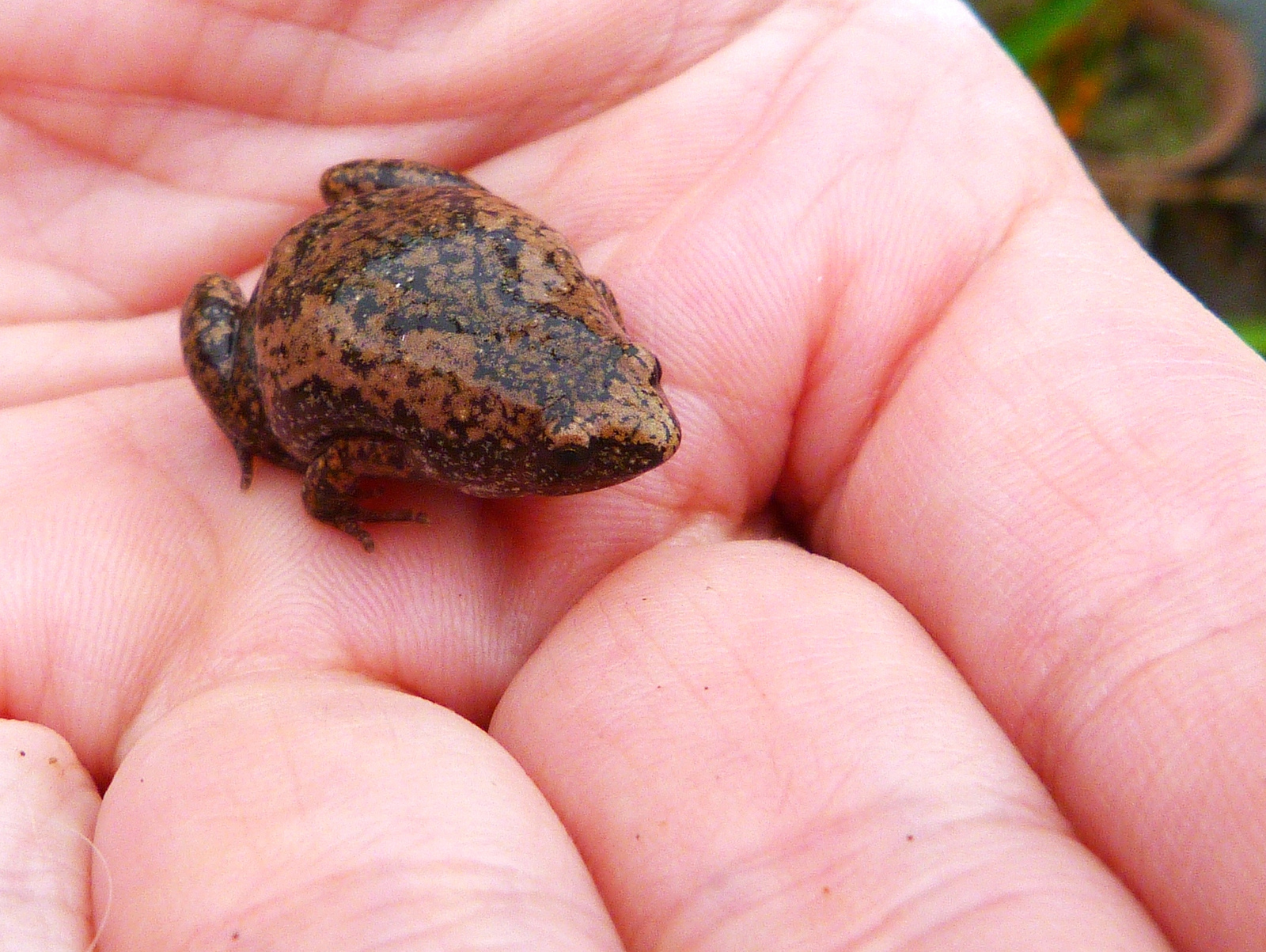
This frog is typically 1″ in length, with females being slightly larger. One defining characteristic of this frog is the fold of skin on the back of the frogs head. The eastern narrow mouth toad is grey or brown in color with smooth thick skin. It can be found in grassy areas on rocky slopes and in rock filled canyons. They will hide under rocks and can sometimes be found with tarantulas. As shown in the photo below, in Kansas, they can be found in the extreme lower eastern corner – typically under flat rocks.
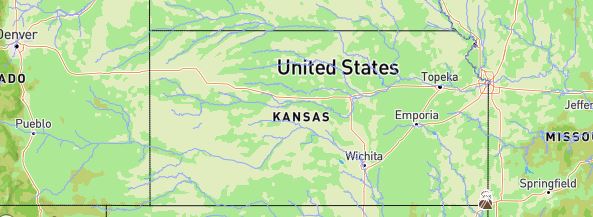
The male eastern narrow mouth toad’s belly will create a substance that will stick the mating pair together. The female will lay up to 850 eggs on the surface of the water. They will take 2 days to hatch and will be toadlets within a quick 30-60 days. It’s call sounds similar to a bleating sheep with a baaaaa. Several calling frogs together sound like bees or a bunch of toy airplanes. I was very surprised by the pitch of their call. Have a listen below:
Fowler’s Toad (Anaxyrus fowleri)

The Fowler’s toad is usually brown, grey, olive green and rust red in color with darkened warty spots. As these toads become adults, a pale stripe will form down its back. The belly is usually white-ish with one dark spot. These toads are found in a few localized areas in the eastern portion of Kansas.
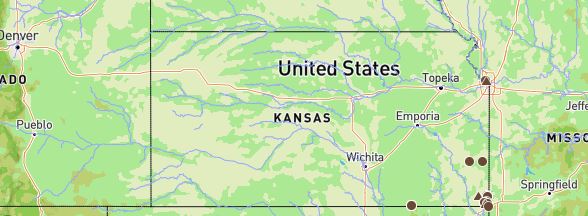
This toad has a long, loud, high pitched W-A-A-A-H-H-H call. Listen to it in the video below! It is said that they can be mistaken for a herd of sheep calling in the night. The Fowler’s toad will make a series of quick, short hops as the American toad will make a few larger hops. The Fowler’s toad will amplexus in March – August. The female can release 7,000 -10,000 fertilized eggs which will hatch 2-7 days later.
Great Plains Toad (Anaxyrus cognatus)

The great plains toad has numerous warts and prominent ridges on its head. The females will typically reach 3″ with males being less. The great plains toad can be found throughout Kansas except for the southeastern corner of the state. They burrow well in loose soil and are found at night roadside or in ditches where insects are bountiful.
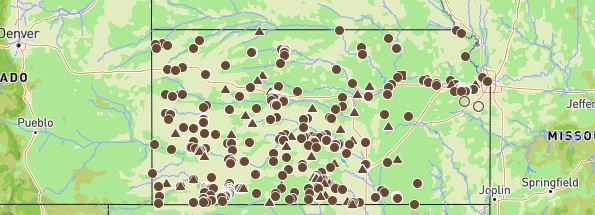
A female great plains toad will lay up to 20,000 eggs. The male great plains toad has a long trill call that lasts 20-50 seconds long and can vary depending on the size of the male and the temperature. Some people have compared this toad’s call to a jackhammer, but go ahead and listen to it for yourself below:
Green Frog (Lithobates clamitans)
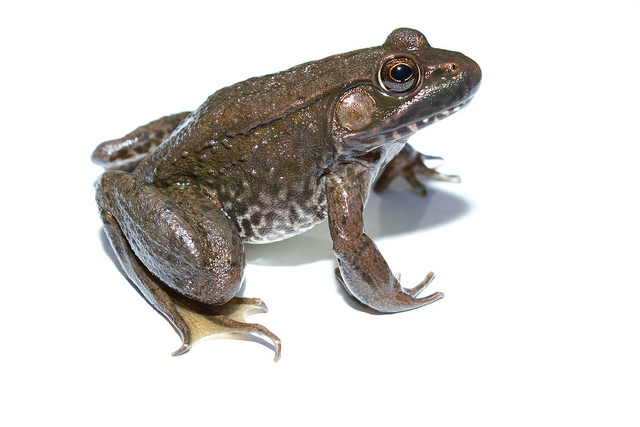
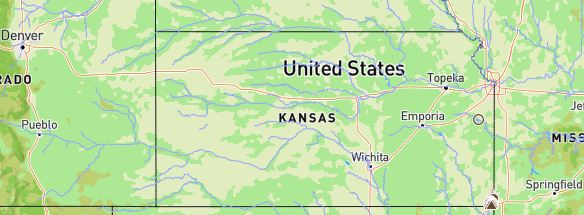
The green frog is typically greenish-brown with dark mottling on its head, chest and under its legs. The throat color ranges to yellow for a male to white for the females. The green frog is similar to the bullfrog, however the bullfrog is larger and lacks the skin fold behind the eye to mid torso. The Green Frog is seen in the extreme southeastern corner of Kansas.
These frogs can produce as many as 6 different calls – however the most distinctive sound is a throaty boink that sounds like a loose banjo string being plucked. Listen to the video below to hear!
Pickerel Frog (Lithobates palustris)

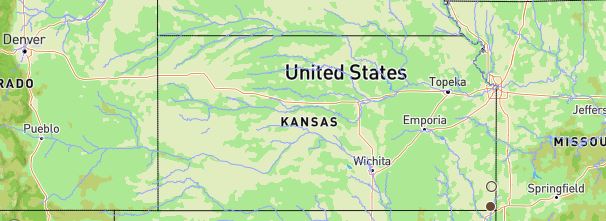
The Pickerel frog looks very similar to the Northern Leopard frog; however the pickerel frog has 2 parallel rows of squareish spots down its back. They are often found near beaver ponds with dense vegetation. The pickerel frog may be found in the southeastern corner of Kansas.
Female pickerel frogs lay between 700-2,900 eggs in a globular mass attached to a submerged stick or stem. The tadpoles will transform into frogs around mid-July based on water temperature. As a defense the skin of the pickerel frog produces a toxic substance which makes them unappealing to most predators. Listen to the video below to hear their call. It sounds similar to a low and slow snore.
Plains Leopard Frog (Lithobates blairi)

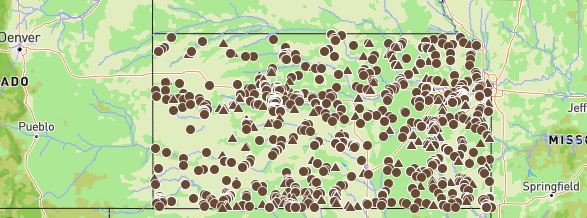
This frog is brown with large rounded dark spots with light borders. As you can see from the photo above, the ear drum is very distinct. The Plains leopard frog is known for its distinctively broken and displaced skin ridges along the back and can reach 3-3/4″. They can be found near streams, ponds, creeks and ditches. In wet, mild weather, they may be found far away from water. The range of the Plain’s leopard frog is throughout Kansas.
Female plains leopard frogs will lay a mass of eggs which can hold up to 6,500 eggs. Tadpoles will become frogs in midsummer or may even transform the following spring. The plains leopard frog’s call includes a few low grunting sounds along with a series of short clucks. Listen to their call below:
Plains Spadefoot (Spea bombifrons)

The Plains spadefoot is known for its vertically elongated pupil and markings similar to a hourglass on its upper sides. The spadefoot may have some green on its back and sides and some tiny reddish warts. On the underside of each hind foot, there is a wedge shaped spade. They can be found almost statewide within Kansas except for the southeastern corner.
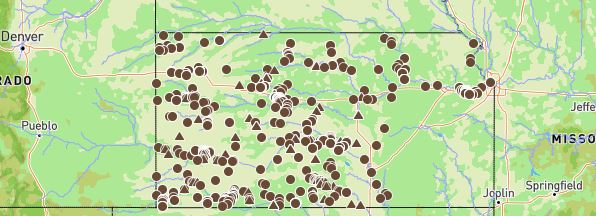
The plains spadefoot spends most of its life buried in the soil, but will emerge to breed after heavy rains in spring or summer. The plains spadefoot is an explosive breeder and many frogs will appear suddenly after a heavy rain. A female can produce up to 2,000 eggs which will hatch in a few days. They produce a compound in their blood which keep their blood from freezing in the winter. The call of the plains spadefoot is a brief snoring sound. Take a listen below.
Red Spotted Toad (Bufo punctatus)
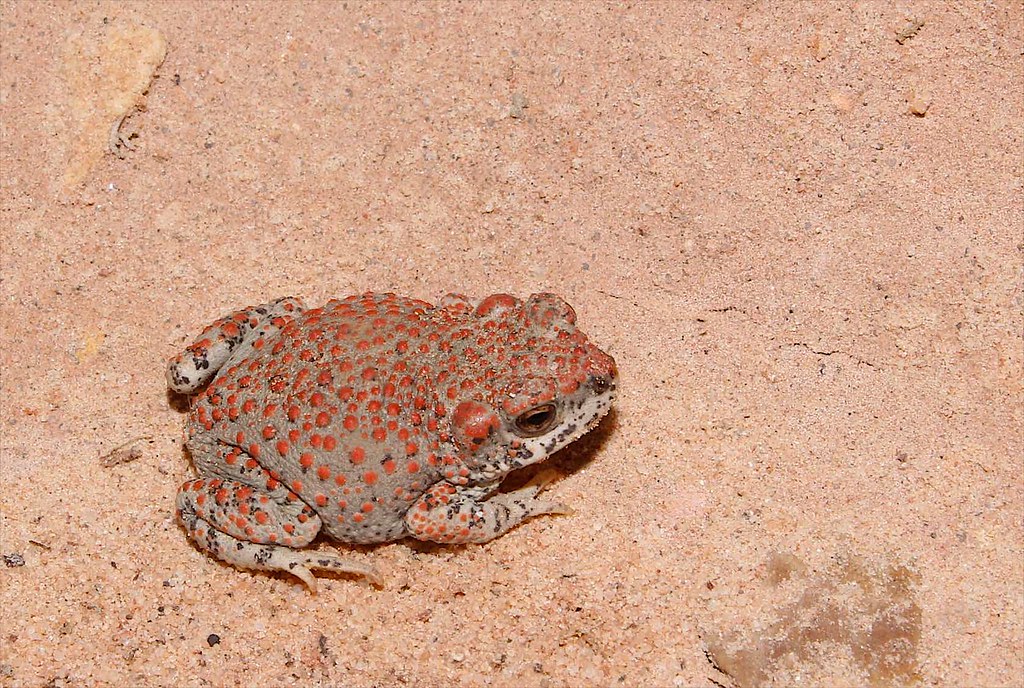
The red-spotted toad is unique due to its gray or brown coloring and red/orange warts. They can reach 3″ in length and can be found in rocky canyons and streams or burrowing under rocks. They can only be found in the south central area within the state of Kansas.
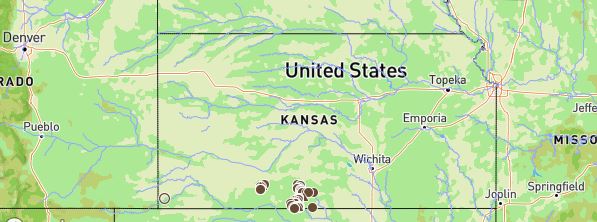
The red-spotted toad has an unusually high pitched trill which can last 3-12 seconds. During the breeding season, the males throat color may darken.
Southern Leopard Frog (Lithobates sphenocephalus)
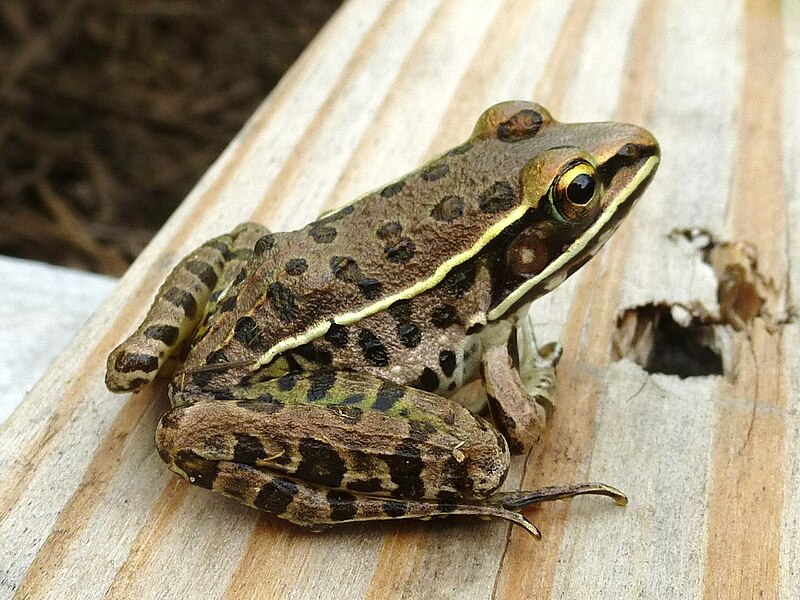
The southern leopard frog is a greenish brown color and has 2 yellow lines down the back and one above the lip. These frogs can be found in shallow freshwater or slightly brackish water. They are usually found a powerful jump or two away from the water, however in summer they may be found far from the water where they venture for insects. They can be found in the eastern portion of Kansas.
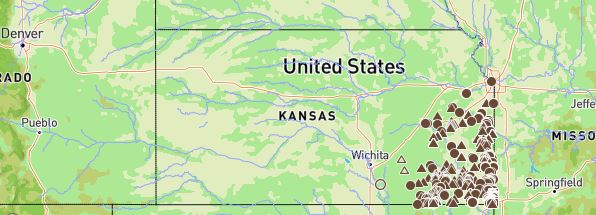
The southern leopard frogs call sounds like a squeaky balloon or chuckling croak. Females may deposit 3,000-5,000 eggs in cluster within the water. Listen below to hear their call.
Spotted Chorus Frog (Pseudacris clarkii)

The spotted chorus frog is a small nocturnal treefrog which is typically grey or olive green in color with green mottling pattern that can reach up to 1.25″ in length. They are typically found in grasslands and prairies. In Kansas, they can be found in the south central area.
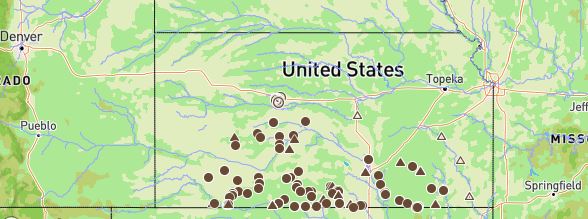
The spotted chorus frog will breed from January to early June and has been known to go into October if the conditions are right. Their call is a loud, medium pitched rapid whank whank whank sound. Listen to their call below:
Spring Peeper (Pseudacris crucifer)
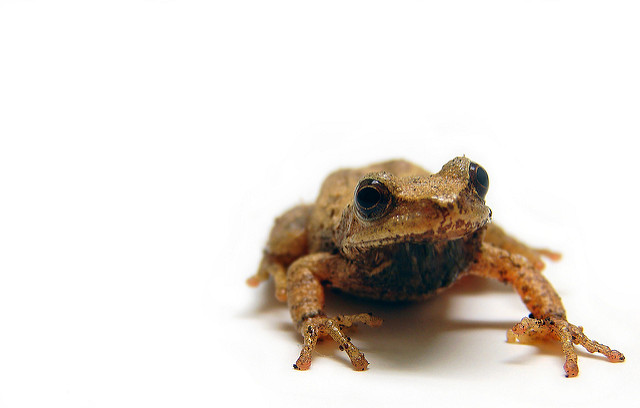
The spring peeper is one of Missouri’s smallest frogs measuring from 3/4″ to 1-1/4″. It can be distinguished by it’s dark colored “X”across its back. This frog is common on the eastern edge of the state of Kansas in woods next to vegetated swamps and marshes.
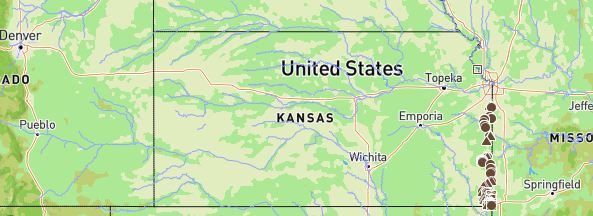
It’s chorus of a shrill high pitched call can be heard from up to a 1/2 mile away! Listen to its call in the video below. The peeper is one of the earliest frog species to breed in the area beginning as early as late February during warm spells. Similar to the American toad, these frogs spend most of its time on land and only are in the water to breed and lay eggs. Like most tree frogs, the spring peeper is nocturnal and loves to hunt ants, spiders and other small insects during the evening.
Strecker’s Chorus Frog (Pseudacris streckeri)

The Strecker’s chorus frog can reach 1.5″. They range in color from light grey, brown, green and have long blotches and typically has a dark strip from their eye to their shoulder. The belly is typically white with yellow or orange around their groin. They can be found in a small area in the southcentral portion of Oklahoma.
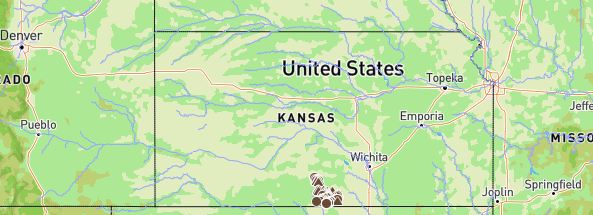
Their call sounds like a single note repeated. Sounds like a bell like whistle.
Western narrow mouth toad (Gastrophryne olivacea)**
**Although it bears the name of “toad” it is actually considered to be a frog.

This frog is typically 1.5″ in length, with females being slightly larger. One defining characteristic of this frog is the fold of skin on the back of the frogs head. The great plain narrow mouth toad is grey or brown in color with smooth thick skin. It can be found in grassy areas on rocky slopes and in rock filled canyons. They will hide under rocks and can sometimes be found with tarantulas. As shown in the photo below, they are typically found on the eastern 2/3rds of Kansas.
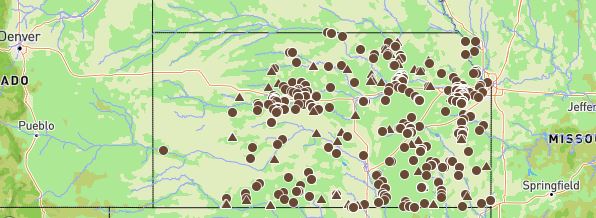
The great plains narrow mouth toad’s call is a nasal buzz lasting only 1-4 seconds. Several calling frogs together sound like bees or a bunch of toy airplanes. I was very surprised by the pitch of their call.
Woodhouse’s Toad (Anaxyrus woodhousii woodhousii)
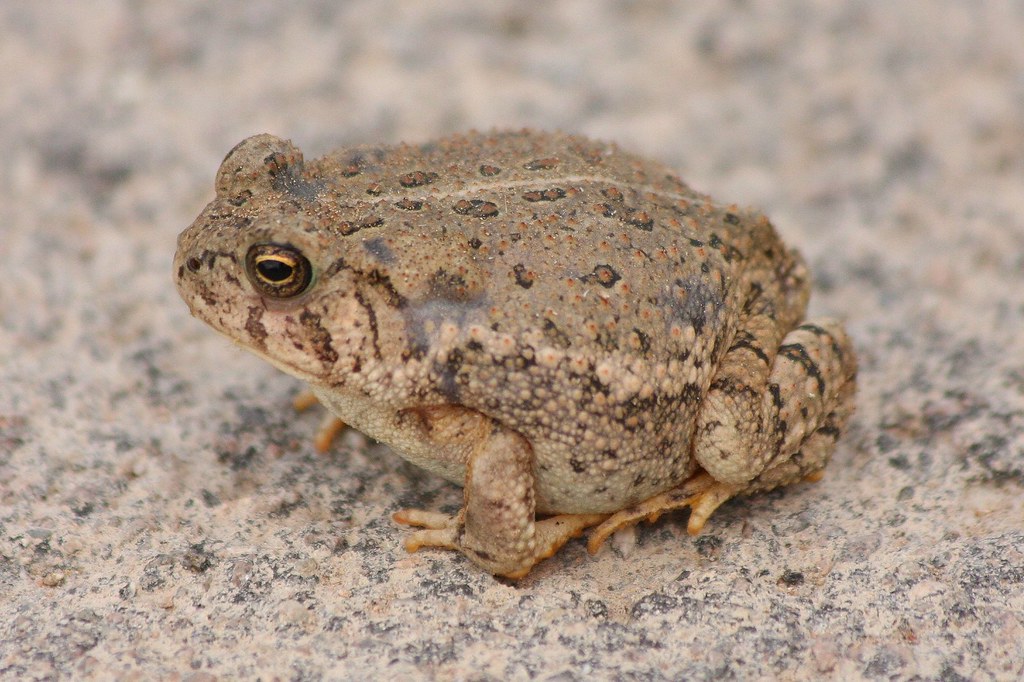
Woodhouse’s toad can vary in color from yellowish brown to greenish grey with a light stripe down the middle of its back. They can reach up to 4″ in length! These toads can be found throughout Kansas. They burrow into soil to escape drought and cold. Woodhouse’s toads are named after a 19th century explorer and naturalist Samuel Woodhouse.
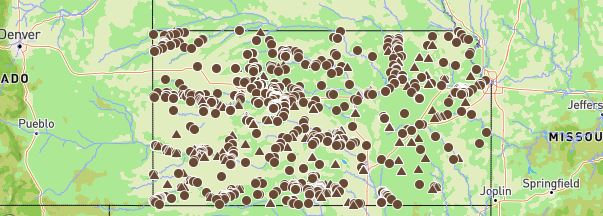
These toads breed from late March to mid-May in marshes, rain pools and other areas lacking strong current. This toad’s call is a loud wahhhhhh lasting between 1-4 seconds and emitted several times a minute. This call is similar to the Fowler’s toad, but with a slightly lower pitch.
Thanks for reading! Check out all of the United State’s native frogs and toads here.
Photo Credits:
Cover photo used by the creative commons license. Text was added. See Original photo by Ngresonance here.
For up to date maps please check out the Kansas Herpetofaunal Atlas.
- Photo from Wikimedia Commons used under the Creative Commons license. Photo taken by Brian Gratwicke. Original Photo Here.
- Photo from Wikimedia Commons used under the Creative Commons license. Photo taken by Brian Gratwicke. Original Photo Here.
- Photo from Wikimedia Commons used under the Creative Commons license. Photo taken by Andy Reago & Chrissy McClarren. Original Photo Here.
- Photo from Flickr Wikimedia Commons used under the Creative Commons license. Photo taken by J. N. Stuart. Original Photo Here.
- Photo from Wikimedia Commons used under the Creative Commons license. Photo taken by Gregory ‘Slobirdr’ Smith. Original Photo Here.
- Photo from Wikimedia Commons used under the Creative Commons license. Photo taken by Fredlyfish4. Original Photo Here.
- Photo from Flickr Wikimedia Commons used under the Creative Commons license. Photo taken by Andrew Hoffman. Original Photo Here.
- Photo from Flickr Wikimedia Commons used under the Creative Commons license. Photo taken by Rusty Clark. Original Photo Here.
- Photo from Wikipedia Commons used under the Creative Commons license. Photo taken by Perlick Laura. Original Photo Here.
- Photo from Wikimedia Commons used under the Creative Commons license. Photo taken by Galactor. Original Photo Here.
- Photo from Flickr Wikimedia Commons used under the Creative Commons license. Photo taken by Brian Gratwicke. Original Photo Here.
- Photo from Wikimedia Commons used under the Creative Commons license. Photo taken by Brian Gratwicke. Original Photo Here.
- Photo from Flickr Wikimedia Commons used under the Creative Commons license. Photo taken by Andrew Hoffman. Original Photo Here.
- Photo from Flickr Wikimedia Commons used under the Creative Commons license. Photo taken by Stanley Trauth. Original Photo Here.
- Photo from Flickr Wikimedia Commons used under the Creative Commons license. Photo taken by Lon & Queta. Original Photo Here.
- Photo from Wikimedia Commons used under the Creative Commons license. Photo taken by Bob Warrick. Original Photo Here.
- Photo from Californiaherps.com and used under the CreativeCommons CC BY-NC-ND 3.0 license. Photo taken by Gary Nafis. Original Photo Here.
- Photo from Flickr Wikimedia Commons used under the Creative Commons license. Photo taken by Matt Reinbold. Original Photo Here.
- Photo from Wikimedia Commons used under the Creative Commons license. Photo taken by Stanley Trauth. Original Photo Here.
- Photo from Wikimedia Commons used under the Creative Commons license. Photo taken by Fernando Mateos-Gonzalez. Original Photo Here.
- Photo from Flickr Wikimedia Commons used under the Creative Commons license. Photo taken by J.N. Stuart. Original Photo Here.
Like “The Frog Lady” on facebook or follow aapanaro on instagram to get some sneak peeks into the frog lady’s frog room!




I live in Olpe Kansas. Our basement is leaking and I was mopping. I found a small black frog which I thought was mud or tar or something. Scared the daylights out of me. I also have a black toad in my shed where I keep my mower. I wondered if black colored toads and frogs are normal in Kansas. I have lived here my whole life and am now 60 years old. This is the first time I have seen black ones.
Tonight (06/17/21) I have seen a Flowlers toad in Dodge City, KS. That’s pretty far from the sights shown on the map, but from your pictures it matches. Under the lights at the Loves Travel Store it looked pale yellow.
Thank you – your site is so helpful in identifying the frogs on my farm!!
Awesome blog. Thank you!