***This post is a part of my series where this year I will be highlighting all of the different states native frogs and toads. Check out this page to see all of the United State’s native frogs broken down by state. ***
Here are the frogs and toads that can be found in Nevada:
Amargosa Toad (Bufo nelsoni)
The amargosa toad can reach between 4-5″ in length. Their backs are an orange-brown to olive coloring with numerous specks and spots and a light stripe down its back. It’s belly is whiteish with black blotches. Its snout is protracted and appears point in profile with NO cranial crests. It can be found near springs, streams and woodlands originally near the Amargosa river. They can be found only in the southern Nevada Oasis Valley.

The call sounds like a squeaky bicycle brake which can only be heard during breeding season. Here is an example of its call.
Arizona Toad (Bufo microscaphus)
The Arizona toad is typically 2-3/4″ in length and can range in color from a brown to a greenish grey with a light stripe across its head. They can typically be found in streams, reservoirs and uplands adjacent to water. In Nevada, they are found in the southern portion.

The Arizona toad will lay its eggs on the bottom of shallow, slow moving streams. It is unique that the adult toads are nocturnal, however the young are active during daylight. This toad will hybridize with the Woodhouse’s toads. It’s call is a trill that will last between 8-10 seconds. Males will not typically create a chorus, but instead will be spread out singly along the stream edge.
Columbia Spotted Frog (Rana luteiventris)
The Columbia Spotted frog has slightly bumpy skin that is smooth and moist. They are typically brown or olive color with irregular spots. They are known for their lower abdomen being bright salmon or a red color. This frog is high aquatic and can rarely be found far from a permanent water source. Within Nevada, they may be found in the Northeastern and central portions of the state.
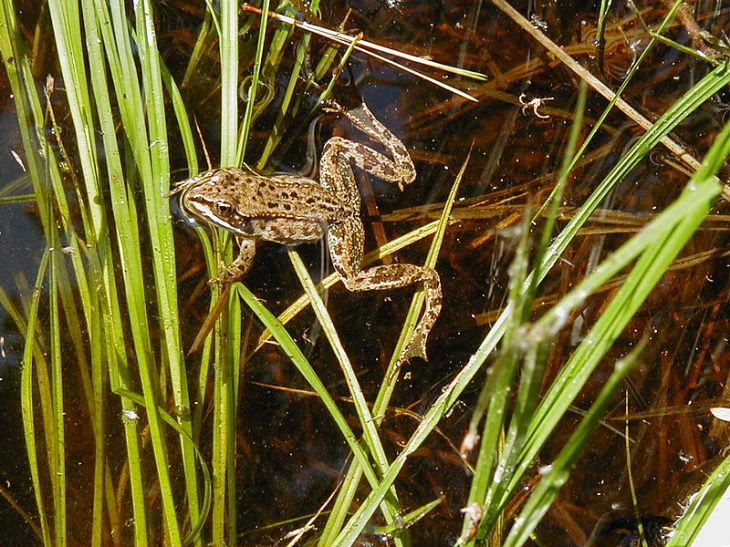
The call of the columbia spotted frog is a clucking noise and sounds like the clicking of your tongue on the roof of your mouth. Listen to the video below and around 52 seconds you can hear the frog calling.
Dixie Valley toad (Bufo williamsi)
The Dixie hot springs toad is the first new U.S. based toad discovery in 2017 in 50 years. It is already one of the rarest toads in the U.S. Its area is restricted to 4 spring fed wetlands on less than 1,500 acres in desert valley. The wetlands make up less than 4 sq. miles of the desert.
The Dixie hot springs toad does not have an advertisement call, but instead the males emit a release call when they come into contact with one another which sounds like a baby bird crying.
Great Basin Spadefoot (Spea intermontana)
The Great Basin spadefoot has a vertical pupil unlike most other toads which have horizontal pupils. They can be greenish, gray or brown with a scattering of darker spots and blotches. Each spadefoot has a wedge shaped digging spade on their hind feet, hence the name. In Nevada, they can be found in the Great Basin Desert area. They are locally common but seldom seen as they spend most of their life buried under the soil.
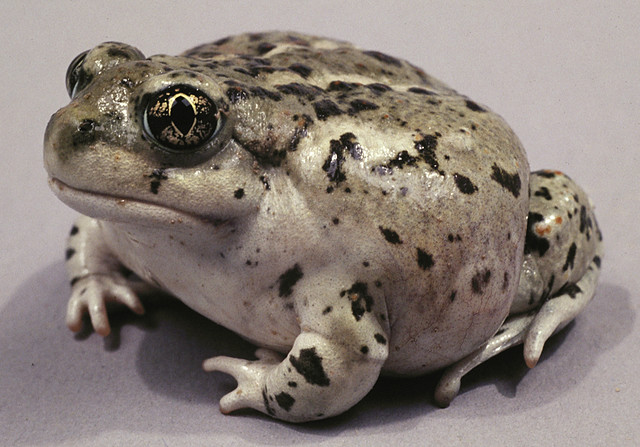
Breeding season is from April – June after heavy spring or summer rain. The eggs hatch within a few days and tadpoles complete metamorphosis in a week. That is the fastest metamophosis rate of any North American anura. Their call is a very nasal waaaaa sound. Listen to it below:
Great Plains Toad (Anaxyrus cognatus)
The great plains toad has numerous warts and prominent ridges on its head. The females will can reach 4.5″ with males being less. The great plains toad can be found throughout Southeastern Nevada. They burrow well in loose soil and are found at night roadside or in ditches where insects are bountiful.

A female great plains toad will lay up to 20,000 eggs. The male great plains toad has a long trill call that lasts 20-50 seconds long and can vary depending on the size of the male and the temperature. Some people have compared this toad’s call to a jackhammer, but go ahead and listen to it for yourself below:
Hot Creek Toad (Anaxyrus boreas)
The hot creek toad was discovered at the same time as the Dixie Valley Toad. It is located 35 miles away in Hot Creek Mountain range which is in a drainage isolated from the Railroad valley toad.

It can only be found in Nye County within Nevada.
Northern Leopard Frog (Lithobates pipiens)
The Northern Leopard frog has 2-3 unevenly spaced rows of irregular oval shaped dots on its back. These frogs are opportunistic feeders, meaning that they will eat anything that fits in their mouth including beetles, ants, smaller frogs – including their own species, birds and even garter snakes. They hibernate underwater in the winter. The northern leopard frog can be found in limited locations in eastern Nevada and the extreme western portion of the state; it is currently disappearing from the state due to disease and environmental stress.
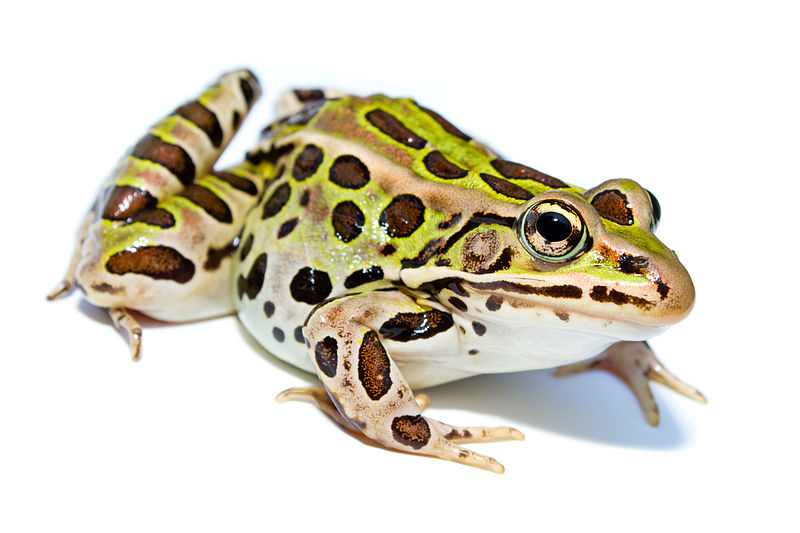
It’s call is like a low and rumbling snore and grunt sound. It has also been known to scream loudly when grasped or frightened by a predator. Listen below to their call.
Pacific Chorus Frog (Pseudacris regilla)
The pacific chorus frog is a small frog that is typically green, gray or brown with a dark stripe running through the eye with a white stomach. They can be found statewide.

Their call is a high pitched two part “kreck-ek” that is usually heard at night. The pacific chorus frog has a second type of call, named an encounter call. This is a trilling sound which serves as a warning when another male gets too close.
Railroad Valley Toad ( Anaxyrus boreas )
The Railroad valley toad was discovered at the same time as the Dixie valley toad and the hot creek toad. It is located in a drainage isolated from the hot creek toad.

It can only be found in Nye County within Nevada.
Red Spotted Toad (Bufo punctatus)
The red-spotted toad is unique due to its gray or brown coloring and red/orange warts. They can reach 3″ in length and can be found in rocky canyons and streams or burrowing under rocks. Typically found in across southern Nevada.
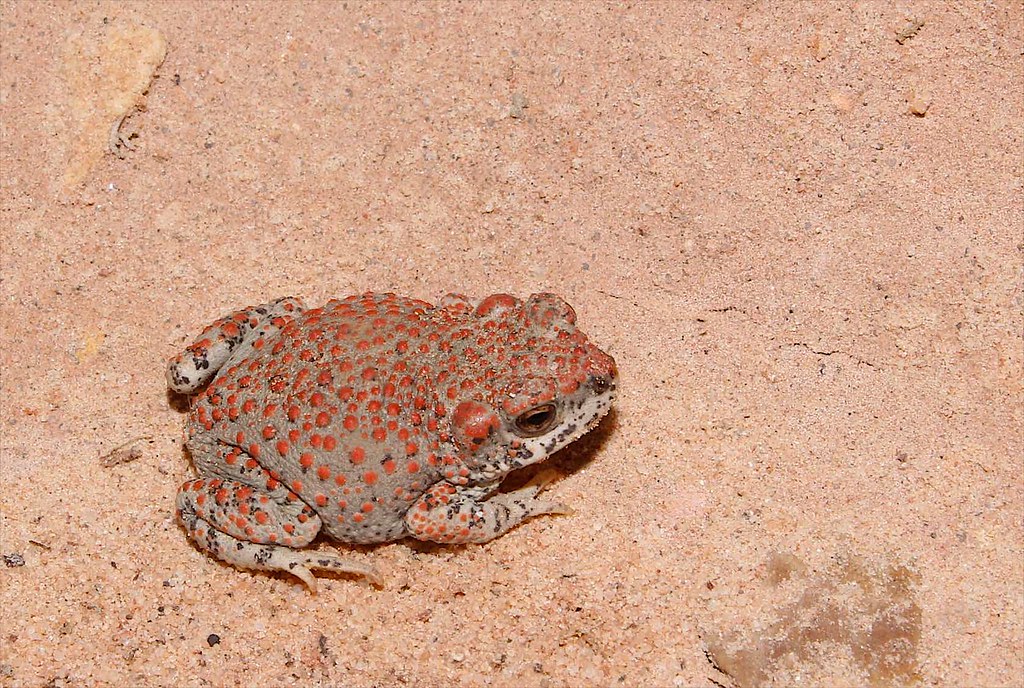
The red-spotted toad has an unusually high pitched trill which can last 3-12 seconds. During the breeding season, the males throat color may darken.
Relict Leopard Frog (Rana onca)
The Relict Leopard frog has been found in southern Nevada near Lake Mead. It is similar to the Northern leopard frog, but the relict frog is typically smaller with shorter legs. They can be brown, gray or greenish with a whitish stomach.

Sierra Nevada Yellow Legged Frog (Rana sierrae)
The Sierra Nevada yellow-legged frog measures between 1.5-3.25″ with females being larger than males. They have a mix of brown and yellow coloring, but can also be grey, red or greenish-brown with dark spots and splotches which can make it appear camouflaged. The belly and underside of their legs are yellow or light-orange, hence where its name comes from. At an elevation of 4,500 ft- 12,000 ft, these frogs can be found in lakes, ponds, meadows and marshes. They occupy western Sierra Nevada north of the Monarch divide (Fresno county) and the eastern slope of the Sierra Nevada (east of the crest) from Inyo County through Mono County (Including Glass Mountain) to the areas north of Lake Tahoe.

If startled, these frogs can produce a mink or garlic like odor to ward off predators. These frogs do not have a vocal sack, but they can vocalize a flat clicking sound. These frogs are Endangered due to non-native trout eating tadpoles and young frogs.
Vegas Valley Leopard Frog (Lithobates fisheri)
The Vegas Valley leopard frog was thought to be extinct since it had not been seen since 1942, after its habitat was drained to build Las Vegas. However, it was determined to be a 100% genetic match to the Chiricahua leopard frogs.

Western Toad (Bufo boreas)
The western toad is chunky, with short legs and numerous warts (it is a toad after all). It can vary in color from brown to green or gray with white and dark mottling on its tummy. There is a conspicuous light colored stripe running down the middle of its back. Their back feet have 2 large rubbery knobs on the heel which they use for digging. The western toad can be found in southeastern Nevada near springs, streams and woodlands.
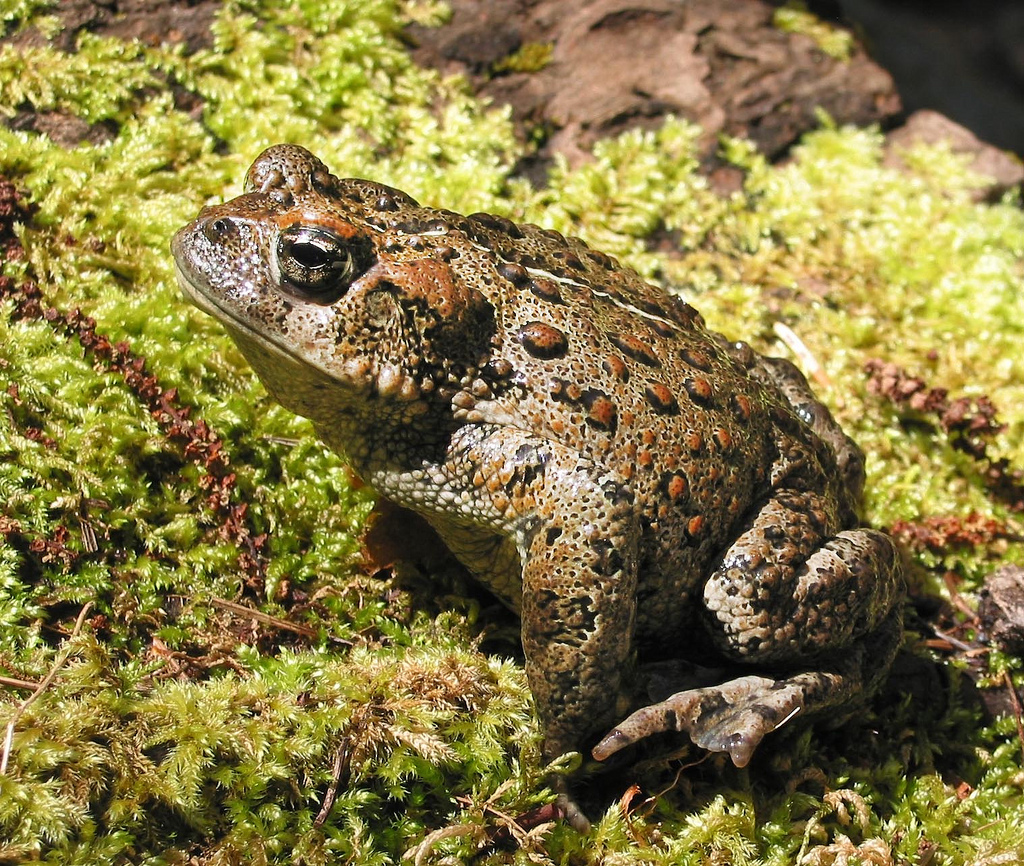
Their call is a soft birdlike clucking call. Listen to it in the video below. When handled, the toad may emit a twittery sound, puff up and urinate. These toads are active during daylight hours and are much more active during damp weather. The western toads population numbers have been declining for unknown reasons; even while in relatively pristine conditions.
Woodhouse’s Toad (Bufo woodhousii)
Woodhouse’s toad can vary in color from yellowish brown to greenish grey with a light stripe down the middle of its back and can reach up to 5″ in length with the males being smaller than females. These toads can be found primarily in deep soils in river valleys and flood plains. They burrow into soil to escape drought and cold. Woodhouse’s toad can be found in southeastern Nevada.
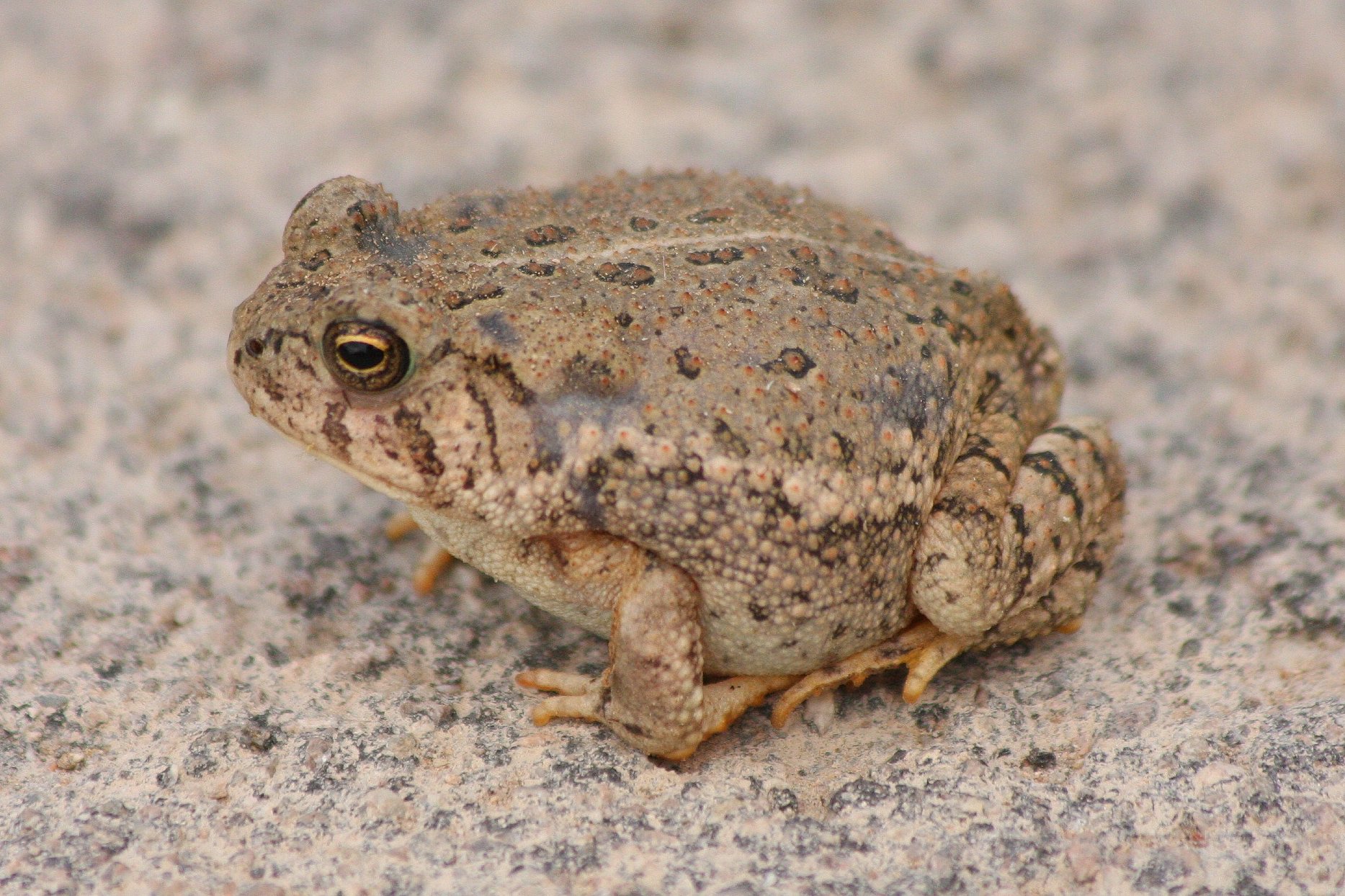
These toads breed from March to July in marshes, rain pools and other areas lacking strong current. This toad’s call is a loud wahhhhhh lasting between 1-4 seconds and emitted several times a minute. It has been compared to the sound of a sheep. This toad can secrete a white toxin that can cause nausea and irregular heart beats if ingested.
Thanks for reading! Check out all of the United State’s native frogs and toads here.

Photo Credits:
Cover photo used by the creative commons license. Text was added. See Original photo by pdphoto.org here.
- Photo from Flickr Wikimedia Commons used under the Creative Commons license. Photo taken by U.S. Department of Agriculture. Original Photo Here.
- Photo from Flickr Wikimedia Commons used under the Creative Commons license. Photo taken by Kerry Matz. Original Photo Here.
- Photo from Wikimedia Commons used under the Creative Commons license. Photo taken by Forest Service Northern Region. Original Photo Here.
- Photo from Flickr Wikimedia Commons used under the Creative Commons license. Photo taken by Kerry Matz. Original Photo Here.
- Photo from Wikimedia Commons used under the Creative Commons license. Photo taken by Galactor. Original Photo Here.
- Photo from CaliforniaHerps.com used under the Attribution-NonCommercial-NoDerivs 3.0 Umported CC-BY=NC=ND 3.0 license. Photo taken by Gary Nafis. Original Photo Here
- Photo from Wikipedia Commons used under the Creative Commons license. Photo taken by Brian Gratwicke. Original Photo Here.
- Photo from Flickr Wikimedia Commons used under the Creative Commons license. Photo taken by born1945. Original Photo Here.
- Photo from CaliforniaHerps.com used under the Attribution-NonCommercial-NoDerivs 3.0 Umported CC-BY=NC=ND 3.0 license. Photo taken by Gary Nafis. Original Photo Here
- Photo from Flickr Wikimedia Commons used under the Creative Commons license. Photo taken by Lon & Queta. Original Photo Here.
- Photo from Wikimedia Commons used under the Creative Commons license. Photo taken by Mary Cynthia Dickerson. Original Photo Here.
- Photo from Wikipedia Commons and used under the public domain license. Photo by Devin Edmonds, USGS. Original photo here.
- Photo from Wikipedia Commons used under the Creative Commons license. Photo taken by Jim Rorabaugh USFWS. Original Photo Here.
- Photo from Flickr and used under the Creative Commons license. Photo by Oregon State University. Original photo here.
- Photo from Flickr Wikimedia Commons used under the Creative Commons license. Photo taken by J.N. Stuart. Original Photo Here.
For more information:
- http://www.ndow.org/uploadedFiles/ndoworg/Content/Nevada_Wildlife/Animals/Fact_Sheets/nvfrogs_toads.pdf
- https://www.birdandhike.com/Wildlife/Amphib/_Amphib.htm
- https://www.biologicaldiversity.org/species/amphibians/Dixie-Valley-toad/index.html
- http://www.mister-toad.com/PacificTreeFrog.html
Like “The Frog Lady” on facebook or follow aapanaro on instagram to get some sneak peeks into the frog lady’s frog room!


 The Frog Lady
Hello frog lady. Most likely there are additional frogs on this list but I have identified both a mature male and female pacific tree frog high in the slot canyons of red rock. Not sure if that is common knowledge or not. They are very distinct and sexually dimorphic with allows for easy identification.
I have just captured 9 Western Toads from my small backyard fish pond in Sparks, NV. We had a huge tadpole population last Spring which I thought came from 3 toads. I guess there might have been more. I’m going to relocate them to one of the many ponds here in the Reno area.
Thank you for your great pictures and information. Can I send you a photo of one I found last night in my yard here in Las Vegas. I am concerned that my dog might get one as they have been showing up recently.
Thanks, Charyll Ruggeroli
CDRuggeroli
I found a small Toad living in grass tunnels in my back yard, I think it is a Great Plains Toad – Anaxyrus cognatus. That Toad is not mentioned as living in Washoe Co. But over the years I have had numerous varieties of Toads living in my back yard and even in my front yard which is water-wise.
Is there another frog, maybe introduced besides the bullfrog that has a mostly green face and brown body, found in the streams of the Henderson wetlands park? My friend says it’s a bullfrog, and I’ve been around bullfrogs and think there are similarities…. but it’s about half the size if the bullfrogs I’ve seen back East. Do they just stay smaller because of the conditions?
Thank you for all your frog wisdom. I live in the boonies about 15 miles NE of Elko. I discovered a frog about the size of my fist late last night. First time I have seen a frog here and we’ve been here 25 years. We have lots of trees and vegetation for this area. I have water out in several places for the critters. What kind of frog could it be? I wish I could have gotten a picture. Thanks for your time. Debo
I found a frog or toad in our pool this morning. I live in Logandale, NV. I enjoyed reading your blog about the Nevada species. I would love to send you a picture just to know what kind it was.