***This post is a part of my series where this year I will be highlighting all of the different states native frogs and toads. Check out this page to see all of the United State’s native frogs broken down by state. ***
Here are the frogs and Toads that can be found in Illinois:
American Bullfrog (Lithobates catesbeianus)
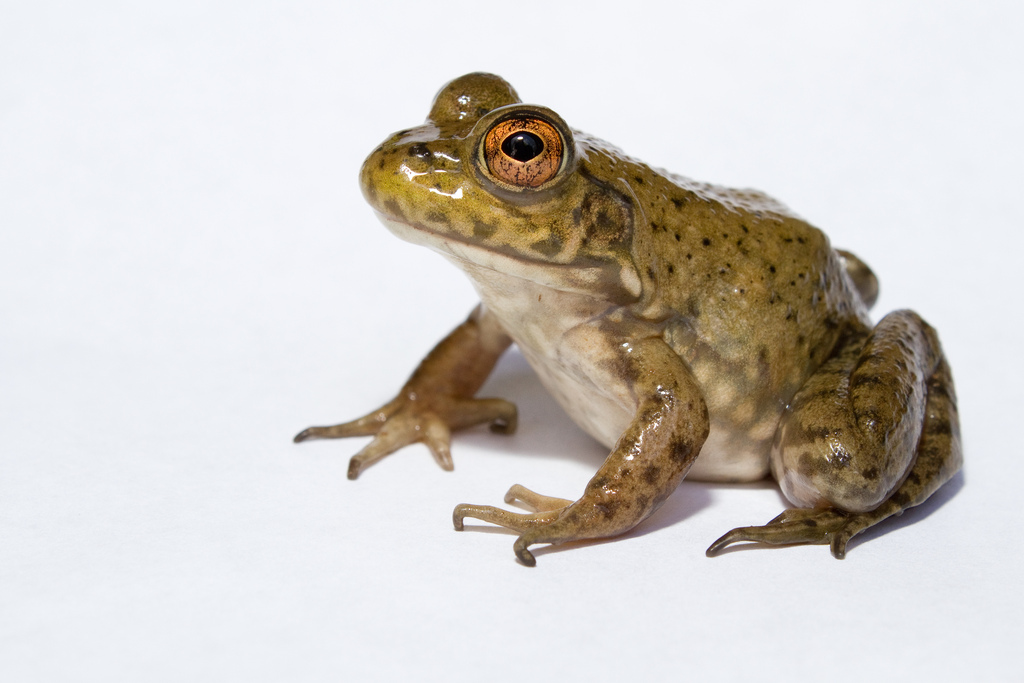
The American Bullfrog is the largest frog in North America. They are typically green or gray-brown with brown spots. They can grow up to 8″ in length and weigh up to 1.5 pounds. The bullfrog can be found near large permanent bodies of water with vegetation near the shorelines. They are abundant within the state of Illinois.

It has a very deep call which resembles the mooing of a cow. Watch the video below to hear! Both genders of the bullfrog croak. Their calls may be heard day or night between May and July.
American Toad (Anaxyrus americanus)
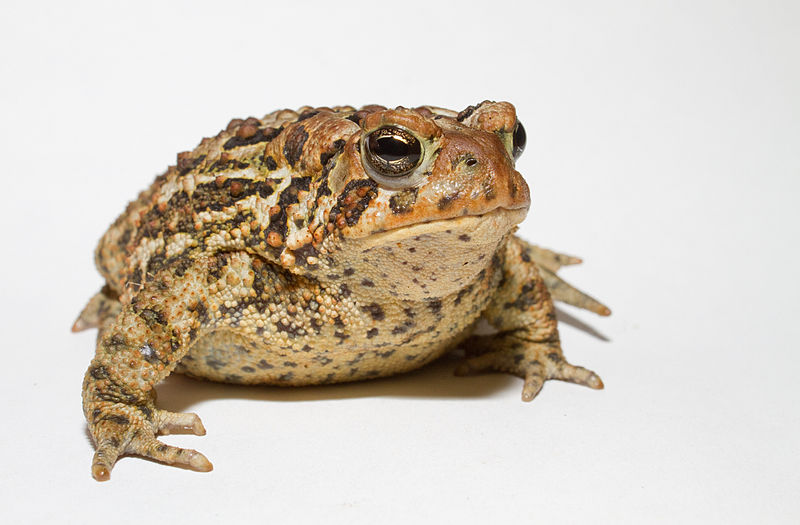
The American toad is mainly nocturnal and is most active when the weather is warm and humid. During the winter, the toad will burrow deep into the ground below the frost line. As the frost line gets deeper, the toads will burrow deeper beneath the ground. They can be found throughout Illinois except for the southeastern corner and have adapted to urban settings where they occasionally can be found within parks and gardens.

The toad has a high musical trill which can last upwards of 30 seconds. American toad is highly terrestrial and can only be found in the water for a short period while breeding and laying eggs. Below is a video that shows the American Toad calling.
Bird Voiced Tree Frog (Hyla avivoca)
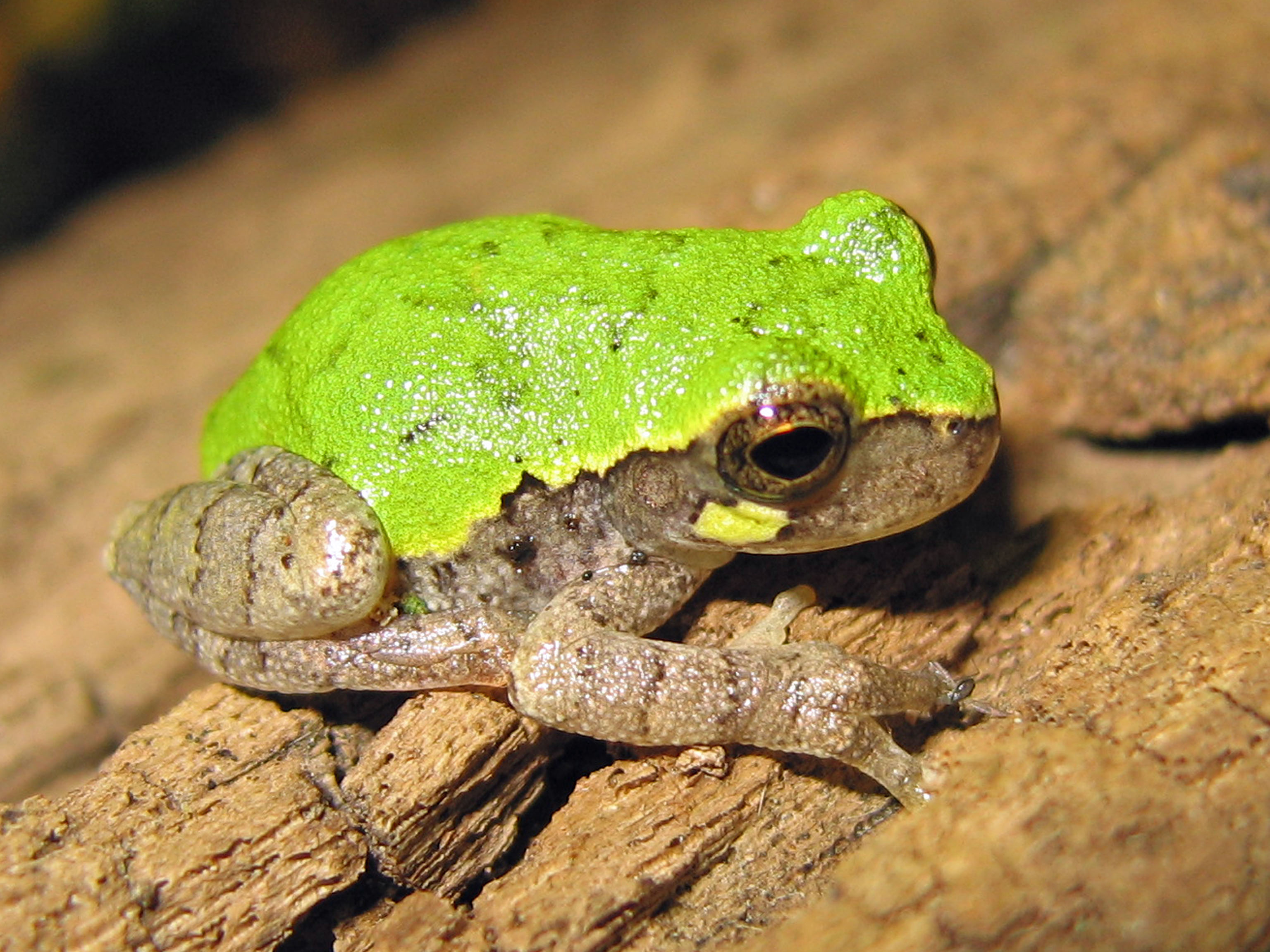
The Bird-Voiced treefrog is highly variable and can change colors, however it is typically shades of gray and green with yellow-green inside its legs. They have a distinctive white/ yellowish spot under their eye. They can be found in the extreme southern tip of Illinois.

They breed from April-August using branches hung over water. Their call is very bird-like, hence the name, with 2-5 whistles per second. Listen to it below:
Blanchard’s Cricket Frog (Acris blanchardi)

The Blanchard’s cricket frog is a small treefrog that’s skin color is quite variable. The skin color can range from brown, green,grey or reddish tan and may change based on environmental conditions. The cricket frog can be found across the state of Illinois. They can be found near ponds, lakes and adjacent streams and tend to breed in quiet water. The cricket frog cannot withstand inundation for more than 24 hours and are not freeze tolerant, which may help attribute to their short lifespan.

Tadpoles typically have a distinct black tipped tail and can reach 1.9″ in length. Breeding occurs between mid-May thru mid-August. The Blanchard crickets call resembles the sound of 2 ball bearings clinking together. Listen to the video below to hear them!
Cope’s Gray Treefrog (Hyla chrysoscelis)
The Cope’s gray treefrog is smaller and smoother skinned than the gray treefrog. The gray treefrog and Cope’s gray treefrog can be difficult to tell apart during breeding while they are both mottled. However, most of the time the Cope’s gray treefrog has a solid lime green colored back. These frogs can be found throughout Illinois near forest edges and favoring brush over trees.
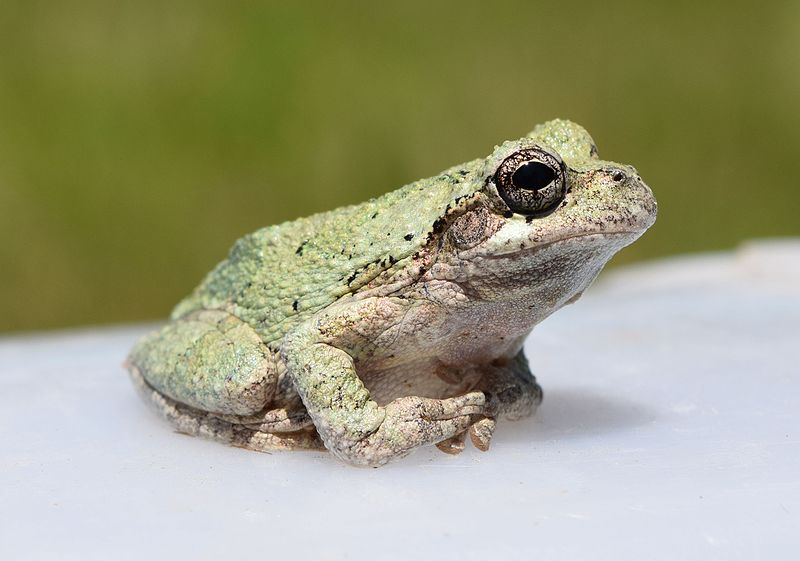
Another way the Cope’s gray treefrog can be distinguished from the gray treefrog is by its call. The Cope’s gray treefrog’s call is short and raspy. Listen to the video below to hear.
Crawfish Frog (Lithobates areolatus)
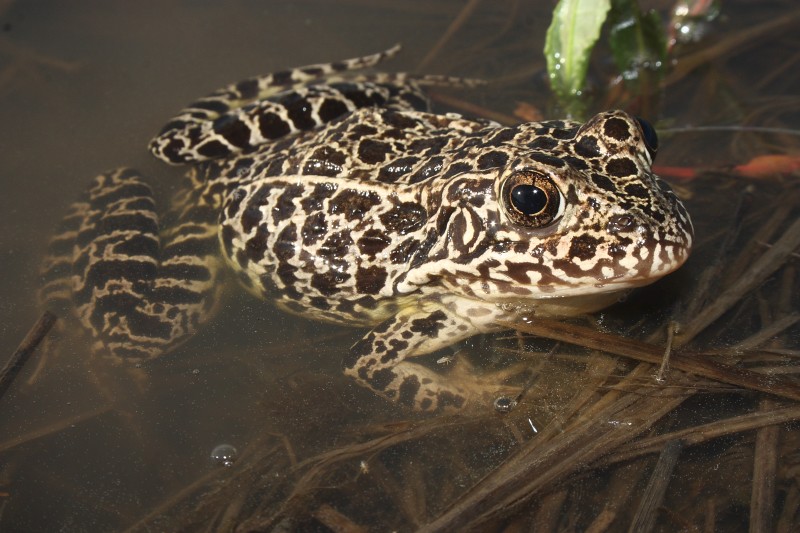
This frog has a large and stubby body with a distinct humped back while it rests. It is covered in many irregular shaped spots and its belly is solid white. It gets its name from its diet which consists of nocturnal beetles, small amphibians and reptiles and crawfish. The crawfish frog can be found in low lying areas including meadows, prairies, brush fields and crawfish holes. In Illinois, it may be found in the southern portion of the state. However, it is rarely seen as it burrows underground.

The crawfish frog breed from late February through April. The males will gather in a fishless pond and call. The females can lay up to 7000 eggs group in large 5-6″ clumps. The pond must maintain through mid-June while all of the froglets transform. The crawfish frog has a loud and deep call which reminds me of a hog. Listen to them below:
Eastern Cricket Frog (Acris crepitans)
The Eastern Cricket frog measures an average of 1″ in length with the females being slightly larger. These frogs can jump a surprisingly long way (5-6′) for their small size. They can range a combination of black, yellow orange or red on a base of brown or green. They may be found near permanent water sources like slow moving streams, margins of lakes and ponds or around marshy areas.

This frog was named for its breeding call which sounds very much like a chirp or trill of a cricket repeated for about 20 beats or like 2 pebbles clicked together. Listen to its call below.
Eastern narrow mouth toad (Gastrophryne carolinensis)**
**Although it bears the name of “toad” it is actually considered to be a frog.
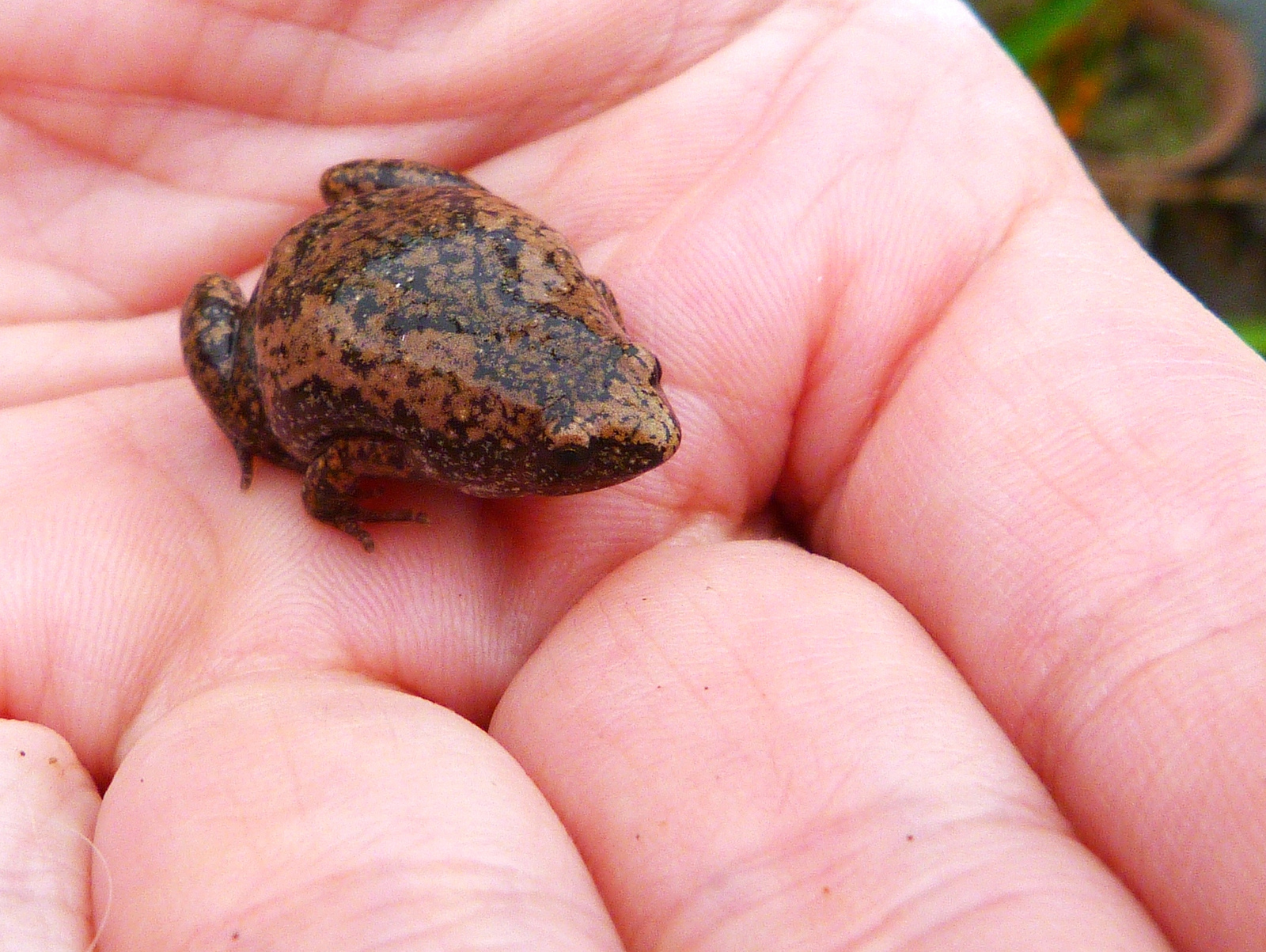
This frog is typically 1″ in length, with females being slightly larger. One defining characteristic of this frog is the fold of skin on the back of the frogs head. The eastern narrow mouth toad is grey or brown in color with smooth thick skin. It can be found in grassy areas on rocky slopes and in rock filled canyons. They will hide under rocks and can sometimes be found with tarantulas. As shown in the photo below, they can be found in the southernmost counties of Illinois.

The male eastern narrow mouth toad’s belly will create a substance that will stick the mating pair together. The female will lay up to 850 eggs on the surface of the water. They will take 2 days to hatch and will be toadlets within a quick 30-60 days. It’s call sounds similar to a bleating sheep with a baaaaa. Several calling frogs together sound like bees or a bunch of toy airplanes. I was very surprised by the pitch of their call. Have a listen below:
Eastern Spadefoot (Scaphiopus holbrookii)
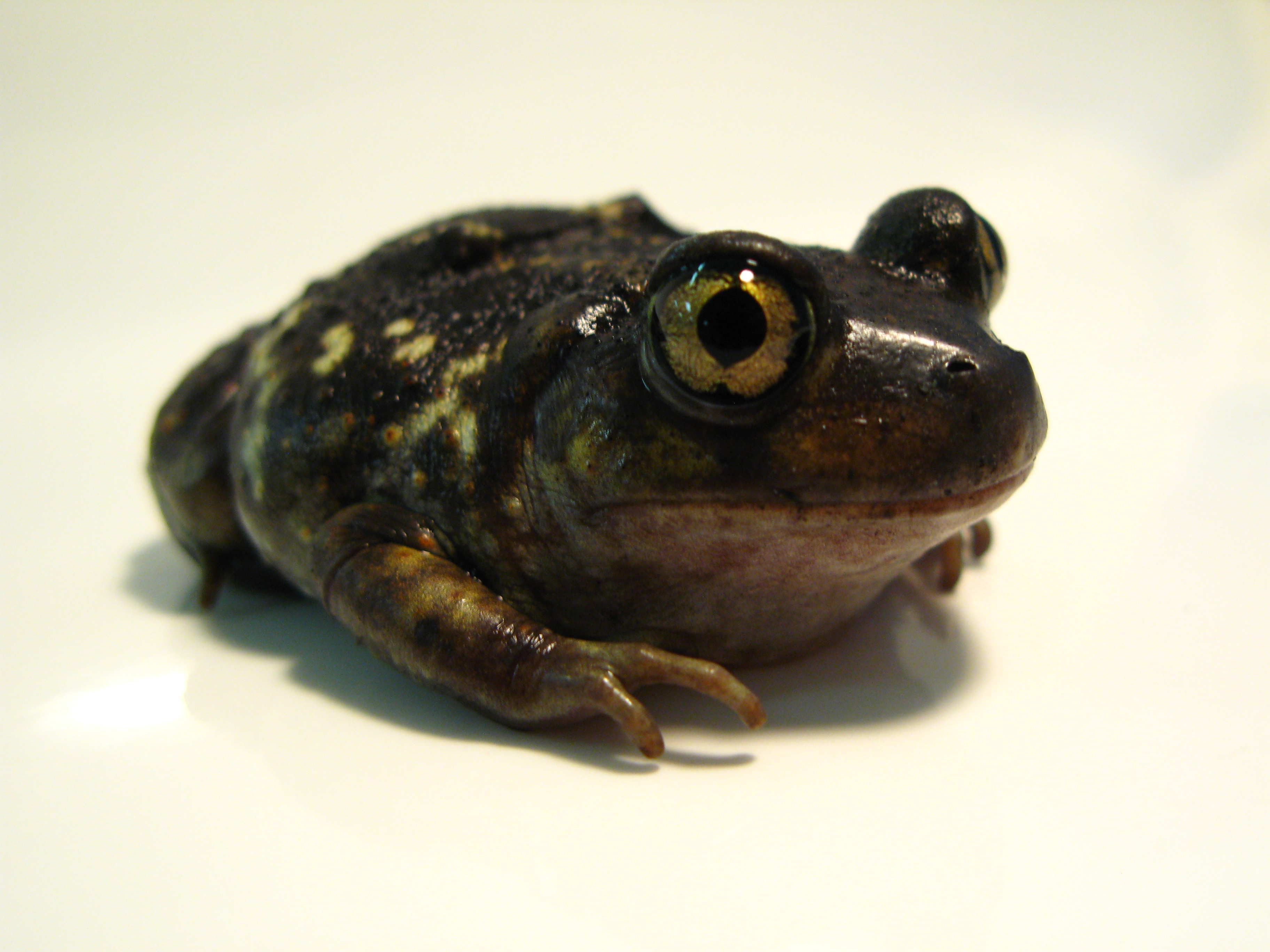
The Eastern Spadefoot has smoother and more moist skin than most toads and is speckled with very tiny warts. This species typically had a light brown to yellow brown color mottled with dark brown. The back of the eastern spadefoot may be dark brown with exception of a couple light yellow stripes. The lines are usually more visible in males. The Eastern Spadefoot has a vertical pupil in the eye similar to a cat. They can be found in the sandy soil along the floodplains of streams and rivers. The Eastern Spadefoot prefers dry habitats with sandy soil, but will breed in flooded fields or ditches in warm rainy weather. They can be found in around the southern boarder of Illinois.

These spadefoots spend almost all of their time buried under ground, with the exception of breeding time. During breeding time, the spadefoots emerge from their burrows and the male will let out a short explosive “wank” call which sounds like a call of a crow. Something odd about these guys is that some people believe that the Eastern spadefoot smells like peanut butter.
Fowler’s Toad (Anaxyrus fowleri)

The Fowler’s toad is usually brown, grey, olive green and rust red in color with darkened warty spots. As these toads become adults, a pale stripe will form down its back. The belly is usually white-ish with one dark spot. These toads are found throughout Illinois, but are more common in the southern half.

This toad has a long, loud, high pitched W-A-A-A-H-H-H call. Listen to it in the video below! It is said that they can be mistaken for a herd of sheep calling in the night. The Fowler’s toad will make a series of quick, short hops as the American toad will make a few larger hops. The Fowler’s toad will amplexus in March – August. The female can release 7,000 -10,000 fertilized eggs which will hatch 2-7 days later.
Gray Treefrog (Hyla versicolor)
The grey treefrog may range in color from green to brown to grey (as shown above). During the day, they may be found sleeping on tree branches or leaves. Their toes have a sticky pad which allows them to easily climb vertically up windows, siding, trees; etc. They may be found throughout Illinois.

Female grey tree frogs may lay 1,000-2,000 eggs in clusters of 10-40. Tadpoles can be distinguished by their redish-orange tails. Male grey treefrogs have a short melodic trill that lasts only a second. They will generally call on warm and humid evenings between April & July. Below is a video of the Gray treefrog calling
Green Frog (Lithobates clamitans)
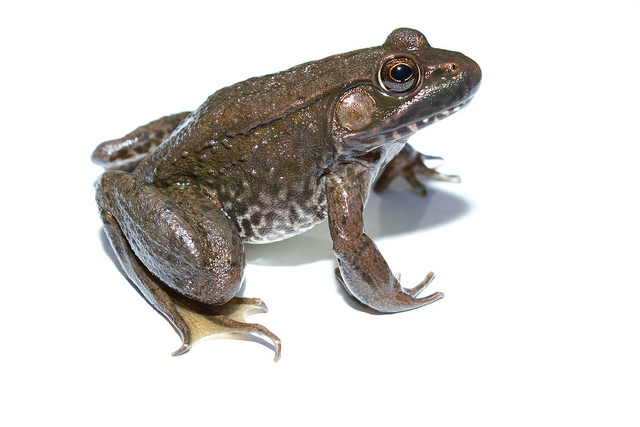
The Green Frog is abundant throughout northern, eastern and the exterior border of the state of Illinois. It is typically greenish-brown with dark mottling on its head, chest and under its legs. The throat color ranges to yellow for a male to white for the females.

These frogs can produce as many as 6 different calls – however the most distinctive sound is a throaty boink that sounds like a loose banjo string being plucked. Listen to the video below to hear!
Green Treefrog (Hyla cinerea)

The green treefrog is slender frog that ranges from bright green to dull green with a white stripe down its side. These frogs can reach 2.5″ and can be easily frightened. They are typically found within marshes, swamps, small ponds and streams. They can be found in the southern portion of Illinois.

On average, a female will lay 400 eggs. Breeding takes place April – August. It has been noted that the green treefrog will choose its prey not based on size, but based on activity level. With the most active being eaten first. The male’s call is a single note repeated over and over sounding like a “queenk”. Listen to their call below.
Illinois Chorus Frog (Pseudacris illinoensis)

The Illinois chorus frog is a tan to tanish grey frog with many dark brown or grey irregular markings. This frog has a V shaped marking between the eyes, a dark spot below each eye and a dark line from snout to shoulder. This member of the treefrog family acts similar to a toad, where most of its years are spent underground in sandy soil. This frog can be found in the central and southcentral area of Illinois.

It breeds in early spring. Females will lay clusters of eggs during heavy rain and when temperatures exceed 48 degrees F. It’s call sounds like a high-pitched birdlike whistle as can be heard below:
Northern Leopard Frog (Lithobates pipiens)
The Northern Leopard frog has 2-3 unevenly spaced rows of irregular oval shaped dots on its back. The northern leopard frog can be found within Northern third of Illinois. It needs 3 different habitats to match its lifestyle – permanent water for overwintering, floodplains & marshes for breeding & meadows and fields for foraging.
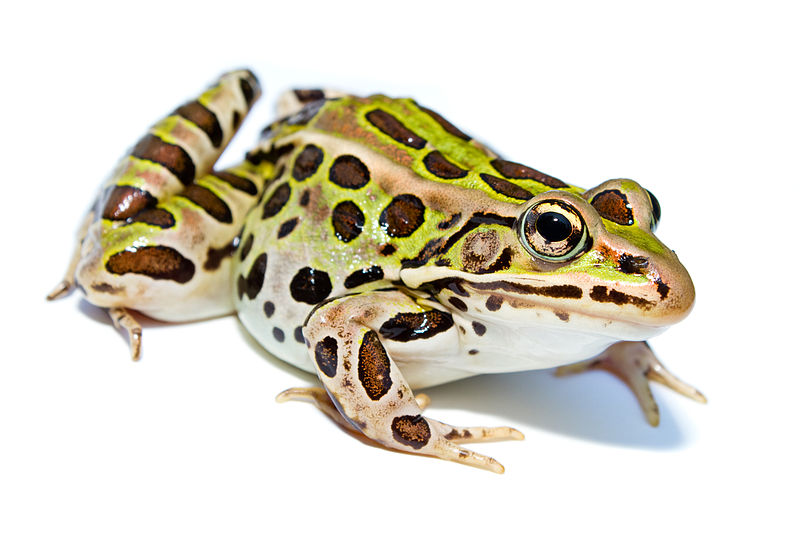
These frogs are opportunistic feeders, meaning that they will eat anything that fits in their mouth including beetles, ants, smaller frogs – including their own species, birds and even garter snakes. It’s call is like a low and rumbling snore and grunt sound. It has also been known to scream loudly when grasped or frightened by a predator. Listen below to their call.
Pickerel Frog (Lithobates palustris)

The Pickerel frog looks very similar to the Northern Leopard frog; however the pickerel frog has 2 parallel rows of squareish spots down its back. These frogs are listed as a species of greatest need of conservancy in Illinois as it has a complex habitat requirements. It looks for a cold stream to overwinter in and then moves to warmer ponds for breeding and then forests to forage for food. It can be found near the northern, eastern and southwestern borders of Illinois.

As a defense the skin of the pickerel frog produces a toxic substance which makes them unappealing to most predators. Listen to the video below to hear their call. It is similar to the Northern Leopard frog, however it is shorter and faster, causing it to sound more like a finger running over tines on a comb.
Plains Leopard Frog (Lithobates blairi)

This frog is brown with large rounded dark spots with light borders. As you can see from the photo above, the ear drum is very distinct. The Plains leopard frog is known for its distinctively broken and displaced skin ridges along the back and can reach 3-3/4″. They can be found near streams, ponds, creeks and ditches. In wet, mild weather, they may be found far away from water. The range of the Plain’s leopard frog is scattered across the central and southern portion of Illinois.

Female plains leopard frogs will lay a mass of eggs which can hold up to 6,500 eggs. Tadpoles will become frogs in midsummer or may even transform the following spring. The plains leopard frog’s call includes a few low grunting sounds along with a series of short clucks. Listen to their call below:
Southern Leopard Frog (Lithobates sphenocephala)
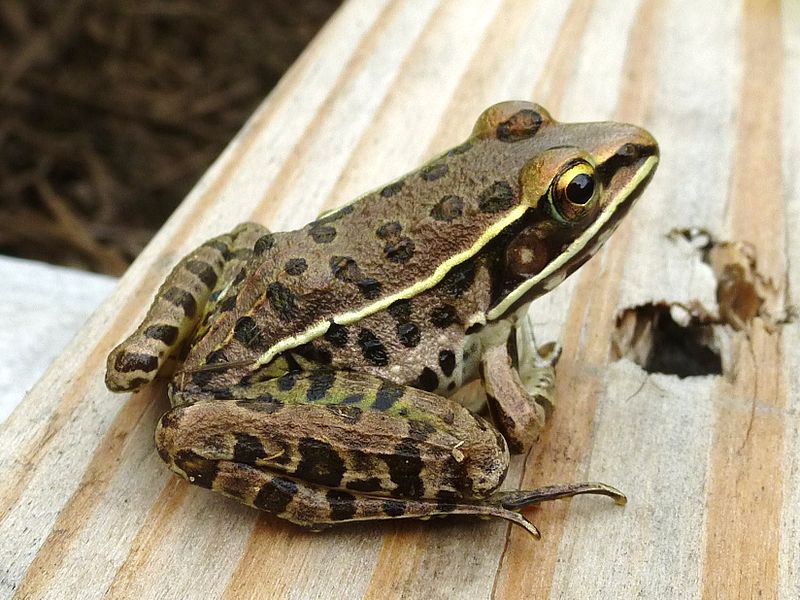
The Southern Leopard frog has 2-3 unevenly spaced rows of irregular oval shaped dots on its back. The southern leopard frog has been found in the southern half of Illinois. It needs 3 different habitats to match its lifestyle – permanent water for overwintering, floodplains & marshes for breeding & meadows and fields for foraging.

These frogs are opportunistic feeders, meaning that they will eat anything that fits in their mouth including beetles, ants, smaller frogs – including their own species, birds and even garter snakes. It’s call is like a low and rumbling snore and grunt sound. It has also been known to scream loudly when grasped or frightened by a predator. Listen below to their call.
Spring Peeper (Pseudacris crucifer)
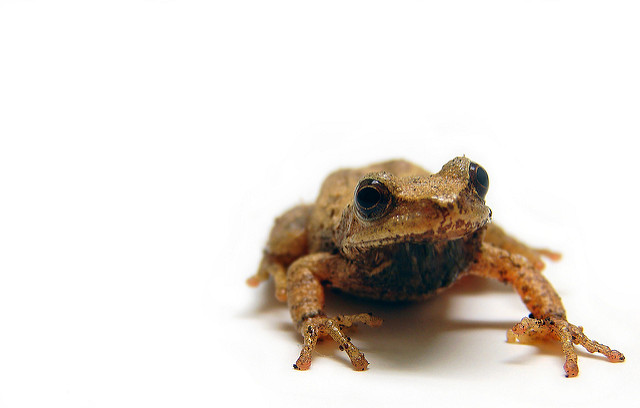
The spring peeper measures from 3/4″ to 1-1/2″. It can be distinguished by it’s dark colored “X”across its back. This frog is quite common throughout the state of Illinois except for within the Grand Prairie.

It’s chorus of a shrill high pitched call can be heard from up to a 1/2 mile away! Listen to its call in the video below. Similar to the American toad, these frogs spend most of its time on land and only are in the water to breed and lay eggs. Like most tree frogs, the spring peeper is nocturnal and loves to hunt ants, spiders and other small insects during the evening.
Upland Chorus Frog (Pseudacris feriarum)
Upland chorus frogs are usually brown, grey brown or reddish brown in color with darker blotching. They have 3 stripes running along their back with a dark triangular spot between the eyes. These frogs are secretive and rarely seen or heard except immediately after it rains. They can be found in a variety of habitats including vegetated areas not far from a permanent water source. In Illinois, they can be found statewide.
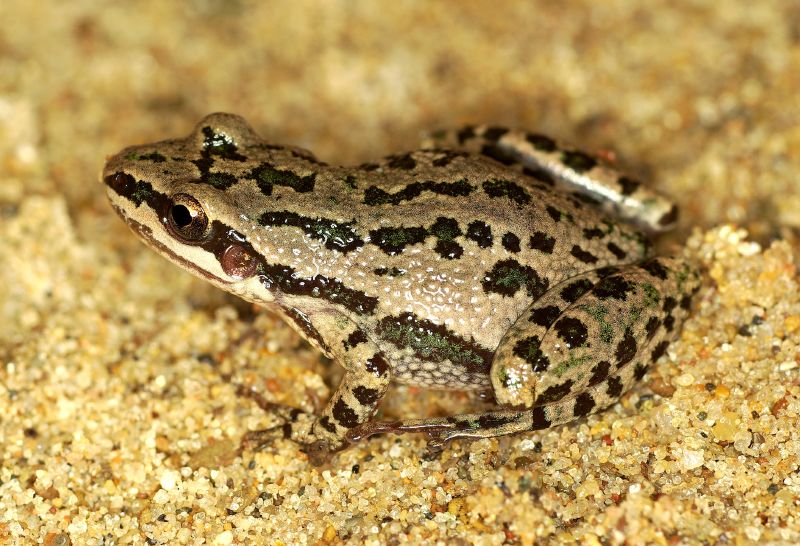
The call of the upland chorus frog is a raspy trill sound which ascends higher in pitch, similar to running a finger across tines on a comb. Listen to the males call below.
Western Chorus Frog (Pseudacris triseriata)
The western chorus frog is relatively small reaching 1.5″. They can range from greenish grey, reddish to olive to brown with 3 stripes down its back. The western chorus frog prefers freshwater areas like marshes or swamps to cut down on predication.
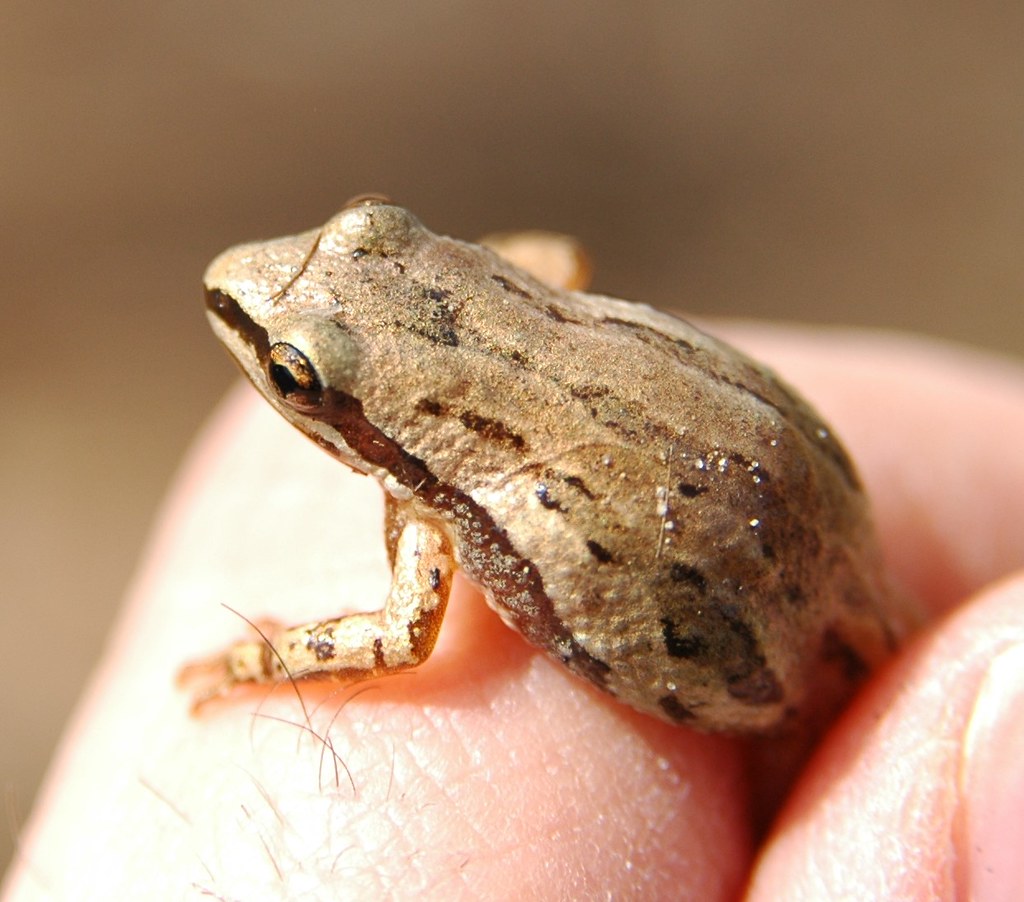
These frogs are nocturnal and rather secretive so they can be hard to find. Best time to find them is on a warm summer night when they come out to call. The call of the Western chorus frog is a “cree-ee-eek” as heard in the video below.
Wood Frog (Lithobates sylvaticus)
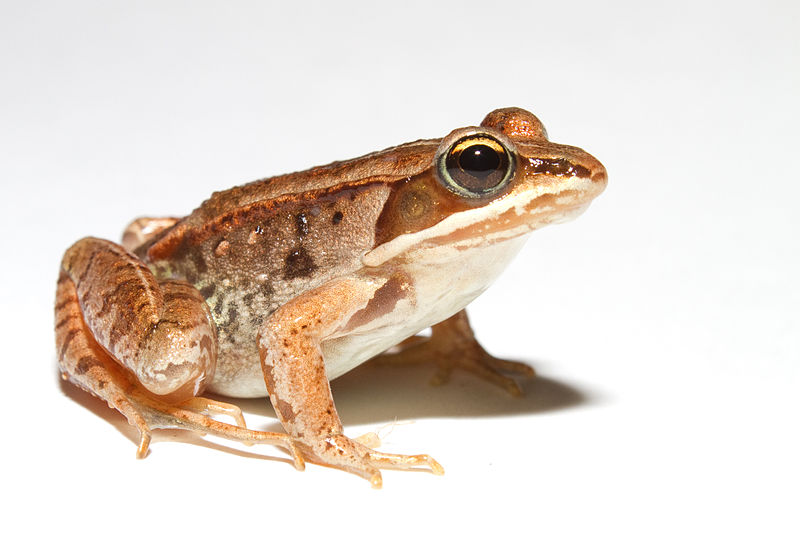
The Wood frog is known as a brown, tan or rust colored frog with a dark colored around its eyes. Some call it a “robbers mask”. These frogs can be found on the eastern half of the state of Illinois.

Their call sounds like a quacking of a duck. Watch the video below to hear! Two interesting facts about the wood frog, is that while the frogs do not show any paternal care to their young, it has been discovered that tadpoles that have been separated from parents can pick their parents out and aggregate around them. Secondly, the wood frog is very tolerable to cold temperatures. These frogs can tolerate complete freezing of up to 65% of their body as they pump any water within their body to their extremities and at the same time pump large amount of glucose from the liver into their cells. This creates a syrupy sugar solution which acts as antifreeze within their body. Their blood will freeze, the heart will stop beating and all breathing and muscle movements cease until early spring as they begin to thaw and re-animate.
Thanks for reading! Check out all of the United State’s native frogs and toads here.

Photo Credits:
Cover photo used by the creative commons license. Text was added. See Original photo by Kevin Young here.
- Photo from Wikimedia Commons used under the Creative Commons license. Photo taken by Brian Gratwicke. Original Photo Here.
- Photo from Wikimedia Commons used under the Creative Commons license. Photo taken by Brian Gratwicke. Original Photo Here.
- Photo from Flickr Wikimedia Commons used under the Creative Commons license. Photo taken by Greg Schechter. Original Photo Here.
- Photo from Wikimedia Commons used under the Creative Commons license. Photo taken by Andy Reago & Chrissy McClarren. Original Photo Here.
- Photo from Wikimedia Commons used under the Creative Commons license. Photo taken by Fredlyfish4. Original Photo Here.
- Photo from Flickr Wikimedia Commons used under the Creative Commons license. Photo taken by Andrew Hoffman. Original Photo Here.
- Photo from Wikimedia Commons used under the Creative Commons license. Photo taken by Andy Reago & Chrissy McClarren. Original Photo Here.
- Photo from Flickr Wikimedia Commons used under the Creative Commons license. Photo taken by Rusty Clark. Original Photo Here.
- Photo from Connecticut Department of Energy & Environmental Protection. Original photo here.
- Photo from Wikipedia Commons used under the Creative Commons license. Photo taken by Perlick Laura. Original Photo Here.
- Photo from Wikimedia Commons used under the Creative Commons license. Photo taken by Patrick Coin. Original Photo Here.
- Photo from Flickr Wikimedia Commons used under the Creative Commons license. Photo taken by Matt Reinbold. Original Photo Here.
- Photo from Flickr Wikimedia Commons used under the Creative Commons license. Photo taken by Jarek Tuszynski. Original Photo Here.
- Photo from Wikimedia Commons used under the Creative Commons license. Photo taken by Stanley Trauth. Original Photo Here.
- Photo from Wikipedia Commons used under the Creative Commons license. Photo taken by Brian Gratwicke. Original Photo Here.
- Photo from Wikimedia Commons used under the Creative Commons license. Photo taken by Brian Gratwicke. Original Photo Here.
- Photo from Wikimedia Commons used under the Creative Commons license. Photo taken by Stanley Trauth. Original Photo Here.
- Photo from Wikimedia Commons used under the Creative Commons license. Photo taken by Bob Warrick. Original Photo Here.
- Photo from ADW used under the creative commons license. Photo taken by James Harding. Original Photo Here.
- Photo from Flickr Wikimedia Commons used under the Creative Commons license. Photo taken by Andrew Hollander. Original Photo Here.
- Photo from Flickr Wikimedia Commons used under the Creative Commons license. Photo taken by Mark Nenadov. Original Photo Here.
- Photo from Wikimedia Commons used under the Creative Commons license. Photo taken by Brian Gratwicke. Original Photo Here.
Like “The Frog Lady” on facebook or follow aapanaro on instagram to get some sneak peeks into the frog lady’s frog room!


 The Frog Lady
Great informational read, i appreciate the detail!!!