***This post is a part of my series where this year I will be highlighting all of the different states native frogs and toads. Check out this page to see all of the United State’s native frogs broken down by state. ***
Here are the frogs and Toads that can be found in Minnesota:
American Bullfrog (Lithobates catesbeianus)
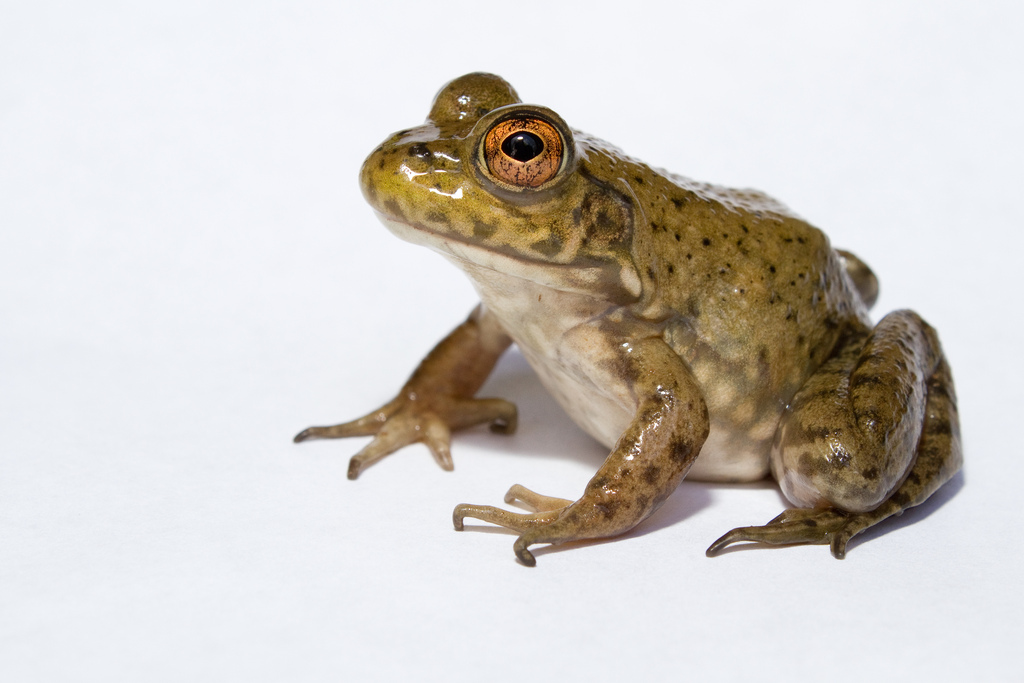
The American Bullfrog is the largest frog in North America. They are typically green or gray-brown with brown spots. They can grow up to 8″ in length and weigh up to 1.5 pounds. The bullfrog can be found near large permanent bodies of water with vegetation near the shorelines. They can be found in a few scattered areas within Minnesota.

It has a very deep call which resembles the mooing of a cow. Watch the video below to hear! Both genders of the bullfrog croak. Their calls may be heard day or night between June-July.
American Toad (Anaxyrus americanus)
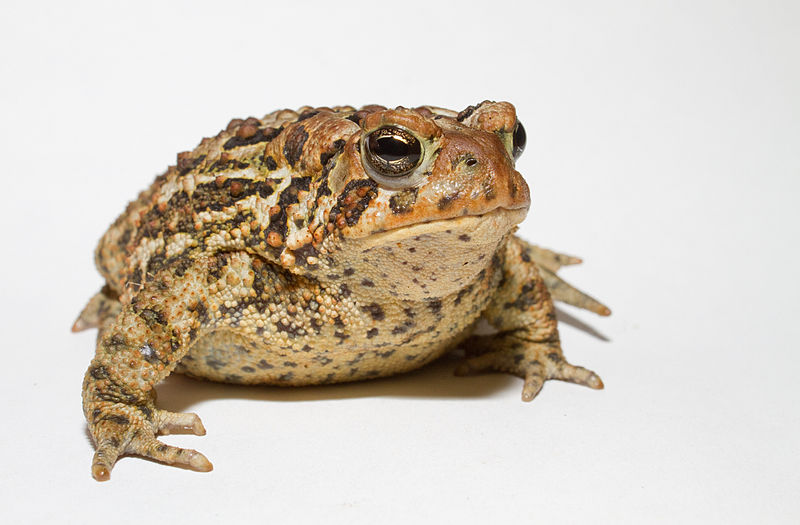
The American toad is mainly nocturnal and is most active when the weather is warm and humid. During the winter, the toad will burrow deep into the ground below the frost line. As the frost line gets deeper, the toads will burrow deeper beneath the ground. They can be found throughout Minnesota except for the northeastern corner of the state.

The toad has a high musical trill which can last upwards of 30 seconds. American toad is highly terrestrial and can only be found in the water for a short period while breeding and laying eggs. Below is a video that shows the American Toad calling.
Boreal Chorus Frog (Pseudacris maculata)

The Boreal Chorus frog is brown with 3 dark lateral stripes or spots down its back with a white upper lip and measures up to 1-1/2″ long. These frogs are typically found near heavily vegetated bodies of water, but also need a shallow open area for breeding. These frogs may be found sstatewide within Minnesota.

The boreal chorus frog sounds similar to the spring peeper in that it sounds like fingers running over a comb, however the boreal chorus frog’s call is more tinny and mechanical opposed to the musical whistle of the spring peeper. Females lay 500-1,500 eggs in groups of 5-300. Listen to the call below.
Canadian Toad (Anaxyrus hemiophrys)

The Canadian toad vary in color from brown to gray and may have a green or red tiny. Belly is pale white or cream with fine speckling pattern. These toads typically inhabit lakes, ponds and are often not far from the water. They are nocturnal and are very strong swimmers. They will often seek the safety of water when threatened. Even though these toads do not have spades on their back feet like the spade toads, they will often burrow into the ground similar to the spadefoot toad. In Minnesota, they can be found in the western counties.

It’s call is similar to the American toad, however it is lower in pitch and shorter.
Cope’s Gray Treefrog (Hyla chrysoscelis)
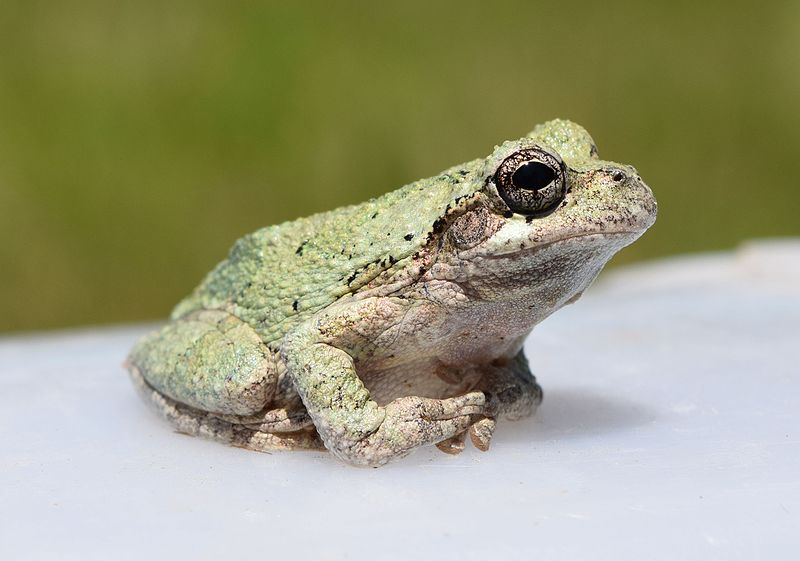
The Cope’s gray treefrog is smaller and smoother skinned than the gray treefrog. The gray treefrog and Cope’s gray treefrog can be difficult to tell apart during breeding while they are both mottled. However, most of the time the Cope’s gray treefrog has a solid lime green colored back. These frogs are common throughout the middle section of Minnesota.

Another way the Cope’s gray treefrog can be distinguished from the gray treefrog is by its call. The Cope’s gray treefrog’s call is short and raspy. Listen to the video below to hear.
Gray Treefrog (Hyla versicolor)

The grey treefrog may range in color from green to brown to grey (as shown above). During the day, they may be found sleeping on tree branches or leaves. Their toes have a sticky pad which allows them to easily climb vertically up windows, siding, trees; etc. They may be found throughout the state except for the southwestern corner of the state of Minnesota.

Female grey tree frogs may lay 1,000-2,000 eggs in clusters of 10-40. Tadpoles can be distinguished by their redish-orange tails. Male grey treefrogs have a short melodic trill that lasts only a second. They will generally call on warm and humid evenings between April & July. Below is a video of the Gray treefrog calling.
Great Plains Toad (Anaxyrus cognatus)

The great plains toad has numerous warts and prominent ridges on its head. The females will typically reach 3″ with males being less. The great plains toad can be found along the western counties of Minnesota. They burrow well in loose soil and are found at night roadside or in ditches where insects are bountiful.

A female great plains toad will lay up to 20,000 eggs. The male great plains toad has a long trill call that lasts 20-50 seconds long and can vary depending on the size of the male and the temperature. Some people have compared this toad’s call to a jackhammer, but go ahead and listen to it for yourself below:
Green Frog (Lithobates clamitans)
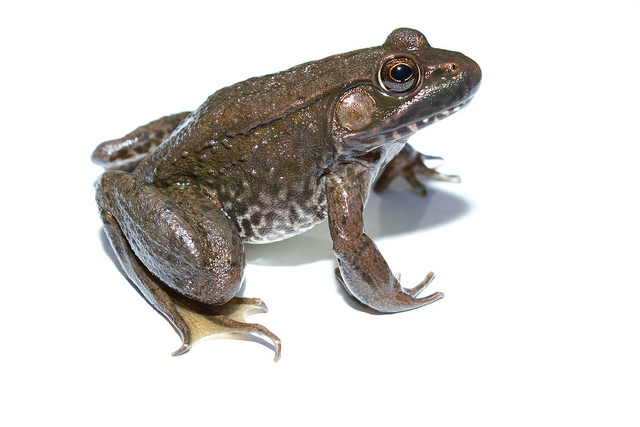
The Green Frog is abundant throughout the eastern half of Minnesota. It is typically greenish-brown with dark mottling on its head, chest and under its legs. The throat color ranges to yellow for a male to white for the females.

These frogs can produce as many as 6 different calls – however the most distinctive sound is a throaty boink that sounds like a loose banjo string being plucked. Listen to the video below to hear!
Mink Frog (Lithobates septentrionalis)
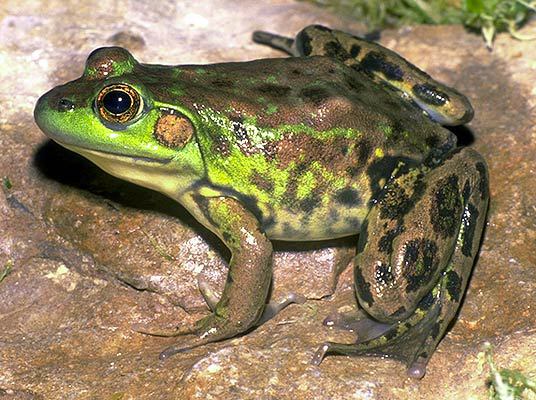
The Mink frog is a green and brown frog that can be found in the water near lilypads. The lilypads are used as stepping stones, basking sites & shelter. They are only found in the northeastern-central area of Minnesota. Mink frogs are notoriously secretive and can be hard to find.

The female may lay up to 4,000 eggs in the spring and some tadpoles will transform to frogs in 3 months, while others will transform the following spring. Individually, their call sounds like a series of taps which sound like pieces of wood being tapped together. As a group, their calls sound like horse’s hooves on a cobblestone path. Listen to the video below to hear! The Mink frog has been said to produce a musky odor upon handling.
Northern Leopard Frog (Lithobates pipiens)
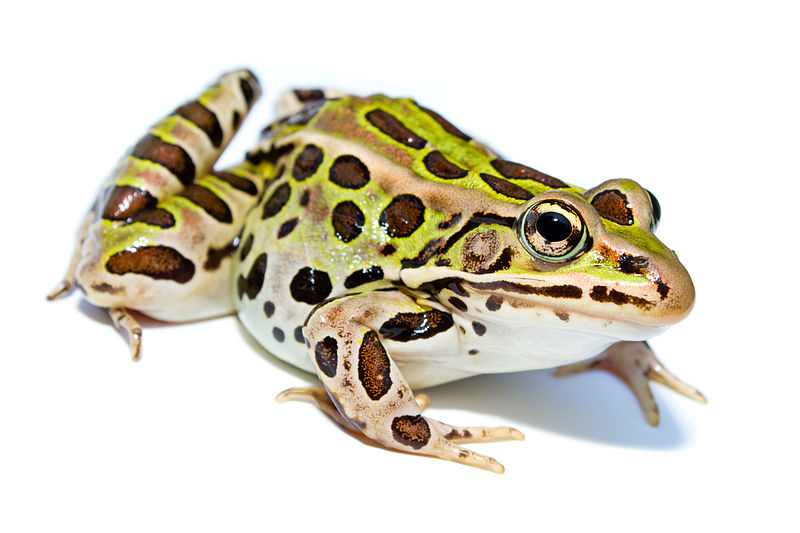
The Northern Leopard frog has 2-3 unevenly spaced rows of irregular oval shaped dots on its back. The northern leopard frog is fairly common within Minnesota and can be found statewide. It needs 3 different habitats to match its lifestyle – permanent water for overwintering, floodplains & marshes for breeding & meadows and fields for foraging.
These frogs are opportunistic feeders, meaning that they will eat anything that fits in their mouth including beetles, ants, smaller frogs – including their own species, birds and even garter snakes. It’s call is like a low and rumbling snore and grunt sound. It has also been known to scream loudly when grasped or frightened by a predator. Listen below to their call.
Pickerel Frog (Lithobates palustris)

The Pickerel frog looks very similar to the Northern Leopard frog; however the pickerel frog has 2 parallel rows of squareish spots down its back. These frogs are rare statewide and can only be found in the southeastern corner of Minnesota. They are often found near beaver ponds with dense vegetation.

As a defense the skin of the pickerel frog produces a toxic substance which makes them unappealing to most predators. Listen to the video below to hear their call. It is similar to the Northern Leopard frog, however it is shorter and faster, causing it to sound more like a finger running over tines on a comb. Breeding season in Michigan is April-May.
Spring Peeper (Pseudacris crucifer)
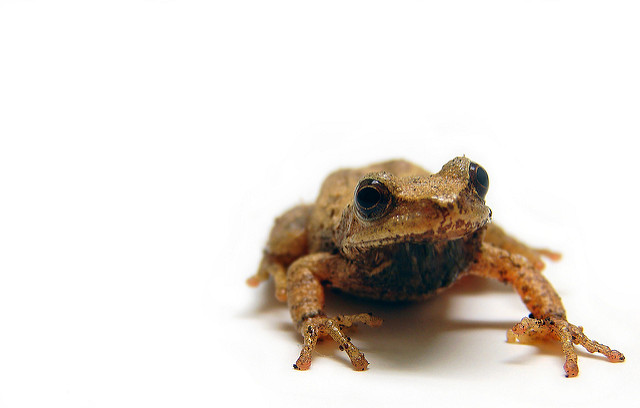
The spring peeper is one of the smallest frogs measuring from 1″ to 1-1/2″. It can be distinguished by it’s dark colored “X”across its back. This frog can be found across the central region of Minnesota in woods next to vegetated swamps and marshes.

It’s chorus of a shrill high pitched call can be heard from up to a 1/2 mile away! Listen to its call in the video below. Similar to the American toad, these frogs spend most of its time on land and only are in the water to breed and lay eggs. Like most tree frogs, the spring peeper is nocturnal and loves to hunt ants, spiders and other small insects during the evening.
Wood Frog (Lithobates sylvaticus)
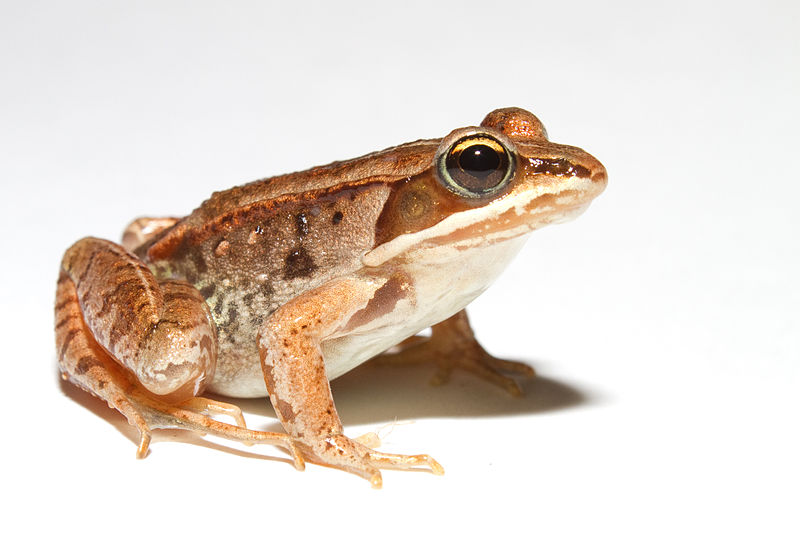
The Wood frog is known as a brown, tan or rust colored frog with a dark colored around its eyes. Some call it a “robbers mask”. These frogs are common in the northern half of Minnesota.

Their call sounds like a quacking of a duck. Watch the video below to hear! Two interesting facts about the wood frog, is that while the frogs do not show any paternal care to their young, it has been discovered that tadpoles that have been separated from parents can pick their parents out and aggregate around them. Secondly, the wood frog is very tolerable to cold temperatures. These frogs can tolerate complete freezing of up to 65% of their body as they pump any water within their body to their extremities and at the same time pump large amount of glucose from the liver into their cells. This creates a syrupy sugar solution which acts as antifreeze within their body. Their blood will freeze, the heart will stop beating and all breathing and muscle movements cease until early spring as they begin to thaw and re-animate.
Thanks for reading! Check out all of the United State’s native frogs and toads here.
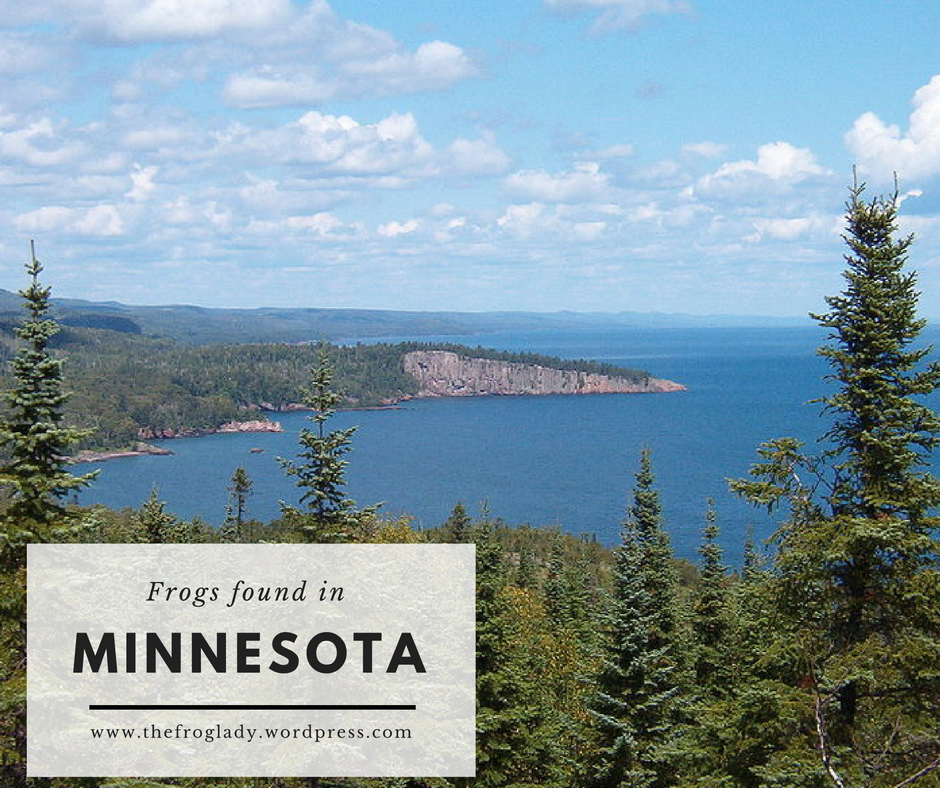
Photo Credits:
Cover photo used by the creative commons license. Text was added. See Original photo by Kablammo here.
- Photo from Wikimedia Commons used under the Creative Commons license. Photo taken by Brian Gratwicke. Original Photo Here.
- Photo from Wikimedia Commons used under the Creative Commons license. Photo taken by Brian Gratwicke. Original Photo Here.
- Photo from Flickr Wikimedia Commons used under the Creative Commons license. Photo taken by J. N. Stuart. Original Photo Here.
- Photo from Flickr Wikimedia Commons used under the Creative Commons license. Photo taken by ceasol. Original Photo Here.
- Photo from Wikimedia Commons used under the Creative Commons license. Photo taken by Fredlyfish4. Original Photo Here.
- Photo from Wikimedia Commons used under the Creative Commons license. Photo taken by Patrick Coin. Original Photo Here.
- Photo from Wikimedia Commons used under the Creative Commons license. Photo taken by Galactor. Original Photo Here.
- Photo from Flickr Wikimedia Commons used under the Creative Commons license. Photo taken by Brian Gratwicke. Original Photo Here.
- Photo from ADW used under the creative commons license. Photo taken by James Harding. Original Photo here.
- Photo from Wikipedia Commons used under the Creative Commons license. Photo taken by Brian Gratwicke. Original Photo Here.
- Photo from Wikimedia Commons used under the Creative Commons license. Photo taken by Brian Gratwicke. Original Photo Here.
- Photo from Flickr Wikimedia Commons used under the Creative Commons license. Photo taken by Matt Reinbold. Original Photo Here.
- Photo from Wikimedia Commons used under the Creative Commons license. Photo taken by Brian Gratwicke. Original Photo Here.
Like “The Frog Lady” on facebook or follow aapanaro on instagram to get some sneak peeks into the frog lady’s frog room!


 The Frog Lady
I found a rather big frog (I think) on my patio after a thunderstorm. It was multi colored brown colors with 1 yellow stripe down the center of its back. On both side of the stripe are symetrical 4 pairs of black circles with darker brown in the middle of the circles. I took a picture. Can you tell me what kind it is thanks.
Editimg my comment above. I live and saw it in new ulm Minnesota.
Feel free to send a request via the contact tab. I will respond via email so you can send your photo. https://thefroglady.wordpress.com/contact/
Hi thanks for the site. I have a photo of a toad that I came across on a run in Saint Paul this September. I don’t think it’s a great plains toad, maybe Canadian? It was around 1 in the afternoon. I have good pictures of it. Can I send them to you? Thanks
Hey, my son got two tadpoles from a bait shop in Minnesota this winter. My kiddos are trying to save them. Can you help me identify them?