***This post is a part of my series where this year I will be highlighting all of the different states native frogs and toads. Check out this page to see all of the United State’s native frogs broken down by state. ***
Due to the large number of native frogs and toads within Florida I have decided it to be easiest to split it into 3 sections: Frogs, Treefrogs and Toads. This is part 2 so here are the native treefrogs to Florida.
Treefrogs
Barking Treefrog (Hyla gratiosa)
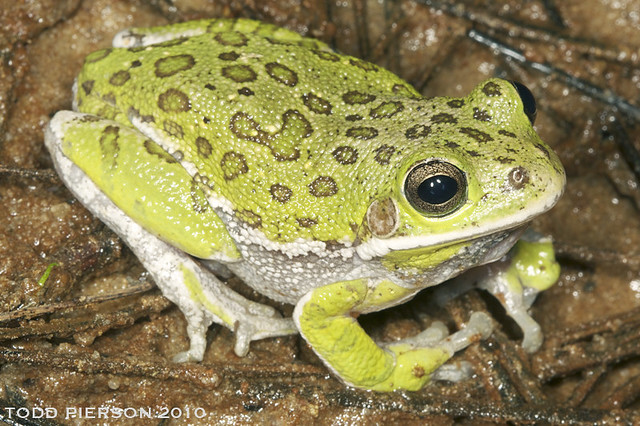
The Barking treefrog can reach 3″ in length. It is known for its bright green color with dark brown spots. It occurs in the all but the southern portion of Florida.

Their call is a loud ‘Tonk’ sound which from the distance the chorus can sound like barking dogs. Breeding lasts March- August and it is a polygamous species; with the female choosing the male based on his call. The barking treefrog can be found high within the treetops, but also burrowing within sand when temperatures get hot. Listen to their call below.
Cope’s Gray Treefrog (Hyla chrysoscelis)
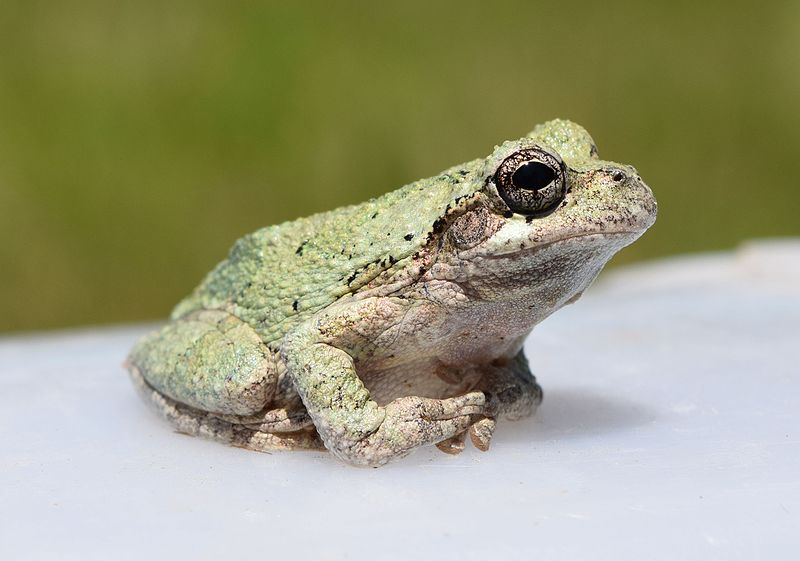
The Cope’s gray treefrog is smaller and smoother skinned than the gray treefrog. The gray treefrog and Cope’s gray treefrog can be difficult to tell apart during breeding while they are both mottled. However, most of the time the Cope’s gray treefrog has a solid lime green colored back. These frogs can be found statewide within Louisiana except for a couple scattered counties.

Cope’s gray tree frogs breed from March – August and can be heard calling between March and October. Another way the Cope’s gray treefrog can be distinguished from the gray treefrog is by its call. The Cope’s gray treefrog’s call is short and raspy. Listen to the video below to hear.
Cuban Treefrog (Osteopilus septentrionalis)
The Cuban Treefrog is considered an invasive tree frog within the state of Florida. It will take over birdhouses, power boxes and native frog habitats. It also secretes a mucus that burns eyes and can cause allergy like reactions in humans and pets. If seen – email description, location and photos to tadpole@ufl.edu.
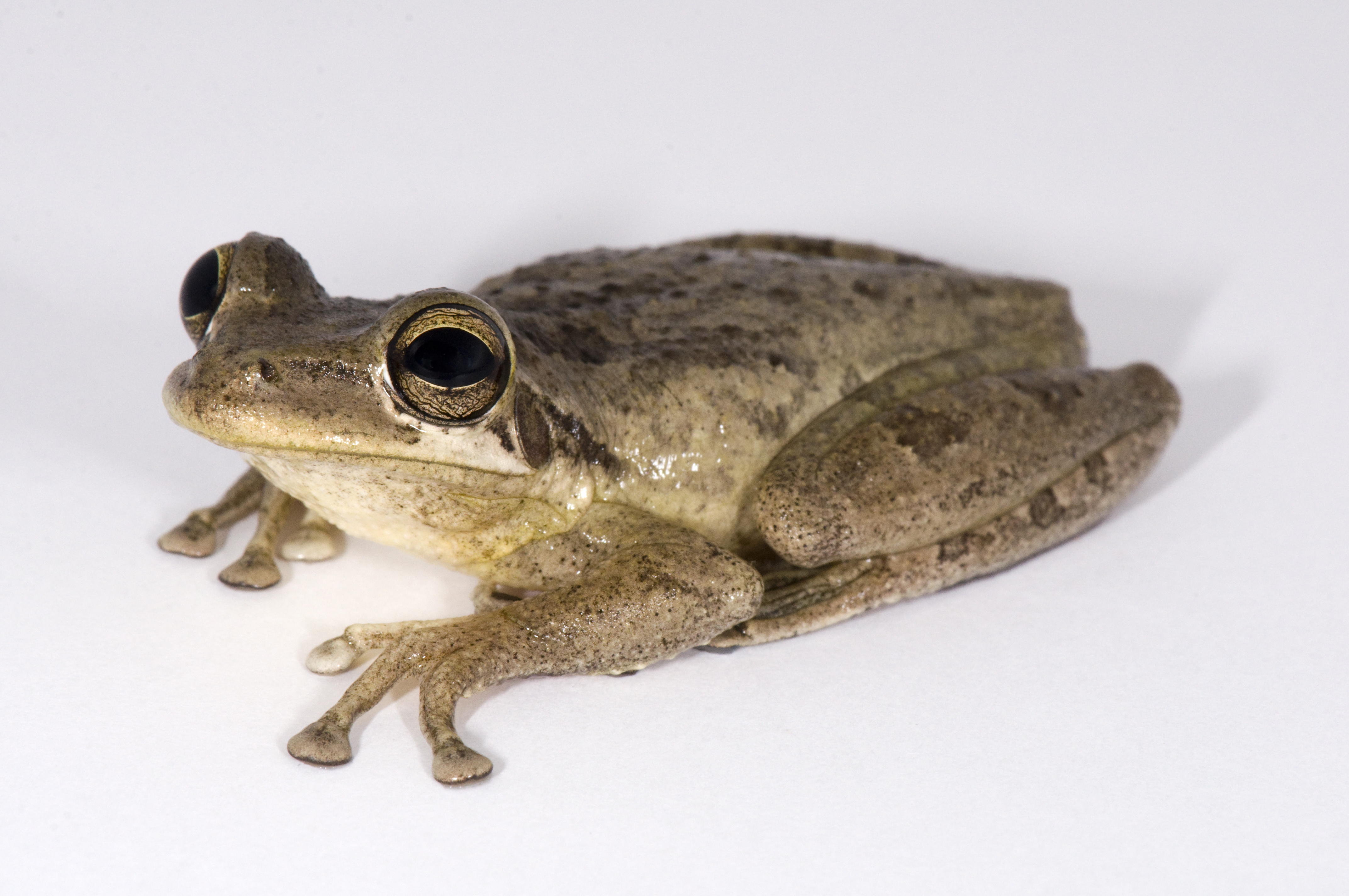
The Cuban treefrog are the largest treefrog in North America, with females reaching up to 5 inches in length. They are highly variable in color, but can range from grey or white to brown, olive tan or bronze. They do have the ability to change color rapidly. These can be differentiated from native treefrogs based on size – largest native treefrog is 3″- or by the fused skin on the skull of the Cuban treefrog. They will live in both urban and suburban areas and have invaded natural habitats and forests as well. These frogs will eat other smaller native frogs and out compete the rest of the native frogs for food.

The call sounds like a raspy snarl or snore at varied pitch lasting 1/3 of a second repeated. It reminds me of the sound of a squeaky door. These calls will be heard at night and while raining during the day.
Green Treefrog (Hyla cinerea)

The green treefrog is slender frog that ranges from bright green to dull green with a white stripe down its side. These frogs can reach 2.5″ and can be easily frightened. They are typically found within marshes, swamps, small ponds and streams, but can also be found within brackish water sources. Within the state of Florida, they can be found statewide.

On average, a female will lay 400 eggs. Breeding takes place April – August. It has been noted that the green treefrog will choose its prey not based on size, but based on activity level. With the most active being eaten first. The male’s call is a single note repeated over and over sounding like a “queenk”. Listen to their call below.
Pine Barrens Treefrog (Hyla andersonii)
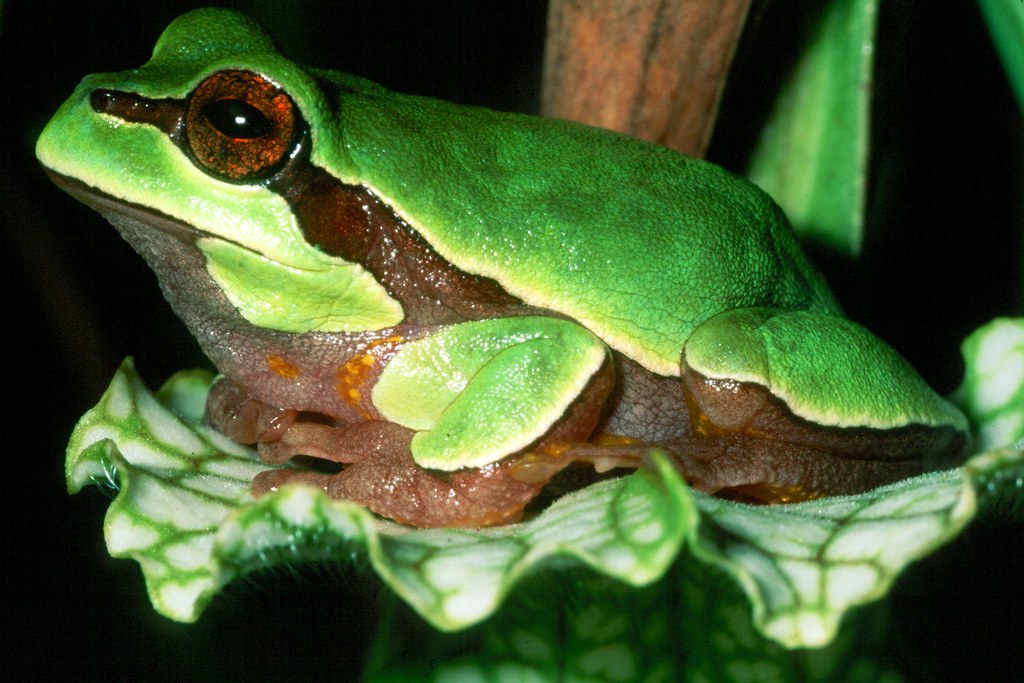
This treefrog is bright green in color with lavender stripes and orange portions concealed on legs. The Pine Barrens treefrog can be found in a portion of the Florida panhandle.

The Pine Barrens treefrog prefers shallow pools and temporary streams. This species can be found by the breeding calls in April-August. Their call sounds like a repetitive honking noise. Listen to the call below. After breeding, they return to a more terrestrial habitat.
Pine woods Treefrog (Hyla femoralis)

The Pinewoods treefrog is around 1.5″ in length and can range from brown-gray to red-brown to gray-green color with dark mottlings on its back and small orange or yellowish spots on the rear of its thigh. They can be found high in trees but also at ground level in rotten logs or crevices in trees. It can be found across the state of Florida except for a small portion of southern Florida.

The males are nicknamed the “Morse-code frog” as their call consists of sporadic chattering. It can be heard from April – October. Listen to its call below:
Squirrel Treefrog (Hyla squirella)

The squirrel treefrog is usually green, but can be brown or tan with numerous spots. A yellowish cream stripe runs along their side. The underside of their legs may have yellow. They can be found in flooded areas, fishless ponds and shallow pools. They can be seen across the state of Florida.
The squirrel treefrog breeds fromMarch to August, but the call can be heard as late as September as it is associated with heavy rainfall and warm temperatures. The breeding call is a hoarse quack which sounds similar to a mallard duck. Listen to it below:
Western Bird Voiced Tree Frog (Hyla avivoca avivoca)
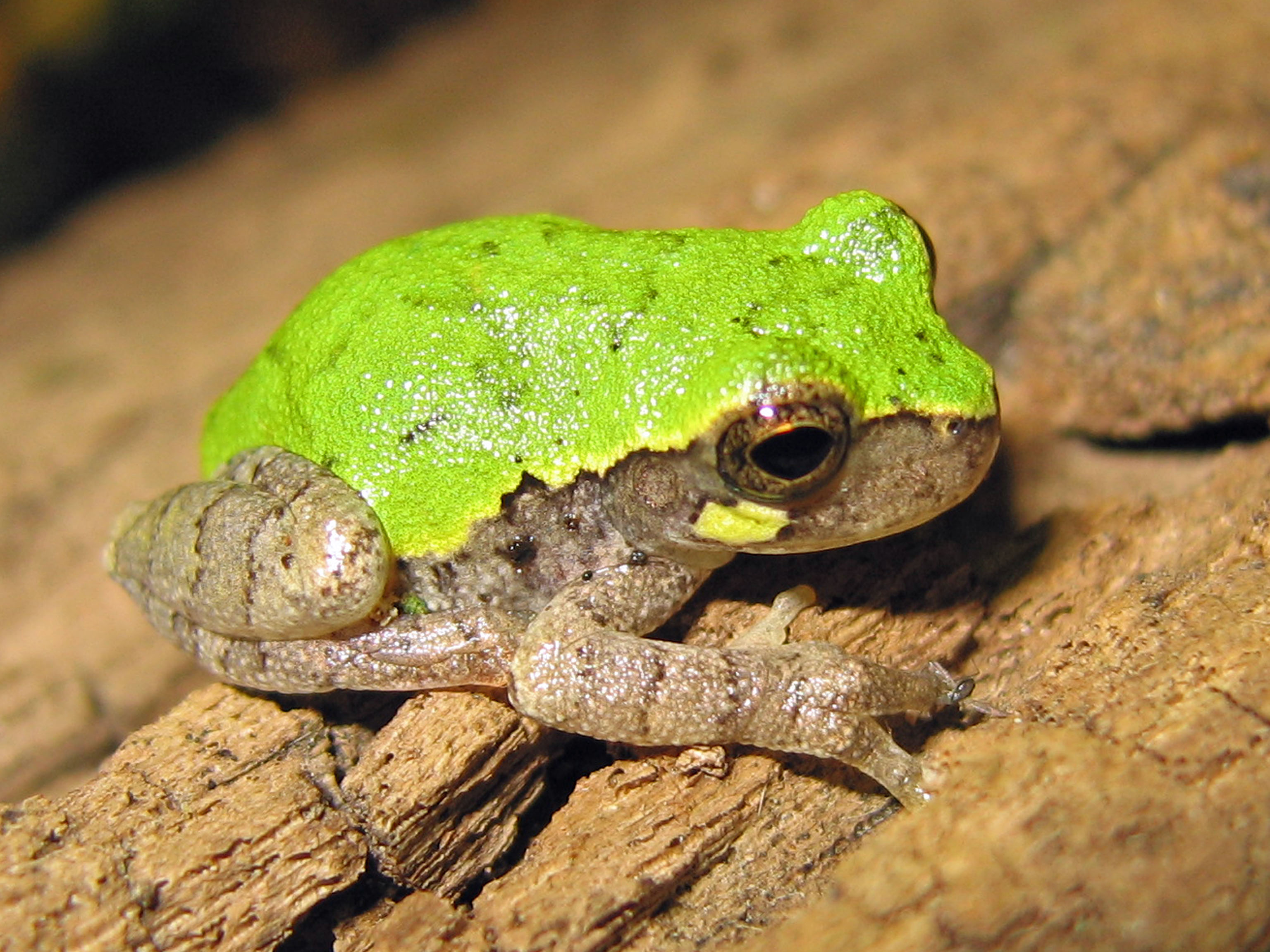
The Bird-Voiced treefrog is highly variable and can change colors, however it is typically shades of gray and green with yellow-green inside its legs. They have a distinctive white/ yellowish spot under their eye. They can be found in and around swamps and swampy lakes. In Florida, it can be seen on the panhandle.

They breed from April-August using branches hung over water. Their call is very bird-like, hence the name, with 2-5 whistles per second. Listen to it below:
Thanks for reading! Check out all of the state’s native frogs and toads here.
Photo Credits:
Cover photo used by the creative commons license. Text was added. See Original photo by Phil’s 1stPix here.
- Photo from Flickr Wikimedia Commons used under the Creative Commons license. Photo taken by Todd Plerson. Original Photo Here.
- Photo from Wikimedia Commons used under the Creative Commons license. Photo taken by Fredlyfish4. Original Photo Here.
- Photo from Flickr Wikimedia Commons used under the Creative Commons license. Photo taken by Mark Yokoyama. Original Photo Here.
- Photo from Flickr Wikimedia Commons used under the Creative Commons license. Photo taken by Jarek Tuszynski. Original Photo Here.
- Photo from Flickr Wikimedia Commons used under the Creative Commons license. Photo taken by Florida Fish & Wildlife. Original Photo Here.
- Photo from Flickr Wikimedia Commons used under the Creative Commons license. Photo taken by Judy Gallagher. Original Photo Here.
- Photo from Wikimedia Commons used under the Creative Commons license. Photo taken by Judy Gallagher. Original Photo Here.
- Photo from Flickr Wikimedia Commons used under the Creative Commons license. Photo taken by Greg Schechter. Original Photo Here.
Like “The Frog Lady” on facebook or follow aapanaro on instagram to get some sneak peeks into the frog lady’s frog room!


 The Frog Lady
I have frogs in my backyard that make a racket through the night. At first I thought it was just your typical tree frogs but now I’m second guessing myself as to whether it is a Cuban tree frog. I took picture last night. Looking at your pictures I’m confused. It has little pods at the end of their “toes” but so do other frogs. How can I tell the difference?
The picture used for green treefrog (Hyla cinerea) is actually a squirrel treefrog (Hyla squirella)
It has been cold here in Florida. A frog I believe to be Cuban or Florida Tree frog sits on the gutter and I am concerned about the dropping temperatures. What should I do? At 20 degrees I brout it in and placed into a box with natural surroundings in my garage. It appears to be fine now. However I want to return it to its habitat asap. What temperature in Farenheit is safe to release?