***This post is a part of my series where this year I will be highlighting all of the different states native frogs and toads. Check out this page to see all of the United State’s native frogs broken down by state. ***
Idaho’s Department of Fish & Game has a place on their website for you to share your own observations and photos. Submit your photos here if you would like to participate!
Columbia Spotted Frog (Rana luteiventris)
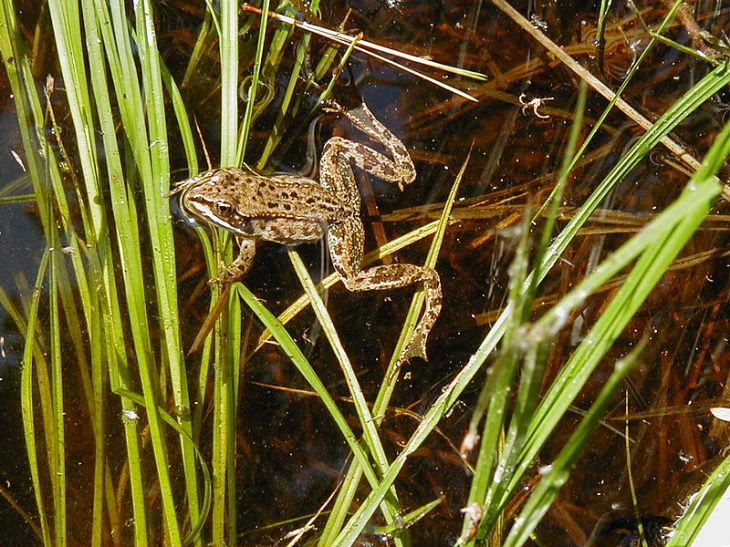
Photo 1
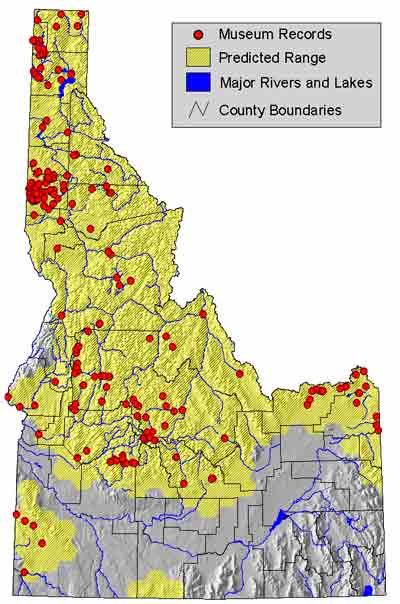
The Columbia Spotted frog has slightly bumpy skin that is smooth and moist. They are typically brown or olive color with irregular spots. They are known for their lower abdomen being bright salmon or a red color. This frog is high aquatic and can rarely be found far from a permanent water source. The range of the columbia spotted frog is said to be declining, but is still widespread and abundant in Idaho. Idaho has this frog listed as Vulnerable meaning there was between 21-100 occurrences of the frog within its range. Below is the range of the columbia spotted frog.
The call of the columbia spotted frog is a clucking noise and sounds like the clicking of your tongue on the roof of your mouth. Listen to the video below and around 52 seconds you can hear the frog calling.
Northern Leopard Frog (Lithobates pipiens)
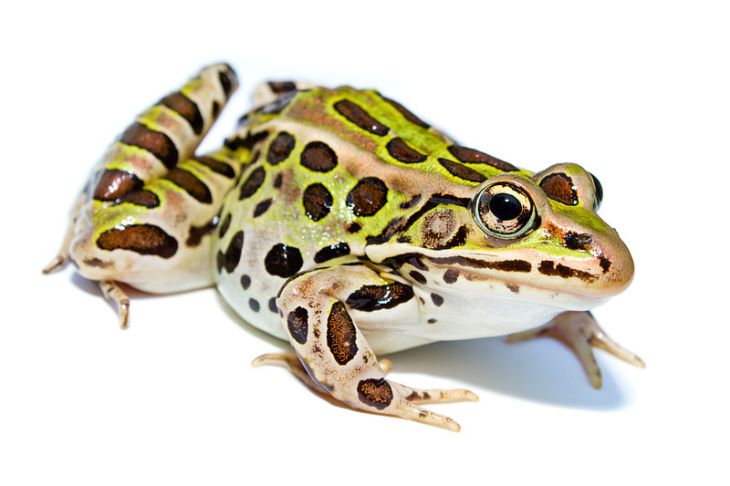
Photo 2
The Northern Leopard frog has 2-3 unevenly spaced rows of irregular oval shaped dots on its back. The northern leopard frog can be found in mountains and lowlands, but in Idaho it is found throughout the southern portion of the state, following the Snake River plain. It needs 3 different habitats to match its lifestyle – permanent water for overwintering, floodplains & marshes for breeding & meadows and fields for foraging. This frog is listed as vulnerable to the state of Idaho which means there are between 21-100 occurrences throughout its range.
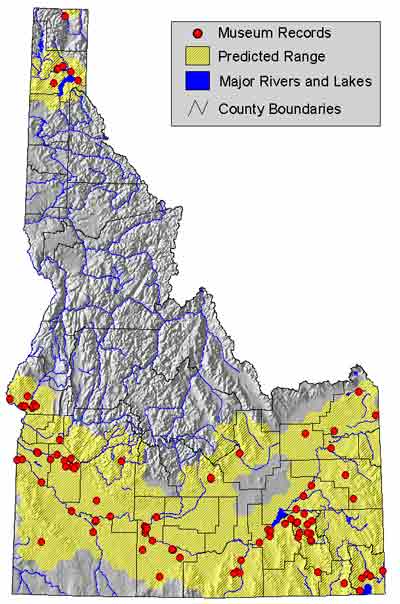
These frogs are opportunistic feeders, meaning that they will eat anything that fits in their mouth including beetles, ants, smaller frogs – including their own species, birds and even garter snakes. It’s call is like a low and rumbling snore and grunt sound. It has also been known to scream loudly when grasped or frightened by a predator. Listen below to their call.
American Bullfrog (Lithobates catesbeianus)
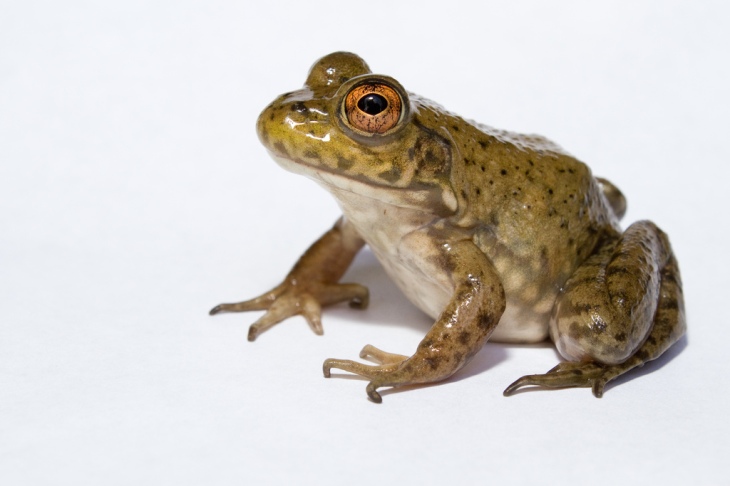
Photo 3
The American Bullfrog is the largest frog in North America. They are typically green or gray-brown with brown spots. They can grow up to 8″ in length and weigh up to 1.5 pounds. The bullfrog can be found near large permanent bodies of water with vegetation near the shorelines. They can be found in a couple spots in Idaho where they followed the Snake River plain. The bullfrog is considered a nonnative species to Idaho.
It has a very deep call which resembles the mooing of a cow. Watch the video below to hear! Both genders of the bullfrog croak. Their calls may be heard day or night between June-July.
Boreal Chorus Frog (Pseudacris maculata)
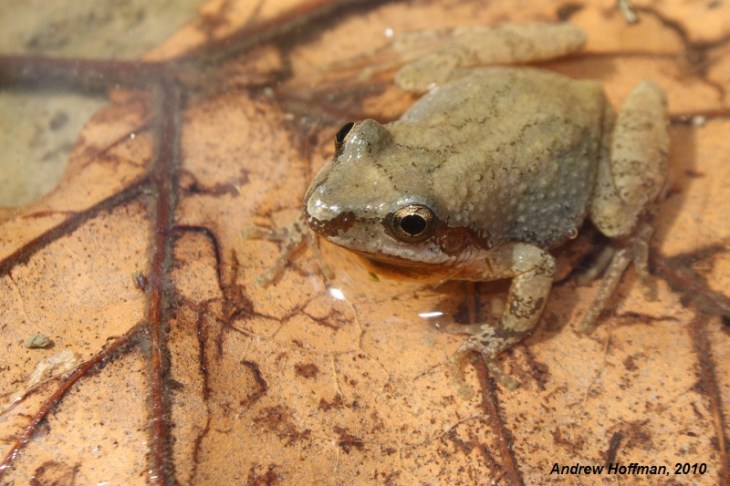
Photo 4
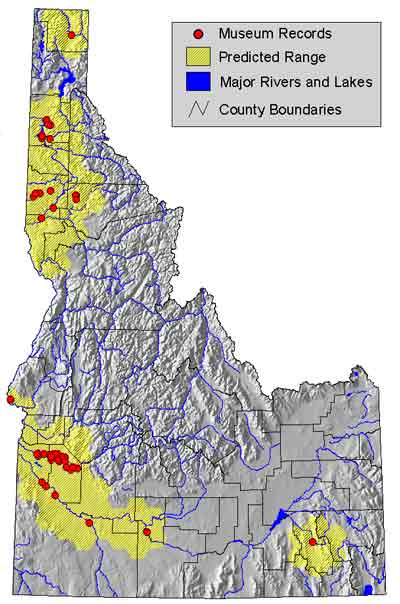
The Boreal Chorus frog is brown with 3 dark lateral stripes or spots down its back with a white upper lip and measures only 1″ long. This species can be found in the eastern portion of the state and along the Snake River plain to the western border of the state.
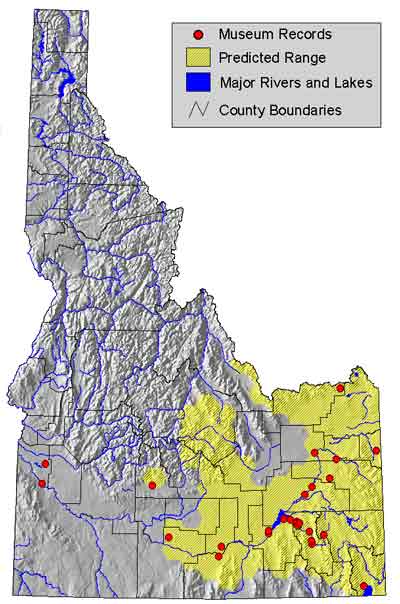
The boreal chorus frog sounds similar to the spring peeper in that it sounds like fingers running over a comb, however the boreal chorus frog’s call is more tinny and mechanical opposed to the musical whistle of the spring peeper. Females lay 500-1,500 eggs in groups of 20-300. Listen to the call below.
Wood Frog (Lithobates sylvaticus)
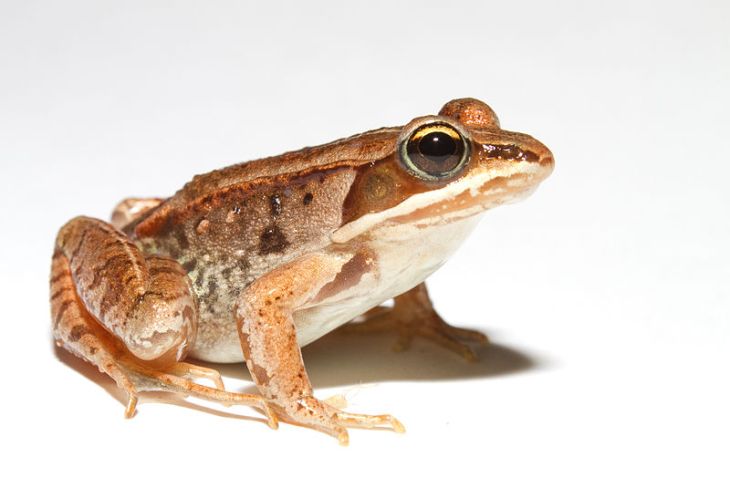
Photo 5
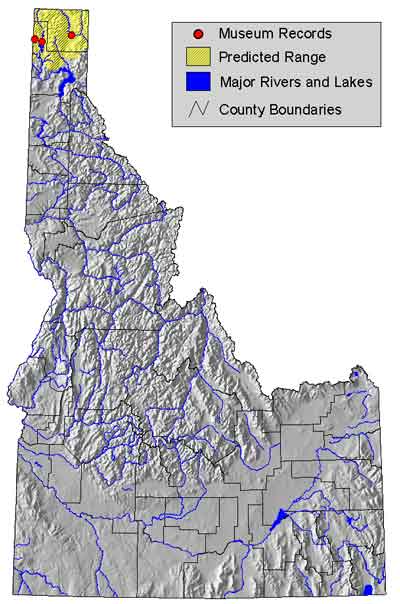
The Wood frog is known as a brown, tan or rust colored frog with a dark colored around its eyes. Some call it a “robbers mask”. These frogs are rare within Idaho. They have only been found in the two northernmost countries of Idaho.
Rocky Mountain Tailed Frog (Ascaphus montanus)
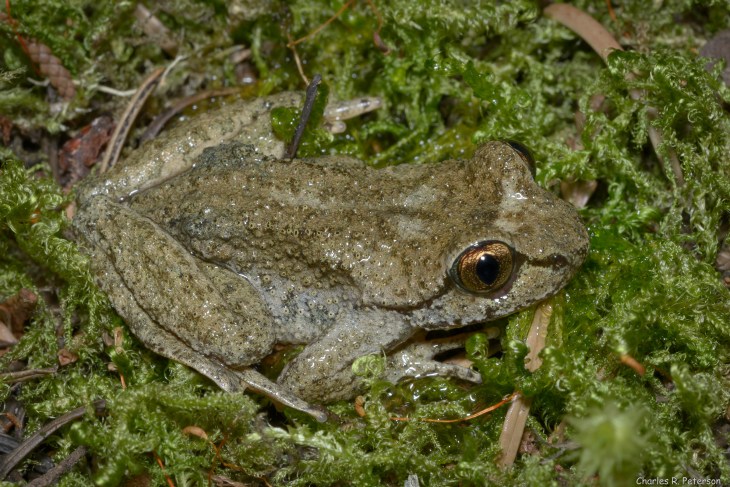
Photo 6
The rocky mountain tailed frog is gray or brown with many blotches. Their skin has a very distinct bumpy texture with their total length reaching 2″. They can be found throughout the central and northern forests of Idaho between sea level and 2000m in clear, cold mountain streams.
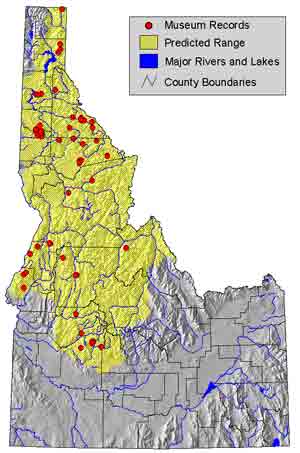
The male rocky mountain frog has a bulbous “tail” which helps in reproduction. The range of the rocky mountain frog throughout the U.S. is rather contained so there is not much information on their call.
Western Toad (Bufo boreas)
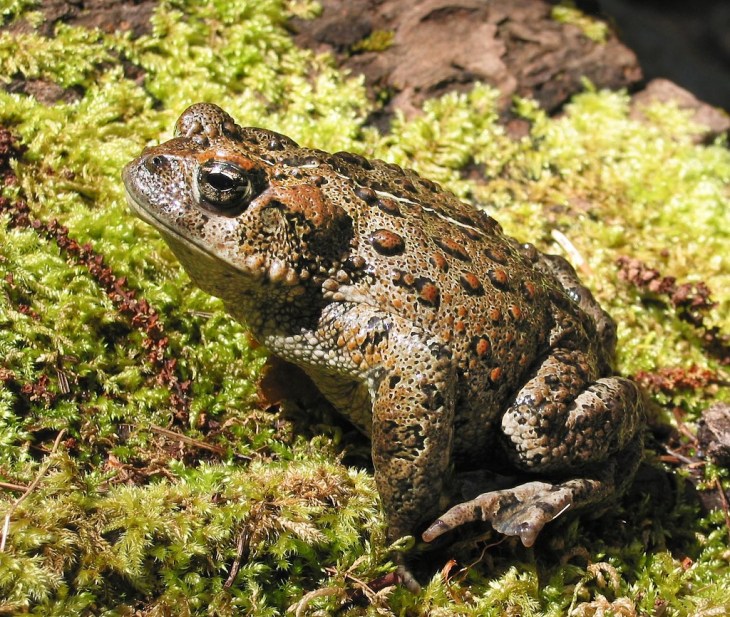
Photo 7
The western toad is chunky, with short legs and numerous warts (it is a toad after all). It can vary in color from brown to green or gray with white and dark mottling on its tummy. There is a conspicuous light colored stripe running down the middle of its back. Their back feet have 2 large rubbery knobs on the heel which they use for digging. The western toad is quite common and can be found in the throughout most of the state of Idaho.
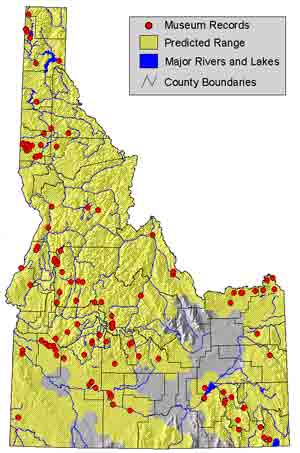
Their call is a soft birdlike clucking call. Listen to it in the video below. When handled, the toad may emit a twittery sound, puff up and urinate. These toads are active during daylight hours and are much more active during damp weather.
Woodhouse’s Toad (Bufo woodhousii)
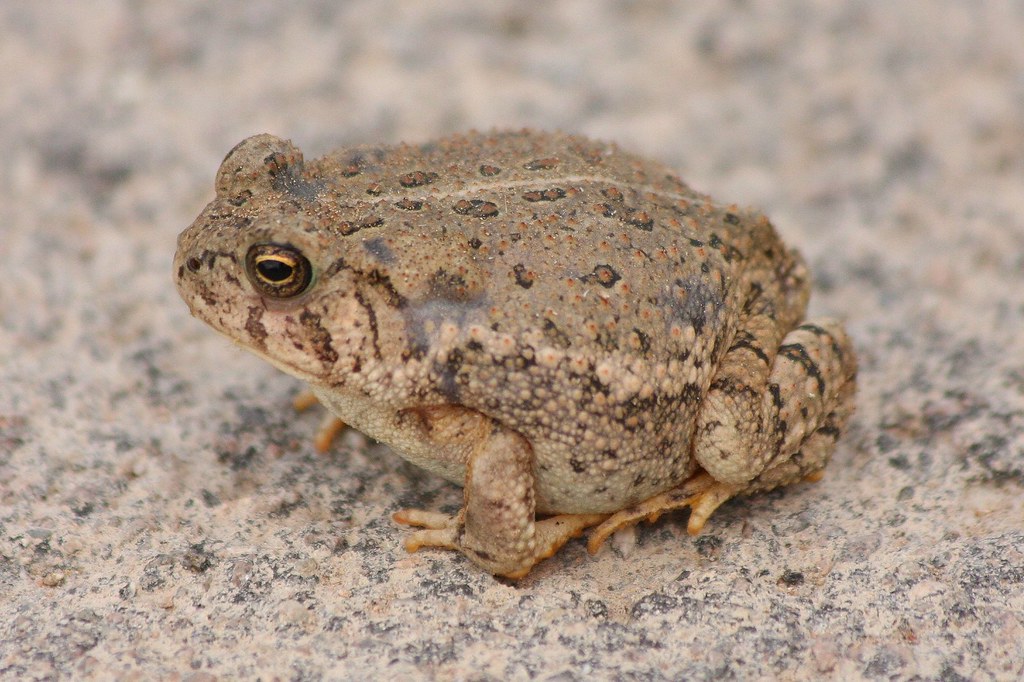
Photo 8
Woodhouse’s toad can vary in color from yellowish brown to greenish grey with a light stripe down the middle of its back and can reach up to 5″ in length with the males being smaller than females. These toads can be found primarily in deep soils in river valleys and flood plains. They burrow into soil to escape drought and cold. Woodhouse’s toad can be found in the Western potion of Idaho, near the Snake River and associated drainage’s. This frog is listed as vulnerable by the state of Idaho meaning that between 21-100 occurrences throughout its range.
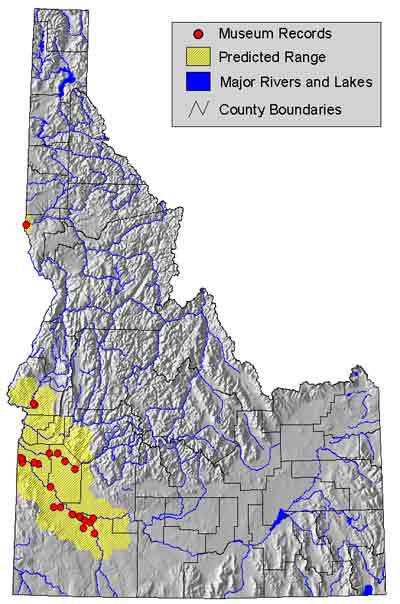
These toads breed from April to June in marshes, rain pools and other areas lacking strong current. This toad’s call is a loud wahhhhhh lasting between 1-4 seconds and emitted several times a minute.
Sierran Treefrog (Pseudacris sierrae)
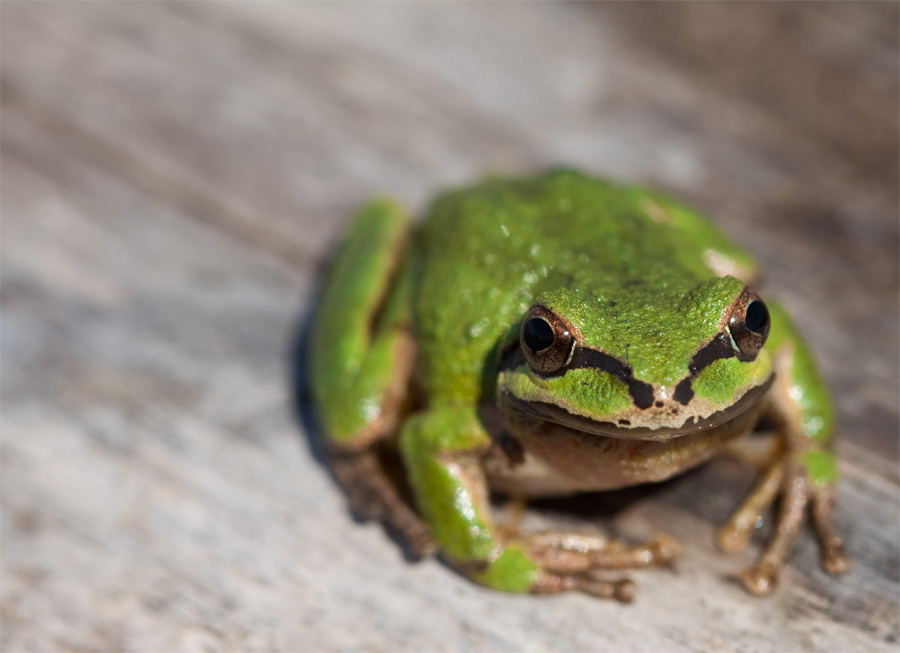
Photo 9
The Sierran Treefrog ranges from .75″ to 2″ and can have variable colors. The color can vary between green, tan, brown, gray, reddish or cream, but it is most often green or brown with a pale yellow under the back legs. There is a characteristic black stripe near the eyes. The body color and markings can quickly change (matter of minutes) from dark to light to match the environment and in response to environmental conditions. As seen by the range below – the Sierran treefrogs range is limited mainly the North and Western portion of the Idaho border.
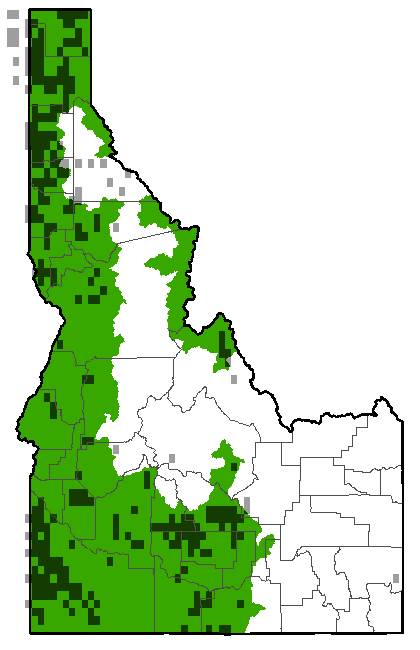
This frog is very smart as it adapts its active periods throughout the day dependent on the weather. In dry periods they will become mostly nocturnal, where as during wet weather they will also be active during the day. The Sierran treefrog is a ground dweller and can be found in dense vegetation and debris piles. They will use their sticky tounge to catch prey and bring it back to its mouth. Prey consists of mainly invertebrates and flying insects. It has 2 different calls 1) a two parted rib-it or 2) a slow trilled call. The slow trilled call can be heard majority of the time where as the two parted call can be heard during breeding season.
Great Basin Spadefoot (Pseudacris sierrae)
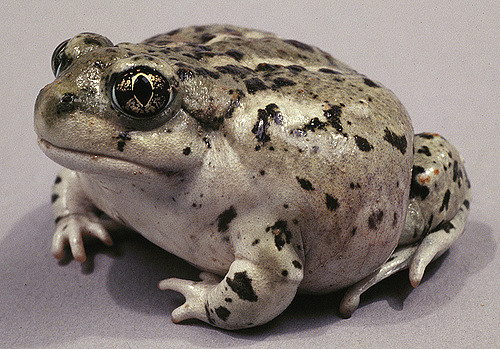
Photo 10
The great basin spadefoot toad can be tan, gray or an olive color with a white or light cream tummy. They can reach a size of up to 2.5″ long with males being smaller than females. The great basin spadefoot has a black wedge shaped spade on each back foot. This helps them to dig down deep when they get too hot or dry. They can be found throughout the deserts and prairies of southern Idaho as seen in the range map below.
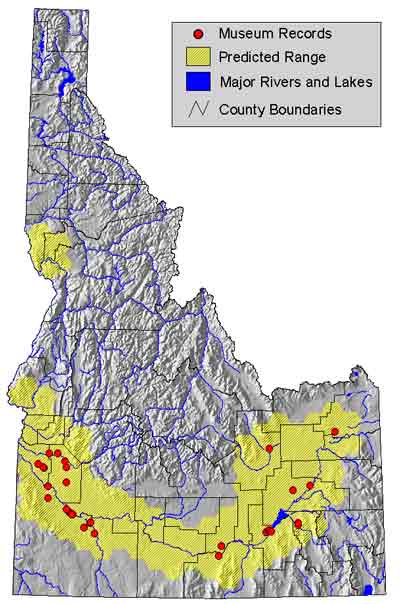
They typically eat at night finding ants, grasshoppers, and flying insects. They have two defense mechanisms. The first defense is their camouflage of looking like rocks. If that doesn’t work they have a noxious skin secretion that will repel most predators and cause humans to sneeze. The call of the great basin spadefoot sounds like a wahhhhh listen to them call below:
Thanks for reading! Check out all of the United State’s native frogs and toads here.
Photo Credits:
Cover photo used by the creative commons license. Text was added. See Original photo by Leaflet here.
- Photo from Wikimedia Commons used under the Creative Commons license. Photo taken by Forest Service Northern Region. Original Photo Here.
- Photo from Wikipedia Commons used under the Creative Commons license. Photo taken by Brian Gratwicke. Original Photo Here.
- Photo from Wikimedia Commons used under the Creative Commons license. Photo taken by Brian Gratwicke. Original Photo Here.
- Photo from Flickr Wikimedia Commons used under the Creative Commons license. Photo taken by Andrew Hoffman. Original Photo Here.
- Photo from Wikimedia Commons used under the Creative Commons license. Photo taken by Brian Gratwicke. Original Photo Here.
- Photo from Flickr Wikimedia Commons used under the Creative Commons license. Photo taken by Charles (Chuck) Peterson. Original Photo Here.
- Photo from Flickr and used under the Creative Commons license. Photo by Oregon State University. Original photo here.
- Photo from Flickr Wikimedia Commons used under the Creative Commons license. Photo taken by J.N. Stuart. Original Photo Here.
- Photo from Flickr Wikimedia Commons used under the Creative Commons license. Photo taken by Natalie McNear. Original Photo Here.
- Photo from Flickr Wikimedia Commons used under the Creative Commons license. Photo taken by Kerry Matz. Original Photo Here.
For more information:
- https://imnh.iri.isu.edu/digitalatlas/bio/amph/main/amphmnfr.htm
- https://fishandgame.idaho.gov/species/taxa/18709
- https://idfg.idaho.gov/old-web/docs/wildlifeExpress/2014apr.pdf
Like “The Frog Lady” on facebook or follow aapanaro on instagram to get some sneak peeks into the frog lady’s frog room!


 The Frog Lady
I am curious if there are any clear frogs in Idaho. We live in Twin Falls. While taking our dog out at 5:30 this morning, there was what I think was a frog. It was clear and curled up so that I couldn’t really see its legs, plus it was still dark outside. I wish I had thought to take a picture. I put my dog inside the house and immediately went outside, but it was already gone. Any ideas?
Yesterday I caught several what I think is a western toad down by King Hill during a storm but I’m not 100% that’s what he is but if I keep him as a pet what do you suggest care wise? I came across your website while researching and thought you could be helpful. The original one I caught was about the size of a soft ball if not a little bigger and then I found two smaller ones around the size of a ping pong ball. If you could respond with suggestions on how I should care for them such as habitat and food that would be great.
Hi Hannah, I understand this is an extremely late answer but it’s never too late for an animal to be released or share this information with others. Any animal found in the wild and brought home as a pet is NOT a good idea. Unless it is injured and you are rescuing to nurse back to health and release. Please Hannah, I am begging you to please release the toad/frog. That are EXTREMELY SCARED it is a VERY TRAUMATIZING experience. Please imagine if you were plucked up from your home and placed in a small cage? Please it’s not a good life and you are not doing it any favors. I am speaking from experience! Releasing the toad I found was the best thing I could do for him. He only have one eye and unthought I was doing him a favor three years later, I realized I was wrong. I hope he is happy to be freed living near the pond still where I found him. Please take care.
Why haven’t you included the Spring Peeper? I live in North Idaho and believe that is the frog we have calling during the spring and summer. The Boreal Chorus frog looks a lot like it, but people always refer to this frog as the Spring Peeper.
I live in north Idaho too and the Spring Peeper is the frog that inhabit all over the lawns in the apartment complex I live in. They are such cute little frogs.
We found what appears to be a “Columbia Spotted Frog” in our backyard yesterday just north of Idaho Falls.
Never expected to find a frog. We live about a mile from the river and there aren’t any canals on our property.
Can frogs live that far away from water?
Hello,
All descriptions of Wood frogs in Idaho depict them as living only in the two Northernmost counties. However, they have been abundant summer visitors at our house in Rathdrum, Kootenai County, for at least seven years. This is about 100 miles from the Canadian border.
We’ve grown quite fond of the little guys, and they seem to enjoy being in our house, in odd places, such as on a television or in our dogs’ water bowl. We’ve had to search for them at night when they hide themselves and start croaking.
Do you suppose anyone is interested in the fact that they’re more widely spread in Idaho?
Thanks very much,
Anne Anderson
925.895.4033
Hey Anne-
You can share your observation with the Idaho Fish & Game Department here:
https://idfg.idaho.gov/species/observations/add#speciesid-15529