***This post is a part of my series where this year I will be highlighting all of the different states native frogs and toads. Check out this page to see all of the United State’s native frogs broken down by state. ***
Here are the frogs and Toads that can be found in Rhode Island:
Eastern Spadefoot Toad (Scaphiopus holbrokkii)
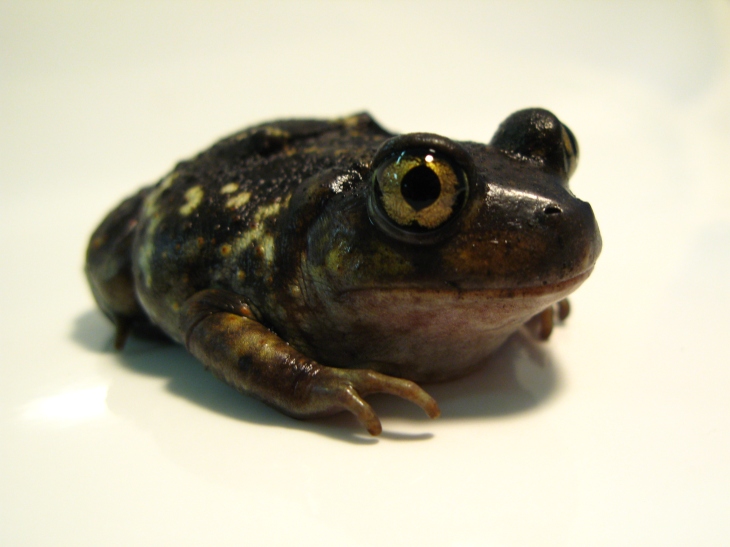
Photo 1
The Eastern Spadefoot has smoother and more moist skin than most toads and is speckled with very tiny warts. This species varies in color from tan or yellowish to dark brown without bold spots like other southern toads. They usually have 2 vertical light lines running from the back of their eyes down their dorsum creating a hourglass shape. The lines are usually more visable in males. The Eastern Spadefoot toad can be found in northwestern Rhode Island. The Eastern Spadefoot prefers dry habitats with sandy soil, but can be found in almost any habitat. Their ability to remain buried for long periods of time allows them to live in suburban and agricultural areas. These spadefoots spend almost all of their time buried under ground, with the exception of breeding time. During breeding time, the spadefoots emerge from their burrows and the male will let out a short explosive “wank” call which sounds like a call of a crow. Something odd about these guys is that some people believe that the Eastern spadefoot smells like peanut butter.
American Toad (Anaxyrus americanus)
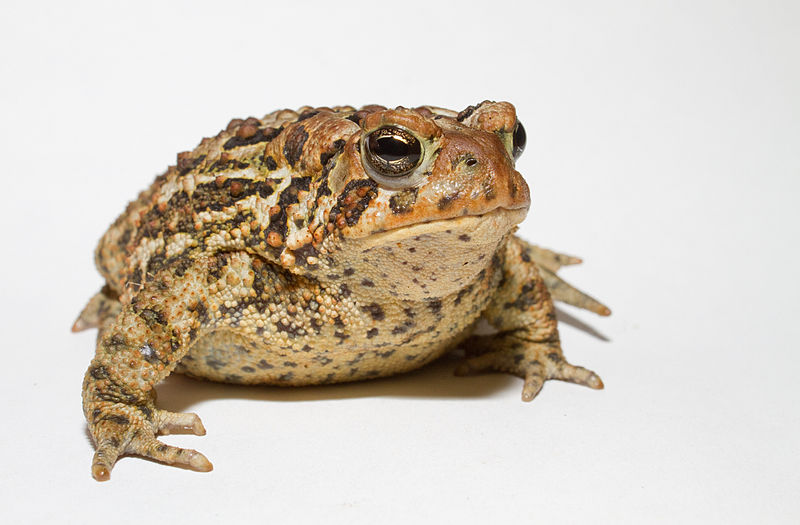
Photo 2
The American toad is mainly nocturnal and is most active when the weather is warm and humid. During the winter, the toad will burrow deep into the ground below the frost line. As the frost line gets deeper, the toads will burrow deeper beneath the ground. They can be found throughout NW Rhode Island and can be found anywhere that has enough moisture and bugs. The toad has a high musical trill which can last upwards of 30 seconds. American toad is highly terrestrial and can only be found in the water for a short period while breeding and laying eggs. Below is a video that shows the American Toad calling.
Fowler’s Toad (Anaxyrus fowleri)

Photo 3
The Fowler’s toad is usually brown, grey, olive green and rust red in color with darkened warty spots. As these toads become adults, a pale stripe will form down its back. The belly is usually whiteish with one dark spot. These toads are found in the low-lying areas of Rhode Island. This toad has a long, loud, high pitched W-A-A-A-H-H-H call. Listen to it in the video below! It is said that they can be mistaken for a herd of sheep calling in the night. The Fowler’s toad will make a series of quick, short hops as the American toad will make a few larger hops. The fowler’s toad will amplexus in May & June. The female can release 7,000 -10,000 fertilized eggs which will hatch 2-7 days later.
Gray Treefrog (Hyla versicolor)
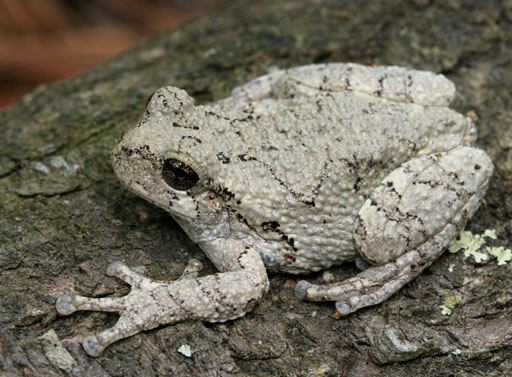
Photo 4
The grey treefrog may range in color from green to brown to grey (as shown above). During the day, they may be found sleeping on tree branches or leaves. Their toes have a sticky pad which allows them to easily climb vertically up windows, siding, trees; etc. They may be found throughout the state of Rhode Island with a short melodic trill that lasts only a second. Below is a video of the Gray treefrog calling.
Spring Peeper (Pseudacris crucifer)
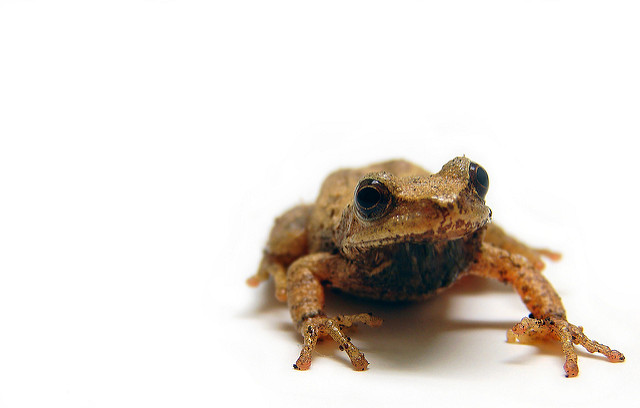
Photo 5
The spring peeper measures from 3/4″ to 1-1/2″. It can be distinguished by it’s dark colored “X”across its back. This frog is quite common throughout the state of Rhode Island. It’s chorus of a shrill high pitched call can be heard from up to a 1/2 mile away! Listen to its call in the video below. Similar to the American toad, these frogs spend most of its time on land and only are in the water to breed and lay eggs. Like most tree frogs, the spring peeper is nocturnal and loves to hunt ants, spiders and other small insects during the evening.
American Bullfrog (Lithobates catesbeianus)
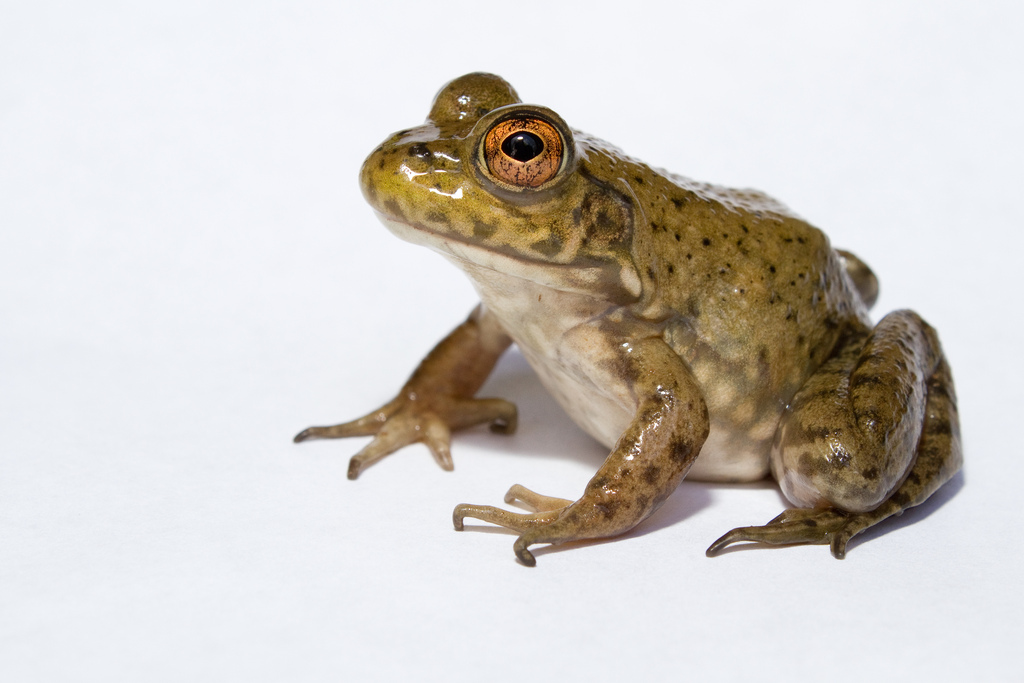
Photo 6
The American Bullfrog is the largest frog in North America. It has a very deep call which resembles the mooing of a cow. Watch the video below to hear! Both genders of the bullfrog croak. Their calls may be heard day or night. They can grow up to 8″ in length and weigh up to 1.5 pounds. The bullfrog can be found statewide. They are typically green or gray-brown with brown spots. The bullfrog emerges from hibernation in May and typically does not start calling until its breeding time in July.
Green Frog (Lithobates clamitans)
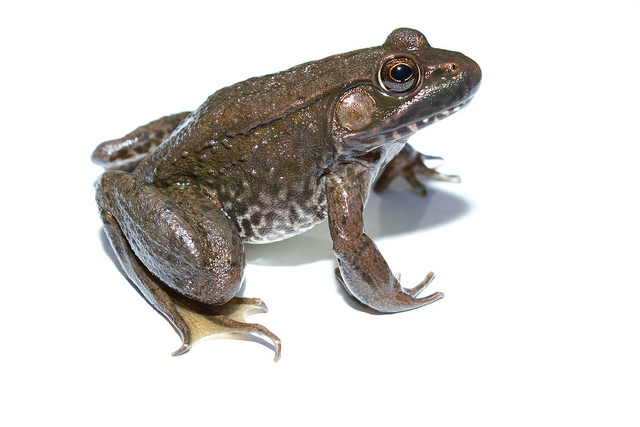
Photo 7
The Green Frog is abundant throughout Rhode Island. It is typically greenish-brown with dark mottling on its head, chest and under its legs. The throat color ranges to yellow for a male to white for the females. These frogs can produce as many as 6 different calls – however the most distinctive sound is a throaty boink that sounds like a loose banjo string being plucked. Listen to the video below to hear!
Wood Frog (Lithobates sylvaticus)
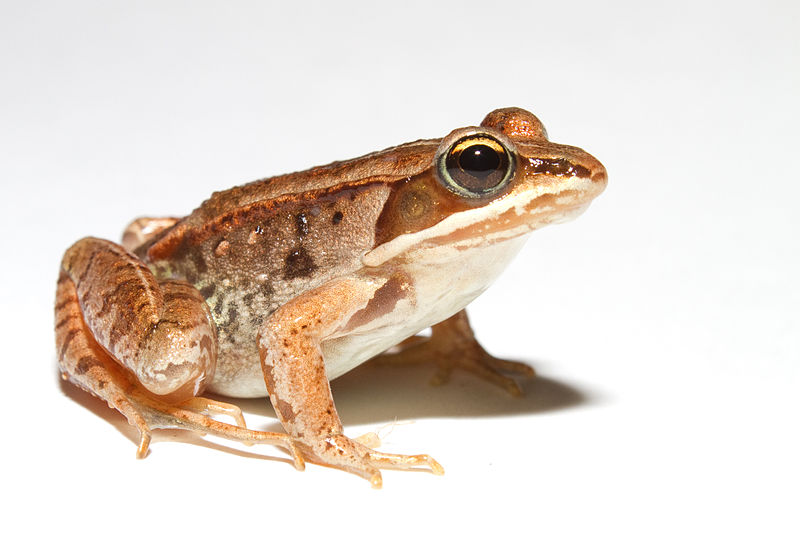
Photo 8
The Wood frog is known as a brown, tan or rust colored frog with a dark colored around its eyes. Some call it a “robbers mask”. These frogs are found statewide. Their call sounds like a quacking of a duck. Watch the video below to hear! Two interesting facts about the wood frog, is that while the frogs do not show any paternal care to their young, it has been discovered that tadpoles that have been separated from parents can pick their parents out and aggregate around them. Secondly, the wood frog is very tolerable to cold temperatures. These frogs can tolerate complete freezing of up to 65% of their body as they pump any water within their body to their extremities and at the same time pump large amount of glucose from the liver into their cells. This creates a syrupy sugar solution which acts as antifreeze within their body. Their blood will freeze, the heart will stop beating and all breathing and muscle movements cease until early spring as they begin to thaw and re-animate.
Northern Leopard Frog (Lithobates pipiens)
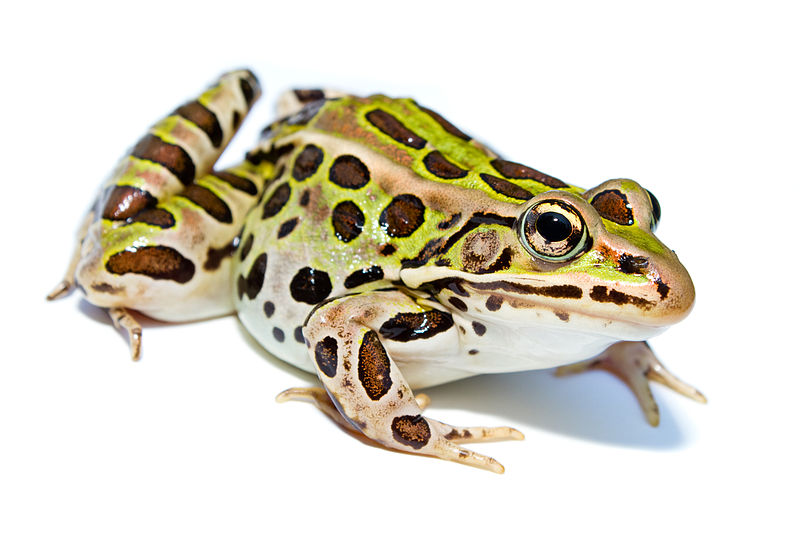
Photo 9
The Northern Leopard frog has 2-3 unevenly spaced rows of irregular oval shaped dots on its back. The northern leopard frog can be found in northern Rhode Island. At one point this frog was very abundant throughout the United states, however since the 1970’s the number of northern leopard frogs has drastically declined. These frogs were widely collected for dissection and frog legs which has not helped the population. These frogs are opportunistic feeders, meaning that they will eat anything that fits in their mouth including beetles, ants, smaller frogs – including their own species, birds and even garter snakes. It’s call is like a low and rumbling snore and grunt sound. It has also been known to scream loudly when grasped or frightened by a predator. Listen below to their call.
Pickerel Frog (Lithobates palustris)

Photo 10
The Pickerel frog looks very similar to the Northern Leopard frog; however the pickerel frog has 2 parallel rows of squareish spots down its back. These frogs are very common throughout Massachusetts. As a defense the skin of the pickerel frog produces a toxic substance which makes them unappealing to most predators. Listen to the video below to hear their call. It is similar to the Northern Leopard frog, however it is shorter and faster, causing it to sound more like a finger running over tines on a comb.
Thanks for reading! Check out all of the United State’s native frogs and toads here.
Photo Credits:
Cover photo used by the CC0/public domain license. Text was added. See Original photo here.
- Photo from Wikimedia Commons used under the Creative Commons license. Photo taken by Brian Gratwicke. Original Photo Here.
- Photo from Wikimedia Commons used under the Creative Commons license. Photo taken by Perlick Laura. Original Photo Here.
- Photo from Wikimedia Commons used under the Creative Commons license. Photo taken by Brian Gratwicke. Original Photo Here.
- Photo from Wikimedia Commons used under the Creative Commons license. Photo taken by Patrick Coin. Original Photo Here.
- Photo from ADW used under the creative commons license. Photo taken by James Harding. Original Photo Here.
- Photo from Flickr Wikimedia Commons used under the Creative Commons license. Photo taken by Brian Gratwicke. Original Photo Here.
- Photo from Flickr Wikimedia Commons used under the Creative Commons license. Photo taken by Matt Reinbold. Original Photo Here.
- Photo from Wikimedia Commons used under the Creative Commons license. Photo taken by Brian Gratwicke. Original Photo Here.
- Photo from Wikipedia Commons used under the Creative Commons license. Photo taken by Brian Gratwicke. Original Photo Here.
- Photo from Wikimedia Commons used under the Creative Commons license. Photo taken by Brian Gratwicke. Original Photo Here.
For more information:
Like “The Frog Lady” on facebook or follow aapanaro on instagram to get some sneak peeks into the frog lady’s frog room!

 The Frog Lady