***This post is a part of my series where this year I will be highlighting all of the different states native frogs and toads. Check out this page to see all of the United State’s native frogs broken down by state. ***
The following are the frogs and toads that can be found in Ohio. If you would like any additional information here is a very helpful book on Ohio’s Backyard frogs and toads by the Ohio Biological Society.
American Toad (Anaxyrus americanus)
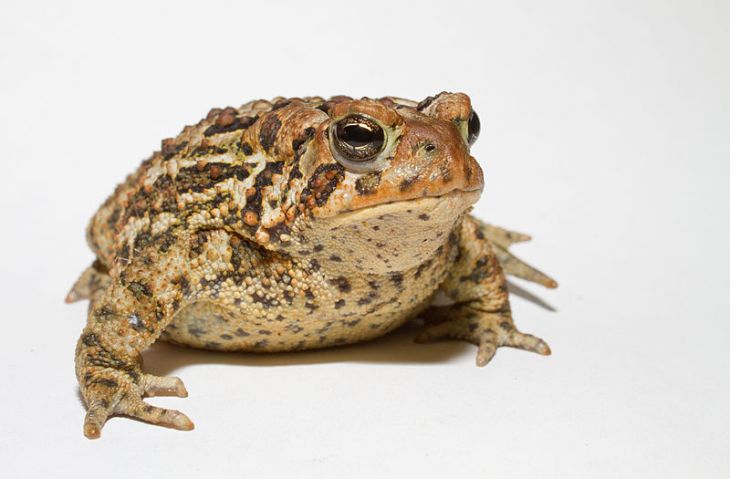
Photo 1
The American toad is mainly nocturnal and is most active when the weather is warm and humid. During the winter, the toad will burrow deep into the ground below the frost line. As the frost line gets deeper, the toads will burrow deeper beneath the ground. They can be found throughout Ohio and they are one of the most common amphibian species in Ohio.
The toad has a high musical trill which can last upwards of 30 seconds. American toad is highly terrestrial and can only be found in the water for a short period while breeding and laying eggs. Below is a video that shows the American Toad calling.
Fowler’s Toad (Anaxyrus fowleri)

Photo 2
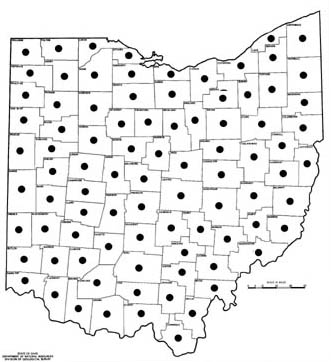
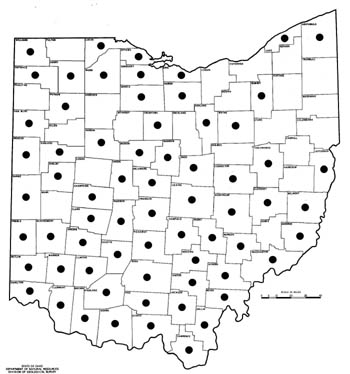
The Fowler’s toad is usually brown, grey, olive green and rust red in color with darkened warty spots. As these toads become adults, a pale stripe will form down its back. The belly is usually whiteish with one dark spot. These toads are abundant throughout its range within Ohio.
This toad has a long, loud, high pitched W-A-A-A-H-H-H call. Listen to it in the video below! It is said that they can be mistaken for a herd of sheep calling in the night. The Fowler’s toad will make a series of quick, short hops as the American toad will make a few larger hops. The fowler’s toad will amplexus in June& July. The female can release 7,000 -10,000 fertilized eggs which will hatch 2-7 days later.
Gray Treefrog (Hyla versicolor)
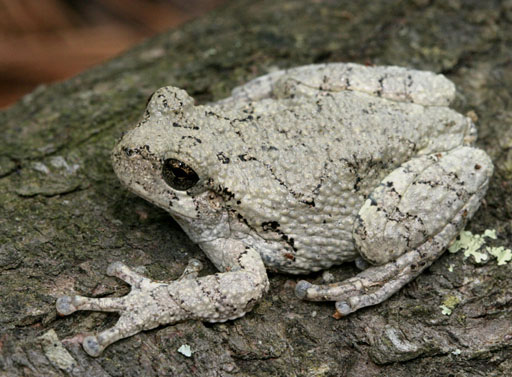
Photo 3
The grey treefrog may range in color from green to brown to grey (as shown above). During the day, they may be found sleeping on tree branches or leaves. Their toes have a sticky pad which allows them to easily climb vertically up windows, siding, trees; etc. They may be found throughout the state of Ohio.
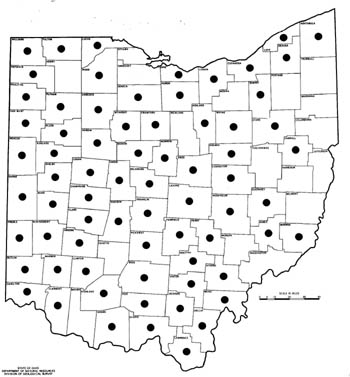
Female grey tree frogs may lay 1,000-2,000 eggs in clusters of 10-40. Tadpoles can be distinguished by their redish-orange tails. Male grey treefrogs have a short melodic trill that lasts only a second. They will generally call on warm and humid evenings between April & May. Below is a video of the Gray treefrog calling.
Spring Peeper (Pseudacris crucifer)
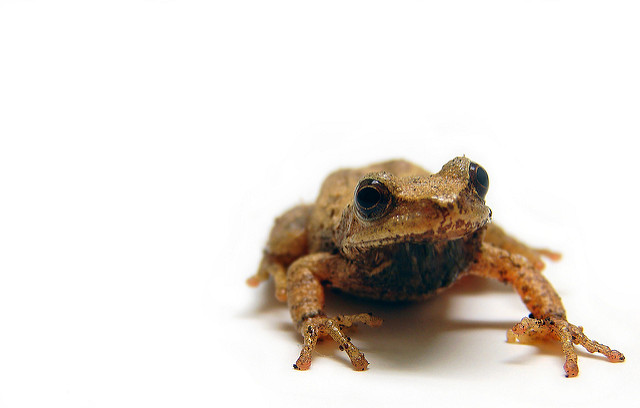
Photo 4
The spring peeper is measures from 1″ to 1-1/2″. It can be distinguished by it’s dark colored “X”across its back. This frog is very common throughout the state of Ohio in woods next to vegetated swamps and marshes.
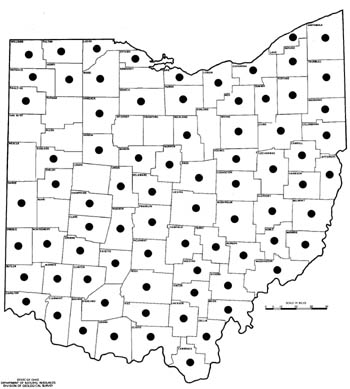
It’s chorus of a shrill high pitched call can be heard from up to a 1/2 mile away! Listen to its call in the video below. Similar to the American toad, these frogs spend most of its time on land and only are in the water to breed and lay eggs. Like most tree frogs, the spring peeper is nocturnal and loves to hunt ants, spiders and other small insects during the evening.
Boreal Chorus Frog (Pseudacris brachyphona)
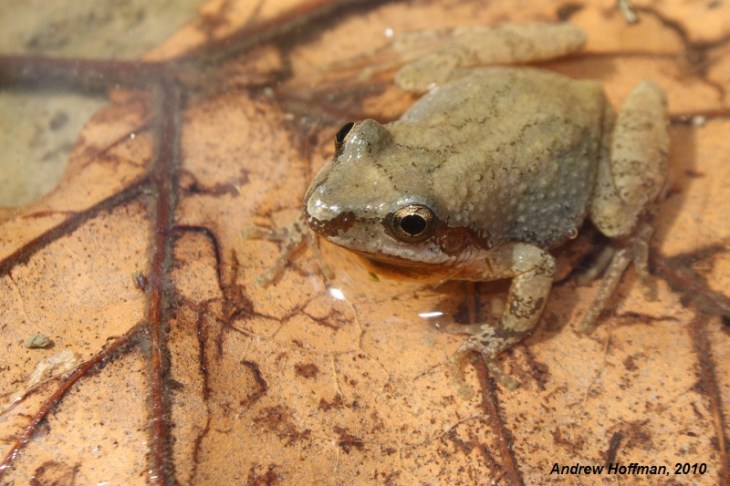
Photo 5
The Boreal Chorus frog is brown with 3 dark lateral stripes or spots down its back with a white upper lip and measures only 1″ long. The species is limited to portions on the Allegheny Plateau.
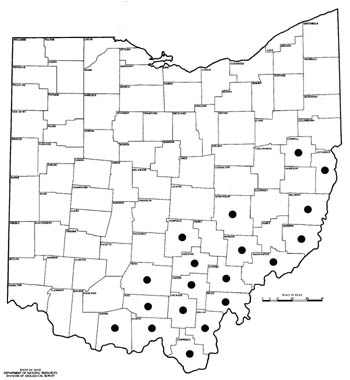
The boreal chorus frog sounds similar to the spring peeper in that it sounds like fingers running over a comb, however the boreal chorus frog’s call is more tinny and mechanical opposed to the musical whistle of the spring peeper. Females lay 500-1,500 eggs in groups of 20-300. Listen to the call below.
American Bullfrog (Lithobates catesbeianus)
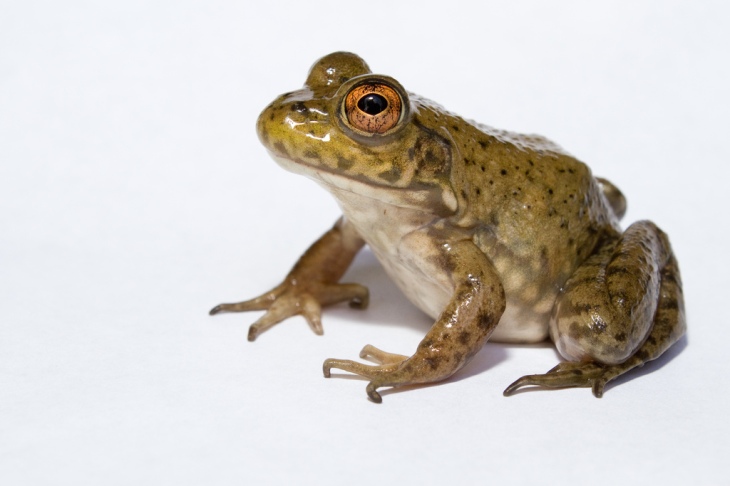
Photo 6
The American Bullfrog is the largest frog in North America. They are typically green or gray-brown with brown spots. They can grow up to 8″ in length and weigh up to 1.5 pounds. The bullfrog can be found near large permanent bodies of water with vegetation near the shorelines. They are common throughout Ohio. This species is so abundant that it is thought that it is partially responsible for the decline of other species.
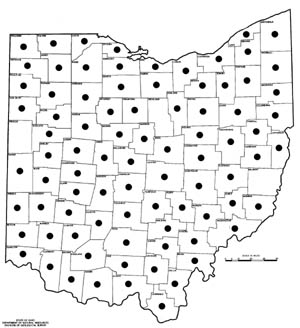
It has a very deep call which resembles the mooing of a cow. Watch the video below to hear! Both genders of the bullfrog croak. Their calls may be heard day or night between May and August.
Green Frog (Lithobates clamitans)
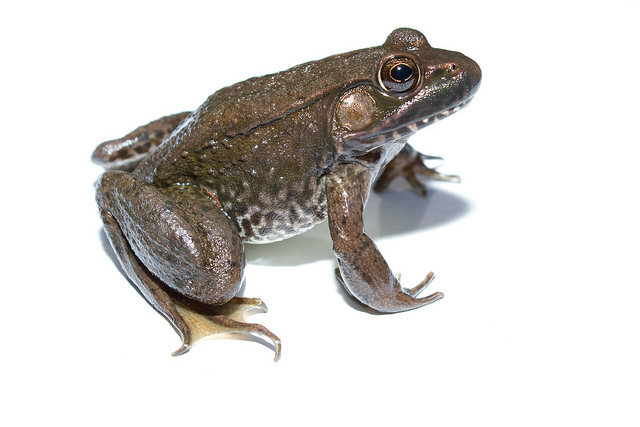
Photo 7
The Green Frog is abundant throughout Ohio and can be found in almost every town. It is typically greenish-brown with dark mottling on its head, chest and under its legs. The throat color ranges to yellow for a male to white for the females.
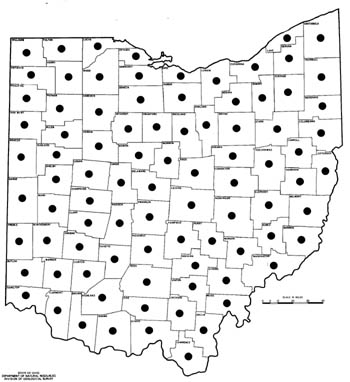
These frogs can produce as many as 6 different calls – however the most distinctive sound is a throaty boink that sounds like a loose banjo string being plucked. Listen to the video below to hear!
Wood Frog (Lithobates sylvaticus)
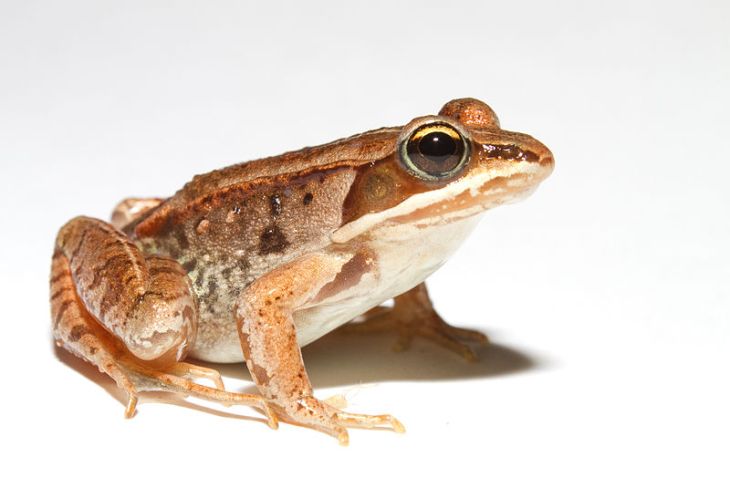
Photo 9
The Wood frog is known as a brown, tan or rust colored frog with a dark colored around its eyes. Some call it a “robbers mask”. These frogs are found statewide with exception of the western portion of Ohio.
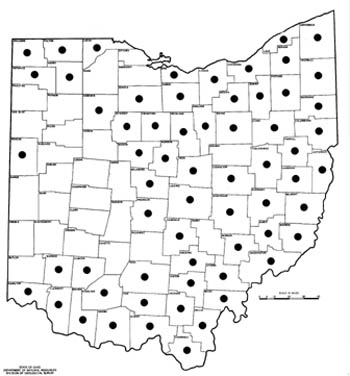
Their call sounds like a quacking of a duck. Watch the video below to hear! Two interesting facts about the wood frog, is that while the frogs do not show any paternal care to their young, it has been discovered that tadpoles that have been separated from parents can pick their parents out and aggregate around them. Secondly, the wood frog is very tolerable to cold temperatures. These frogs can tolerate complete freezing of up to 65% of their body as they pump any water within their body to their extremities and at the same time pump large amount of glucose from the liver into their cells. This creates a syrupy sugar solution which acts as antifreeze within their body. Their blood will freeze, the heart will stop beating and all breathing and muscle movements cease until early spring as they begin to thaw and re-animate.
Northern Leopard Frog (Lithobates pipiens)
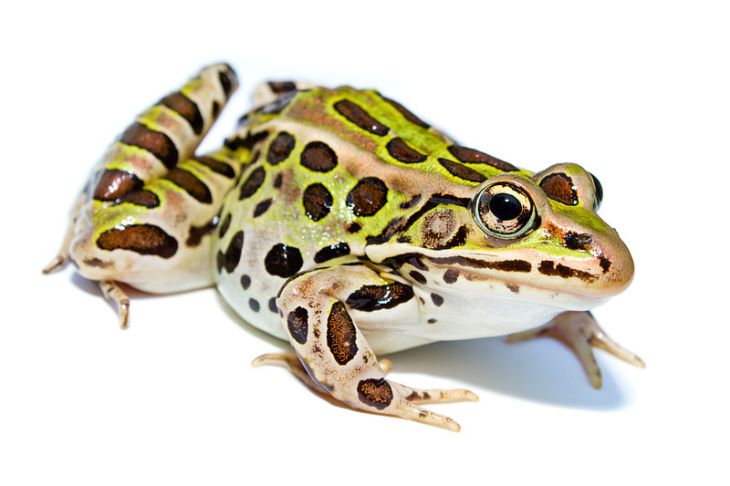
Photo 10
The Northern Leopard frog has 2-3 unevenly spaced rows of irregular oval shaped dots on its back. The northern leopard frog is fairly common throughout the state of Ohio. It needs 3 different habitats to match its lifestyle – permanent water for overwintering, floodplains & marshes for breeding & meadows and fields for foraging.
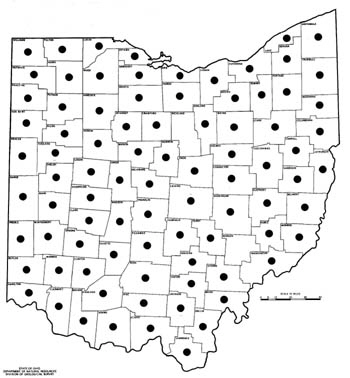
These frogs are opportunistic feeders, meaning that they will eat anything that fits in their mouth including beetles, ants, smaller frogs – including their own species, birds and even garter snakes. It’s call is like a low and rumbling snore and grunt sound. It has also been known to scream loudly when grasped or frightened by a predator. Listen below to their call.
Pickerel Frog (Lithobates palustris)
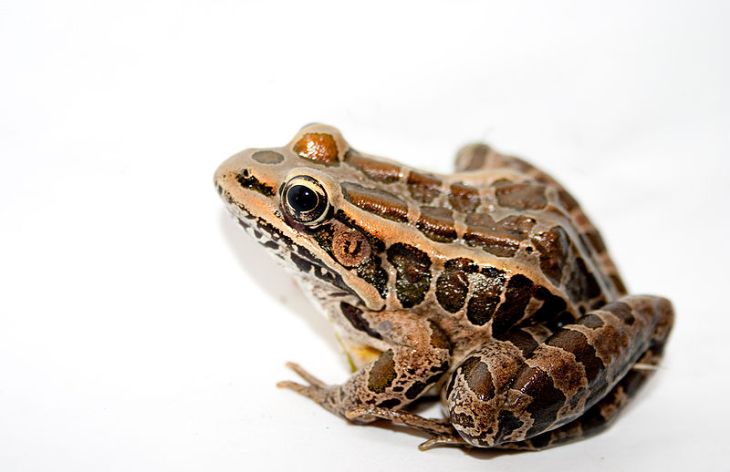
Photo 11
The Pickerel frog looks very similar to the Northern Leopard frog; however the pickerel frog has 2 parallel rows of squareish spots down its back. These frogs are found throughout the eastern half of Ohio. They are often found near beaver ponds with dense vegetation.
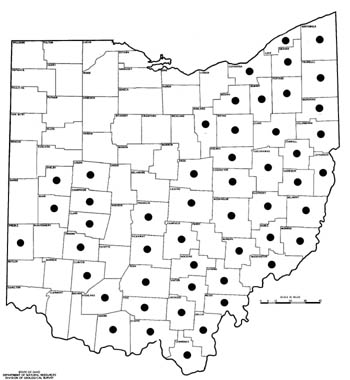
As a defense the skin of the pickerel frog produces a toxic substance which makes them unappealing to most predators. Listen to the video below to hear their call. It is similar to the Northern Leopard frog, however it is shorter and faster, causing it to sound more like a finger running over tines on a comb.
Eastern Spadefoot (Scaphiopus holbrookii)

Photo 12
The Eastern Spadefoot has smoother and more moist skin than most toads and is speckled with very tiny warts. This species varies in color from tan or yellowish to dark brown without bold spots like other southern toads. They usually have 2 vertical light lines running from the back of their eyes down their dorsum creating a hourglass shape. The lines are usually more visable in males. The Eastern Spadefoot toad is the only frog or toad species that is listed as an endangered species within Ohio. They can be found in the sandy soil along the floodplains of streams and rivers.
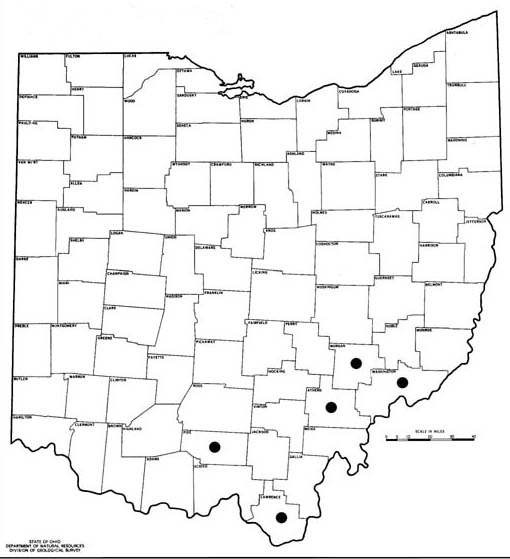
The Eastern Spadefoot prefers dry habitats with sandy soil, but can be found in almost any habitat. Their ability to remain buried for long periods of time allows them to live in suburban and agricultural areas. These spadefoots spend almost all of their time buried under ground, with the exception of breeding time. During breeding time, the spadefoots emerge from their burrows and the male will let out a short explosive “wank” call which sounds like a call of a crow. Something odd about these guys is that some people believe that the Eastern spadefoot smells like peanut butter.
Cope’s Gray Treefrog (Hyla chrysoscelis)
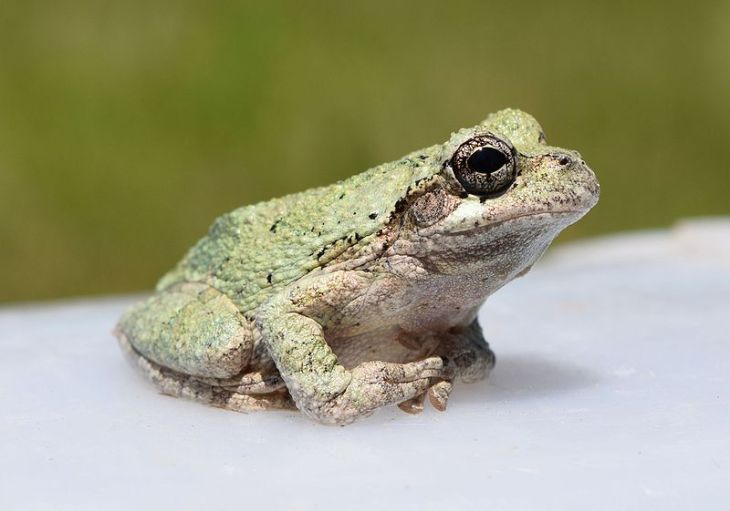
photo 13
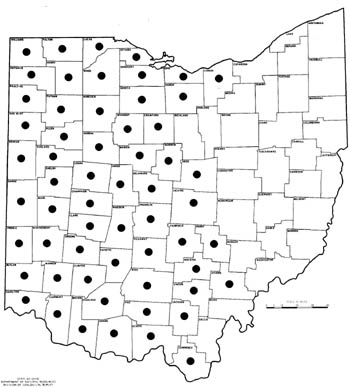
The Cope’s gray treefrog is smaller and smoother skinned than the gray treefrog. The gray treefrog and Cope’s gray treefrog can be difficult to tell apart during breeding while they are both mottled. However, most of the time the Cope’s gray treefrog has a solid lime green colored back. Cope’s gray treefrog appears only in the southern third of the state.
Another way the Cope’s gray treefrog can be distinguished from the gray treefrog is by its call. The Cope’s gray treefrog’s call is short and raspy. Listen to the video below to hear.
Eastern Cricket Frog (Acris crepitans)

photo 14
The Eastern Cricket frog measures an average of 1″ in length with the females being slightly larger. These frogs can jump a surprisingly long way (5-6′) for their small size. They can range a combination of black, yellow orange or red on a base of brown or green. They may be found near permanent water sources like slow moving streams, margins of lakes and ponds or around marshy areas.
This frog was named for its breeding call which sounds very much like a chirp or trill of a cricket repeated for about 20 beats or like 2 pebbles clicked together. Listen to its call below.
Mountain Chorus Frog (Pseudacris brachyphona)
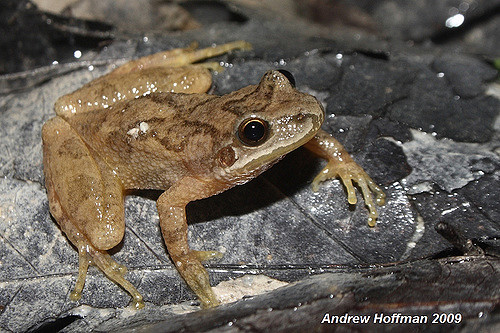
photo 15
The mountain chorus frog is a small species which ranges from tan to light brown with a dark brown mottling pattern. This species is not associated with water and is typically found near woodlands. The mountain chorus frog can be found in the south eastern portion of the state.
The mountain chorus frog has a high pitched call which sounds similar to a fire alarm. Listen to the call below!
Western Chorus Frog (Pseudacris triseriata)
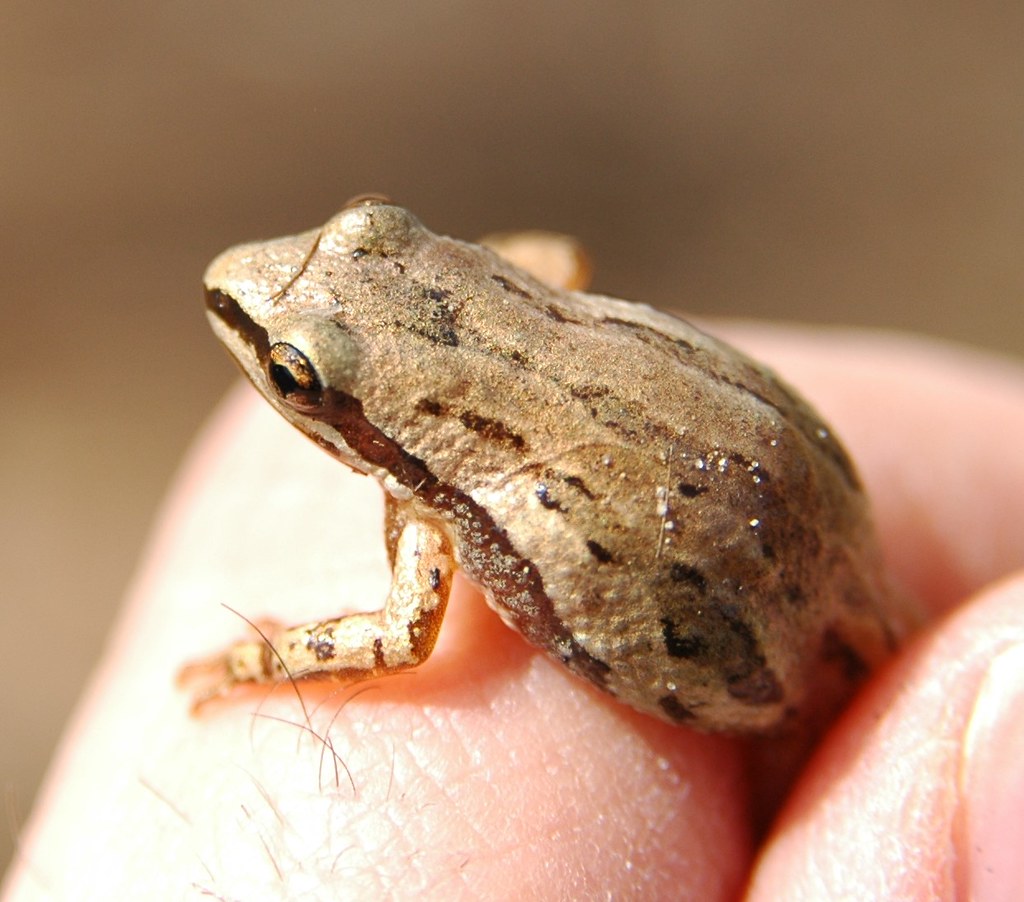
photo 16
The western chorus frog is relatively small reaching 1.5″. They can range from greenish grey, reddish to olive to brown with 3 stripes down its back. The western chorus frog prefers freshwater areas like marshes or swamps to cut down on predication. This species may be found throughout the state; however when found it is typically found in vast numbers.
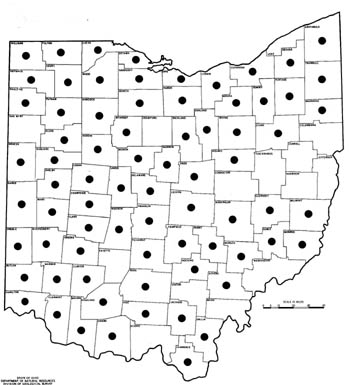
These frogs are nocturnal and rather secretive so they can be hard to find. Best time to find them is on a warm summer night when they come out to call. The call of the Western chorus frog is a “cree-ee-eek” as heard in the video below.
Thanks for reading! Check out all of the United State’s native frogs and toads here.

Photo Credits:
Cover photo used by the CC0/public domain license. Text was added. See Original photo here.
- Photo from Wikimedia Commons used under the Creative Commons license. Photo taken by Brian Gratwicke. Original Photo Here.
- Photo from Wikipedia Commons used under the Creative Commons license. Photo taken by Perlick Laura. Original Photo Here.
- Photo from ADW used under the creative commons license. Photo taken by James Harding. Original Photo Here.
- Photo from Flickr Wikimedia Commons used under the Creative Commons license. Photo taken by Matt Reinbold. Original Photo Here.
- Photo from Flickr Wikimedia Commons used under the Creative Commons license. Photo taken by Andrew Hoffman. Original Photo Here.
- Photo from Wikimedia Commons used under the Creative Commons license. Photo taken by Brian Gratwicke. Original Photo Here.
- Photo from Flickr Wikimedia Commons used under the Creative Commons license. Photo taken by Brian Gratwicke. Original Photo Here.
- Photo from ADW used under the creative commons license. Photo taken by James Harding. Original Photo here.
- Photo from Wikimedia Commons used under the Creative Commons license. Photo taken by Brian Gratwicke. Original Photo Here.
- Photo from Wikipedia Commons used under the Creative Commons license. Photo taken by Brian Gratwicke. Original Photo Here.
- Photo from Wikimedia Commons used under the Creative Commons license. Photo taken by Brian Gratwicke. Original Photo Here.
- Photo from Connecticut Department of Energy & Environmental Protection. Original photo here.
- Photo from Wikimedia Commons used under the Creative Commons license. Photo taken by Fredlyfish4. Original Photo Here.
- Photo from Wikimedia Commons used under the Creative Commons license. Photo taken by Andy Reago & Chrissy McClarren. Original Photo Here.
- Photo from Flickr Wikimedia Commons used under the Creative Commons license. Photo taken by Andrew Hoffman. Original Photo Here.
- Photo from Flickr Wikimedia Commons used under the Creative Commons license. Photo taken by Mark Nenadov. Original Photo Here.
For more information:
- http://wildlife.ohiodnr.gov/species-and-habitats/species-guide-index/amphibians
- http://www.ohioamphibians.com/
Like “The Frog Lady” on facebook or follow aapanaro on instagram to get some sneak peeks into the frog lady’s frog room!

 The Frog Lady
Impressive compilation of Ohio frogs. I was born in Ohio. Never once saw a frog there that I can remember. Guess I wasn’t looking hard enough.
Lee
Tossing It Out
Mom has watched a toad all season from being so tiny to now full grown. She is concerned about it this winter (NW Ohio) and wondered if I could take a large flower pot, turn it on its side near where the toad is and fill it with dirt for it to be safe this winter and survive. Help would be greatly appreciated. Mom watching this little toad has been a joy that I hope to continue. Thanks, Crystal
I would actually flip the flower pot upside down and add a hole in one side. Toads can bury a foot (or more) below grade so the pot would limit the amount it could bury if it was on its side.
Thanks for putting this out there, it helps me identify whats in and around my pond. Love it
I never thought that I’d enjoy an article about frogs, haha. Now I know a little more about the nature of my home state.
I’ve see. A very silver frog in my yard but today I saw a frog that was really flat. It looked like a raccoon with no hair was run over. I ran it get my phone and missed it.
The. I moved rocks around and it landed on my foot but it was no heavier than a leaf. What is it. I’m in Cincinnati ohio
It had a really sharp nose that it laying on the ground. It was only about 1 inch