***This post is a part of my series where this year I will be highlighting all of the different states native frogs and toads. Check out this page to see all of the United State’s native frogs broken down by state. ***
Here are the frogs and toads that can be found in Alaska:
Columbia Spotted Frog (Rana luteiventris)
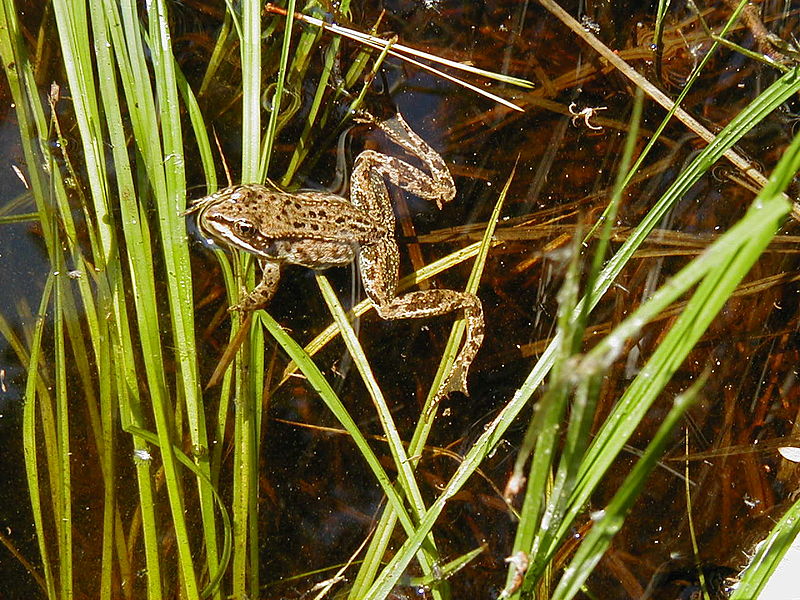
Photo 1
The Columbia Spotted frog has slightly bumpy skin that is smooth and moist. They are typically brown or olive color with irregular spots. They are known for their lower abdomen being bright salmon or a red color. This frog is high aquatic and can rarely be found far from a permanent water source. Below is the range of the columbia spotted frog.
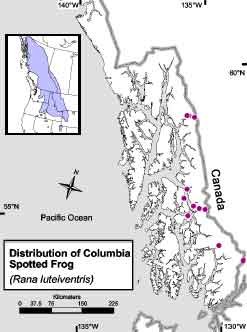
Photo 2
The call of the columbia spotted frog is a clucking noise and sounds like the clicking of your tongue on the roof of your mouth. Listen to the video below and around 52 seconds you can hear the frog calling.
Wood Frog (Lithobates sylvaticus)
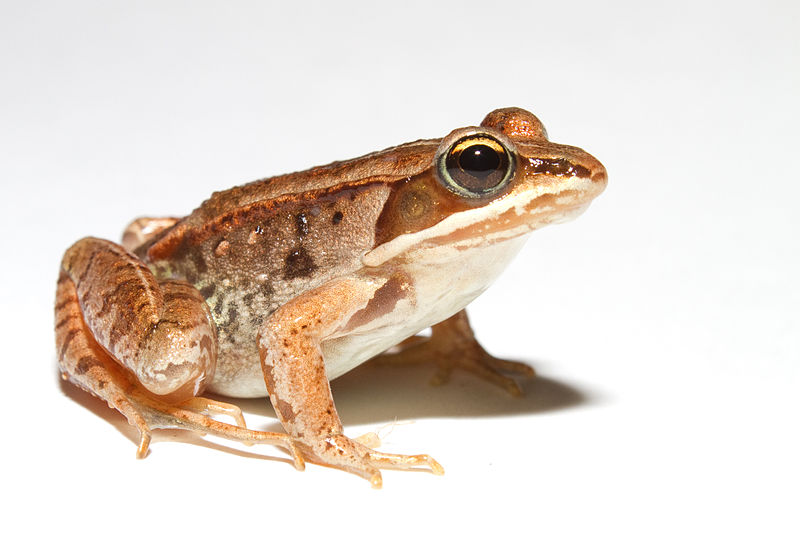
Photo 3
The Wood frog is known as a brown, tan or rust colored frog with a dark colored around its eyes. Some call it a “robbers mask”. These frogs can be seen throughout central Alaska and is the only amphibian found north of the Arctic circle!
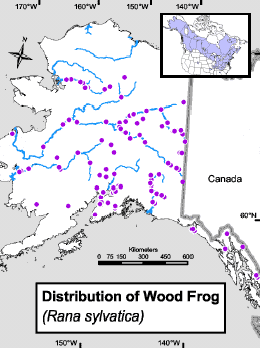
Photo 4
Their call sounds like a quacking of a duck. Watch the video below to hear! Two interesting facts about the wood frog, is that while the frogs do not show any paternal care to their young, it has been discovered that tadpoles that have been separated from parents can pick their parents out and aggregate around them. Secondly, the wood frog is very tolerable to cold temperatures. These frogs can tolerate complete freezing of up to 65% of their body as they pump any water within their body to their extremities and at the same time pump large amount of glucose from the liver into their cells. This creates a syrupy sugar solution which acts as antifreeze within their body. Their blood will freeze, the heart will stop beating and all breathing and muscle movements cease until early spring as they begin to thaw and re-animate. Alaska has a very high rate of physical abnormalities for these poor frogs, including missing, shrunken or misshaped limbs or abnormal eyes. It is currently unknown what is causing these abnormalities but it is thought to occur from some sort of chemical contaminants, parasites, UV radiation, predators, extreme temperatures during development or a combinations of these factors.
Western Toad (Bufo boreas)
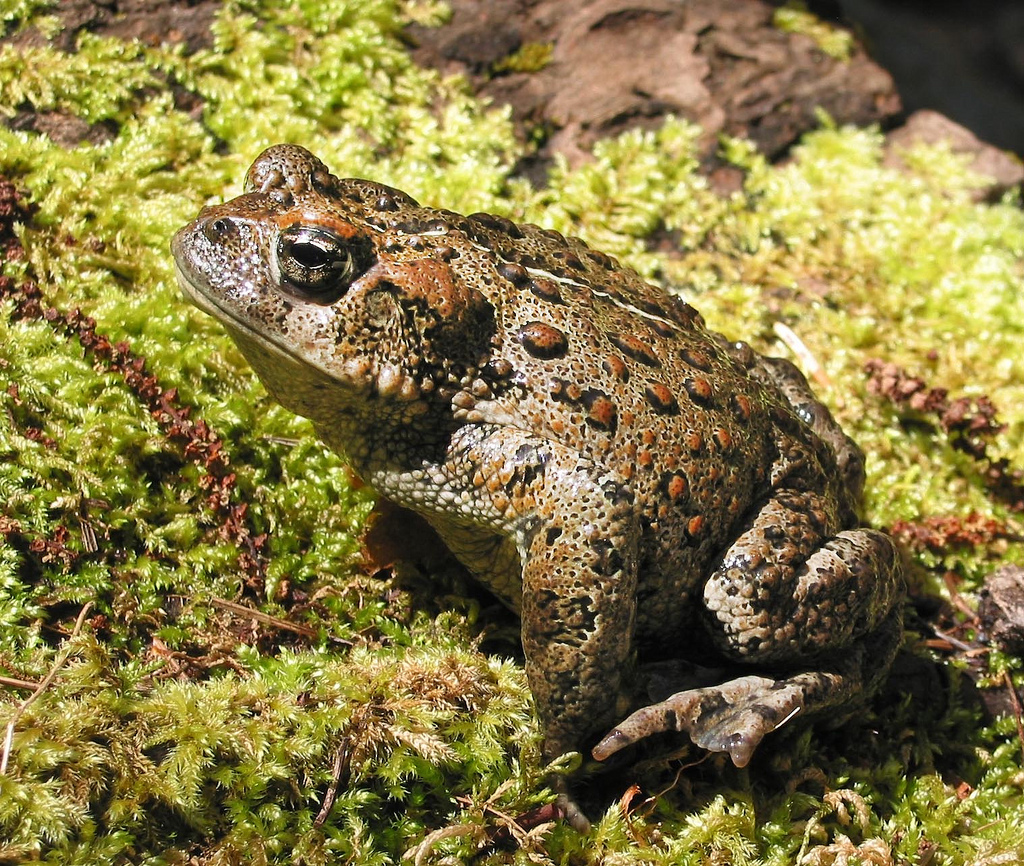
Photo 5
The western toad is chunky, with short legs and numerous warts (it is a toad after all). It can vary in color from brown to green or gray with white and dark mottling on its tummy. There is a conspicuous light colored stripe running down the middle of its back. Their back feet have 2 large rubbery knobs on the heel which they use for digging. The western toad is quite common and can be found widespread on the mainland and the islands of Southeast Alaska.
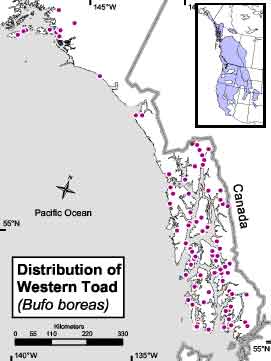
Photo 6
Their call is a soft birdlike clucking call. Listen to it in the video below. When handled, the toad may emit a twittery sound, puff up and urinate. These toads are active during daylight hours and are much more active during damp weather. The western toads population numbers have been declining for unknown reasons; even while in relatively pristine conditions.
Thanks for reading! Check out all of the United State’s native frogs and toads here.

Photo Credits:
Cover photo used by the creative commons license. Text was added. See Original photo by Diamond20 here.
- Photo from Wikimedia Commons used under the Creative Commons license. Photo taken by Forest Service Northern Region. Original Photo Here.
- Photo from the Amphibians and Reptiles of Alaska field handbook by S.O. MacDonald. Original photo here.
- Photo from Wikimedia Commons used under the Creative Commons license. Photo taken by Brian Gratwicke. Original Photo Here.
- Photo from the Amphibians and Reptiles of Alaska field handbook by S.O. MacDonald. Original photo here.
- Photo from Flickr and used under the Creative Commons license. Photo by Oregon State University. Original photo here.
- Photo from the Amphibians and Reptiles of Alaska field handbook by S.O. MacDonald. Original photo here.
For more information:
- https://www.adfg.alaska.gov/static/education/wns/frogs_and_toads.pdf
- http://www.adfg.alaska.gov/index.cfm?adfg=columbiaspottedfrog.main
- http://aknhp.uaa.alaska.edu/herps/sa_wood_frog.htm
- http://aknhp.uaa.alaska.edu/herps/sa_wstrn_toad.htm
Like “The Frog Lady” on facebook or follow aapanaro on instagram to get some sneak peeks into the frog lady’s frog room!


 The Frog Lady
Hi – thanks for the great information. I live in Alaska and am wondering if you have heard anything about the spread of chytridiomycosis and population declines in the northern US? Thanks