Today is the eighth day of the April A to Z Challenge. I will be writing about different frog species based on their latin species names! See the introduction here.
Oophaga histrionica – Harlequin Poison Frog
This adorable frog is only 1-1.5″ long and can be found in tropical rainforests located in the El Choco region of western Colombia. Typically they can be found on the ground scurrying throughout the fallen limbs or leaf litter.
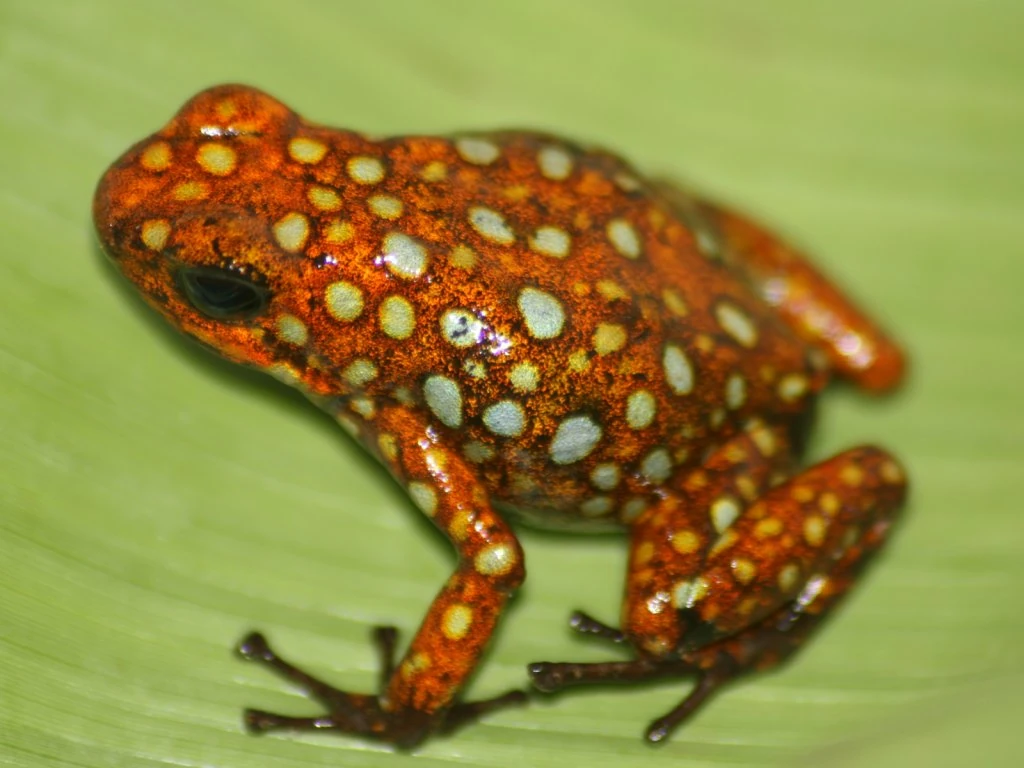
O. histrionica can be found in a variety of color morphs, these vary from one valley to the next in its native range.

As pretty as these frogs are, they are also very dangerous in the wild. Unlike most dendrobatine poison dart frogs, the harlequin frog contains histrionicotoxin. Histrionicotoxin is more poten than many of the pumiliotoxins, but is weaker than batrachotoxin. Symptoms include: physical weakness, blurred vision, heart palpitations and in some cases cardiac paralysis leading to death. Although this frog is dangerous, it was not used by the local tribes for poison blowdarts.
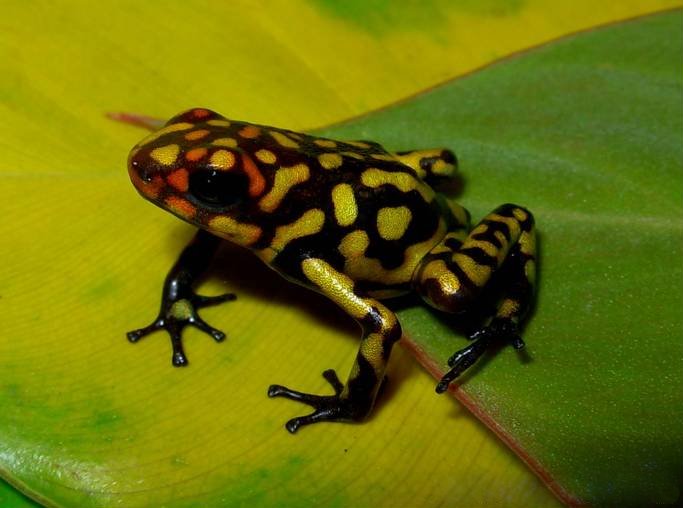
The IUCN redlist does list these frogs as of least concern, however with frogs this beautiful how can you not worry about them going extinct. Rainforests are being destroyed at a rapid rate, and O. histrionica along with other frogs are found in no other habitat in the world.
Sources:
(1) INaturalist(2) Amphibiaweb (3) IUCN redlist (4) Wikipedia (5) Reptiles Wikia (6) EOL.org
Image Sources:
(1) Reptiles.wikia(2) Inaturalist (3) Wikipedia
Like “The Frog Lady” on facebook or follow aapanaro on instagram to get some sneak peeks into the frog lady’s frog room!
Subscribe by email for the latest updates or Join me on facebook and like “The Frog Lady” to get all the latest updates on your newsfeed.
 The Frog Lady
Who knew frogs could be so pretty? You certainly did and thank you for sharing them with us!
Thanks! Some of them are prettier than others, but this one definitely is one of the prettier frogs.
Such beautiful frog pictures, and they’re so little
They are tiny! hard to imagine something so beautiful and small!
They look like tiny jewels! Interesting fact, that the coloration varies from valley to valley.
Thanks for stopping by! I thought it was interesting as well, especially seeing that the valleys are not that far from each other.
Thank you for such an amazing blog. I love frogs. Keep up the good work. I’m so glad I found you on the A-Z challenge list
Thanks! I am so glad you found my blog. Can’t wait to check yours out shortly!
Thank you very much
Also here from the A to Z list. I have Herps for my H! 🙂
Thanks for stopping by! So glad you found it! I will head over to check out your blog and especially your herp post!
Beautiful little creatures, but I guess I’ll keep my distance if I ever run across one.
Arlee Bird
A to Z Challenge Co-host
Tossing It Out
Good Idea! Thanks for stopping by!
Beautiful but not to be messed with.
So, why weren’t they used for poison darts? It sounds like they’re are pretty potent.
I honestly don’t know why they weren’t used, but the only species used were from the Phyllobates genus. They are deadly creatures, but yet so pretty!
It’s heartbreaking to realize how many species we’re losing because we don’t consider them important–or because they’re not cute–or for a million other reasons. Thanks for bringing this issue to people’s attention!
I hope that many visitors will see how beautiful these creatures are and will want to help save them 🙂 Frogs definitely are important to the ecosystem, especially if you don’t like bugs!
I’m not a fan of those bugs, but I’m sure even those miserable mosquitoes serve a purpose–bat food maybe?
Such jewels ❤
Jemima Pett